
Catalogue Search | MBRL


Are you sure you want to remove the book from the shelf?

{{itemTitle}}
67,738
result(s) for
"PHILOSOPHY / Metaphysics"
Sort by:

The fate of place
In this imaginative and comprehensive study, Edward Casey, one of the most incisive interpreters of the Continental philosophical tradition, offers a philosophical history of the evolving conceptualizations of place and space in Western thought. Not merely a presentation of the ideas of other philosophers, The Fate of Place is acutely sensitive to silences, absences, and missed opportunities in the complex history of philosophical approaches to space and place. A central theme is the increasing neglect of place in favor of space from the seventh century A.D. onward, amounting to the virtual exclusion of place by the end of the eighteenth century. Casey begins with mythological and religious creation stories and the theories of Plato and Aristotle and then explores the heritage of Neoplatonic, medieval, and Renaissance speculations about space. He presents an impressive history of the birth of modern spatial conceptions in the writings of Newton, Descartes, Leibniz, and Kant and delineates the evolution of twentieth-century phenomenological approaches in the work of Husserl, Merleau-Ponty, Bachelard, and Heidegger. In the book's final section, Casey explores the postmodern theories of Foucault, Derrida, Tschumi, Deleuze and Guattari, and Irigaray.
eBook
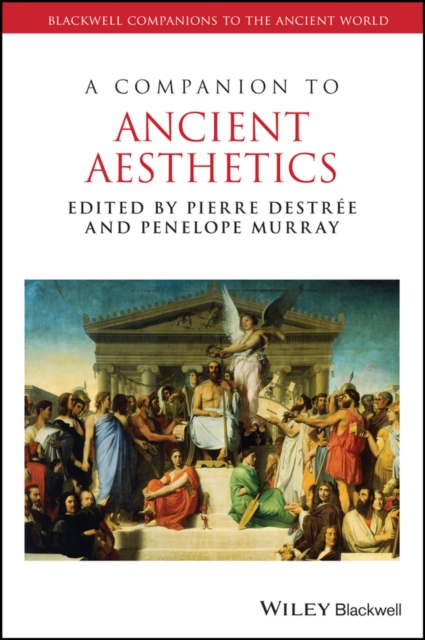
A Companion to Ancient Aesthetics
The first of its kind, A Companion to Ancient Aesthetics presents a synoptic view of the arts, which crosses traditional boundaries and explores the aesthetic experience of the ancients across a range of media—oral, aural, visual, and literary. * Investigates the many ways in which the arts were experienced and conceptualized in the ancient world * Explores the aesthetic experience of the ancients across a range of media, treating literary, oral, aural, and visual arts together in a single volume * Presents an integrated perspective on the major themes of ancient aesthetics which challenges traditional demarcations * Raises questions about the similarities and differences between ancient and modern ways of thinking about the place of art in society
eBook
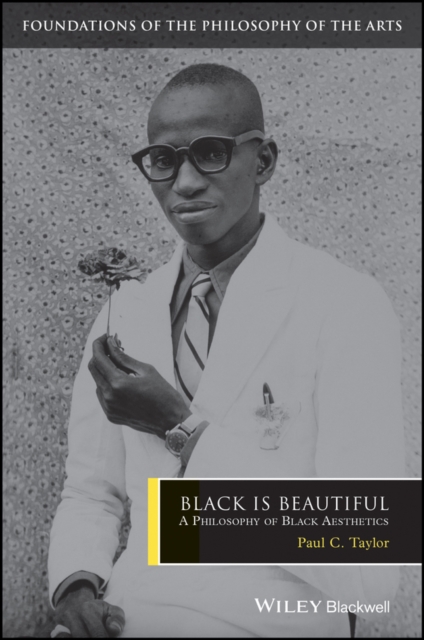
Black is Beautiful
Black is Beautiful identifies and explores the most significant philosophical issues that emerge from the aesthetic dimensions of black life, providing a long-overdue synthesis and the first extended philosophical treatment of this crucial subject. * The first extended philosophical treatment of an important subject that has been almost entirely neglected by philosophical aesthetics and philosophy of art * Takes an important step in assembling black aesthetics as an object of philosophical study * Unites two areas of scholarship for the first time – philosophical aesthetics and black cultural theory, dissolving the dilemma of either studying philosophy, or studying black expressive culture * Brings a wide range of fields into conversation with one another– from visual culture studies and art history to analytic philosophy to musicology – producing mutually illuminating approaches that challenge some of the basic suppositions of each * Well-balanced, up-to-date, and beautifully written as well as inventive and insightful * Winner of The American Society of Aesthetics Outstanding Monograph Prize 2017
eBook

Thinking Through the Imagination: Aesthetics in Human Cognition
Use your imagination! The demand is as important as it is confusing. What is the imagination? What is its value? Where does it come from? And where is it going in a time when even the obscene seems overdone and passe? This book takes up these questions and argues for the centrality of imagination in human cognition. It traces the development of the imagination in Kant's critical philosophy (particularly the Critique of Aesthetic Judgment) and claims that the insights of Kantian aesthetic theory, especially concerning the nature of creativity, common sense, and genius, influenced the development of nineteenth-century American philosophy. The book identifies the central role of the imagination in the philosophy of Peirce, a role often overlooked in analytic treatments of his thought. The final chapters pursue the observation made by Kant and Peirce that imaginative genius is a type of natural gift (ingenium) and must in some way be continuous with the creative force of nature. It makes this final turn by way of contemporary studies of metaphor, embodied cognition, and cognitive neuroscience.
eBook

Quantum Mechanics and the Philosophy of Alfred North Whitehead
In Process and Reality and other works, Alfred North Whitehead struggled to come to terms with the impact the new science of quantum mechanics would have on metaphysics.This ambitious book is the first extended analysis of the intricate relationships between relativity theory, quantum mechanics, and Whitehead's cosmology.
eBook

Rule-Following and Meaning
The rule-following debate, in its concern with the metaphysics and epistemology of linguistic meaning and mental content, goes to the heart of the most fundamental questions of contemporary philosophy of mind and language. This volume gathers together the most important contributions to the topic, including papers by Simon Blackburn, Paul Boghossian, Graeme Forbes, Warren Goldfarb, Paul Horwich, John McDowell, Colin McGinn, Ruth Millikan, Philip Pettit, George Wilson, and José Zalabardo. This debate has centred on Saul Kripke's reading of the rule-following sections in Wittgenstein and his consequent posing of a \"sceptical paradox\" that threatens our every day notions of linguistic meaning and mental content. These essays are attempts to respond to this challenge and represent some of the most important work in contemporary theory of meaning. They examine the notion of meaning; whether it is possible to find a suitable meaning-constituting fact from our previous behaviour or mental histories; objections to, and defenses of, dispositional accounts of meaning; the plausibility of non-factualism about meaning; our attempts to develop non-reductionist accounts of meaning; and the sources of the normativity which attaches to meaning, such as the linguistic practice of the community or the dispositions of the individual. With an introductory essay and a comprehensive guide to further reading the book is an excellent resource for courses in philosophy of mind, philosophy of language, Wittgenstein, and metaphysics, as well as for all philosophers, linguists, and cognitive scientists with interests in these areas. Contributors include Simon Blackburn (University of Cambridge), Paul Boghossian (New York University), Graeme Forbes (Tulane University), Warren Goldfarb (Harvard University), Paul Horwich (City University of New York), John McDowell (University of Pittsburgh), Colin McGinn (Rutgers University), Alexander Miller, Ruth Garrett Millikan (University of Connecticut), Philip Pettit (Princeton University), George. M. Wilson (University of California, Davis), Crispin Wright, and José L. Zalabardo (University College London).
eBook
Causation and Explanation
In the section on laws of nature, Psillos considers both the regularity view of laws and laws as relations among universals as well as alternative approaches to laws. In the final section on explanation he examines in detail the issues arising from deductive-nomological explanation and statistical explanation before considering the explanation of laws and the metaphysics of explanation. Accessible to students of all levels the author provides an excellent introduction to one of the most enduring problems of philosophy.
eBook
Philosophy of Nature
For many years essentialism was considered beyond the pale in philosophy, a relic of discredited Aristotelianism. This is no longer so. Kripke and Putnam have made belief in essential natures respectable once more. Harré and Madden have argued against Hume's theory of causation and developed an alternative theory based on the assumption that there are genuine causal powers in nature. Dretske, Tooley, Armstrong, Swoyer, and Carroll have all developed strong alternatives to Hume's theory of the laws of nature. And Shoemaker has developed a thoroughly non-Humean theory of properties. The \"new essentialism\" has evolved from these beginnings and can now reasonably claim to be a metaphysic for a modern scientific understanding of the world - one that challenges the conception of the world as comprising passive entities whose interactions are to be explained by appeal to contingent laws of nature externally imposed.
eBook
Free Will
Free will remains one of the great problems in philosophy. Whether human choices and actions are causally determined or in some way free and the implications of opting for one position or the other on our moral, personal, and social lives continues to challenge philosophers. Written in a clear and uncomplicated style, this introduction to the problem of free will provides readers with a solid grasp of the central issues as well as the ability to analyse and evaluate the ideas and arguments involved. Free Will explores the determinist rejection of free will through detailed exposition of the central determinist argument and consideration of responses to each of its premises. At every stage familiar examples and case studies help frame and ground the argument. Focusing on a clear, single line of argument allows the author to demonstrate what scrupulous and persistent analytic philosophical inquiry looks and feels like in practice. The manner and approach used throughout encourage the reader to contribute to the debate as an engaged participant. Free Will will be welcomed by students looking for an engaging and clear introduction to the subject. As a rigorous exercise in philosophical argument it will serve the beginning philosophy student as an excellent spring board into the subject more generally.
eBook
Perception
The book includes chapters on forms of natural realism, theories of perceptual experience, representationalism, the argument from illusion, phenomenological senses, types of perceptual content, the representationalist/intentionalist thesis, and adverbialist accounts of perceptual experience. The ideas of Austin, Dretske, Heidegger, Millikan, Putnam, and Robinson are considered among others and the reader is given an invaluable philosophical framework within which to consider the issues.
eBook