
Catalogue Search | MBRL


Are you sure you want to remove the book from the shelf?

{{itemTitle}}
695
result(s) for
"PHILOSOPHY / Movements / Humanism"
Sort by:

Central Works of Philosophy, Volume 3
Ranging over 2,500 years of philosophical writing, this five-volume collection of essays is an unrivalled companion to the study and reading of philosophy. Central Works of Philosophy provides both an overview of particular works and clear and authoritative expositions of their central ideas, giving readers the resources and confidence to read the works themselves. These books offer remarkable insights into the ideas out of which our present ways of thinking emerged and without which they cannot fully be understood. VOLUME 3 introduces readers to the age of idealism, from which twentieth-century Western philosophy emerged. The volume begins with Kant's Critique of Pure Reason, which determined much of the course of nineteenth-century philosophy, and ends with the moral and political philosophy of Stuart Mill, perhaps the only philosopher in this volume to evade Kant's influence. Also included are works by two post-Kantian idealists, Fichte and Hegel, as well as Schopenhauer, Kierkegaard, Marx, and Nietzsche. Contributors include Curtis Bowman, Stephen Evans, Michelle Grier, Michael Inwood, Dale Jacquette, Jonathan Riley, Tom Rockmore, and Rex Welshon.
eBook
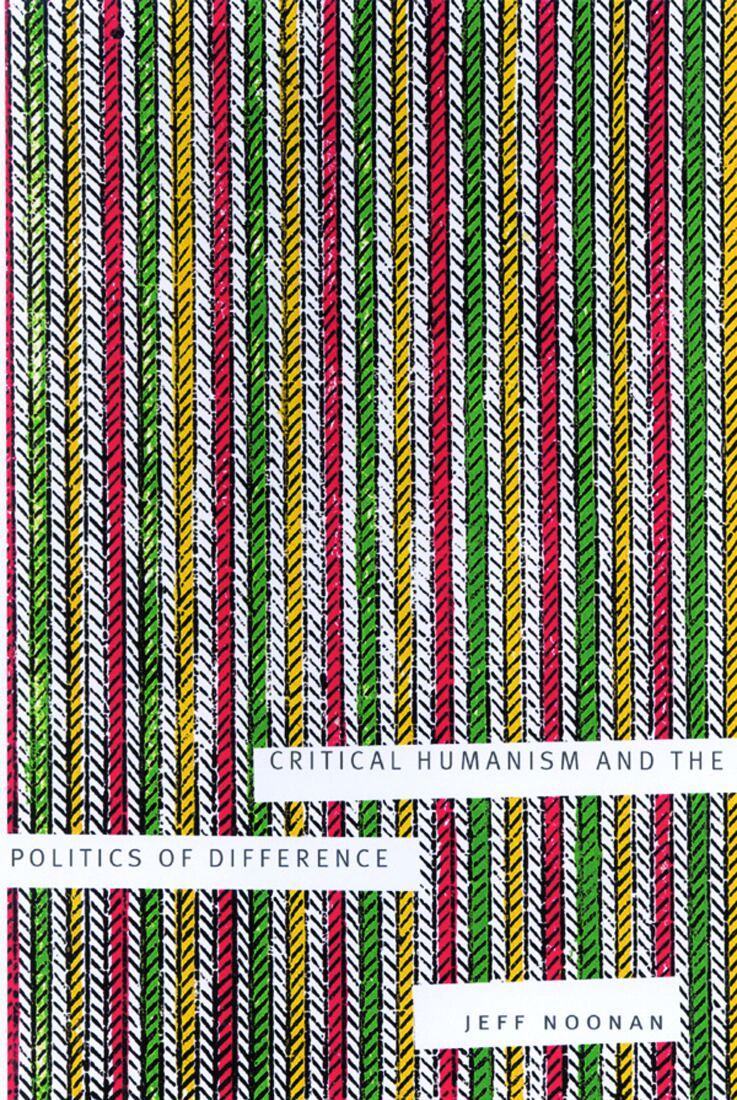
Critical Humanism and the Politics of Difference
Noonan shows that at the core of postmodern philosophy, with its claim that culture creates humans, is a concern to dethrone the modern understanding of human beings as subjects, as builders of their world and free when those world-building activities are the outcome of free choices. He explains that because the postmodern conception of human being does not capture what is universal in all humans it is incapable of critically responding to the forcible subordination of different cultures to European \"humanity.\" When oppressed groups explain why they struggle against oppression, they invoke just that idea of human being as subjectivity that postmodern philosophy claims is the basis of oppression. Noonan argues that the voices of cultural differences, when they struggle against the forces of hatred and exclusion, do not ground themselves just in the particular value of their culture but in the universal value of human freedom and self-determination.
eBook
Kierkegaard as Humanist
Kierkegaard as Humanist is an extensive analysis of Kierkegaard's concepts of self, freedom, possibility, and necessity. Topics examined include the essential and continuing duality of the self, the process by which the self becomes self-consciousness, freedom as the dialectical tension between necessity and possibility and between temporality and eternity, the indeterminate/determinate leap as freedom's form, and love as freedom's content. Come finds in Kierkegaard's writings an anthropological ontology that is derived by a phenomenological method and distinct from those Kierkegaardian materials that are clearly theological in a Christian sense; he concludes that Kierkegaard's anthropological ontology is independent of his Christian theology.
eBook
Inauthentic Culture and Its Philosophical Critics
Jay Newman first puts the contemporary problem of inauthentic culture into philosophical and historical context. He then goes on to show how traditional philosophical criticism of inauthentic culture can help us understand many disturbing aspects of such contemporary cultural phenomena as television and public relations, as well as contemporary forms of craftsmanship, democracy, and the academy. Inauthentic Culture and Its Philosophical Critics will be of great interest to all those concerned with philosophy, cultural theory, and the enduring problem of cultural decline.
eBook

The Feeling Body
A proposal that extends the enactive approach developed in cognitive science and philosophy of mind to issues in affective science.
In The Feeling Body, Giovanna Colombetti takes ideas from the enactive approach developed over the last twenty years in cognitive science and philosophy of mind and applies them for the first time to affective science—the study of emotions, moods, and feelings. She argues that enactivism entails a view of cognition as not just embodied but also intrinsically affective, and she elaborates on the implications of this claim for the study of emotion in psychology and neuroscience.
In the course of her discussion, Colombetti focuses on long-debated issues in affective science, including the notion of basic emotions, the nature of appraisal and its relationship to bodily arousal, the place of bodily feelings in emotion experience, the neurophysiological study of emotion experience, and the bodily nature of our encounters with others. Drawing on enactivist tools such as dynamical systems theory, the notion of the lived body, neurophenomenology, and phenomenological accounts of empathy, Colombetti advances a novel approach to these traditional issues that does justice to their complexity. Doing so, she also expands the enactive approach into a further domain of inquiry, one that has more generally been neglected by the embodied-embedded approach in the philosophy of cognitive science.
eBook
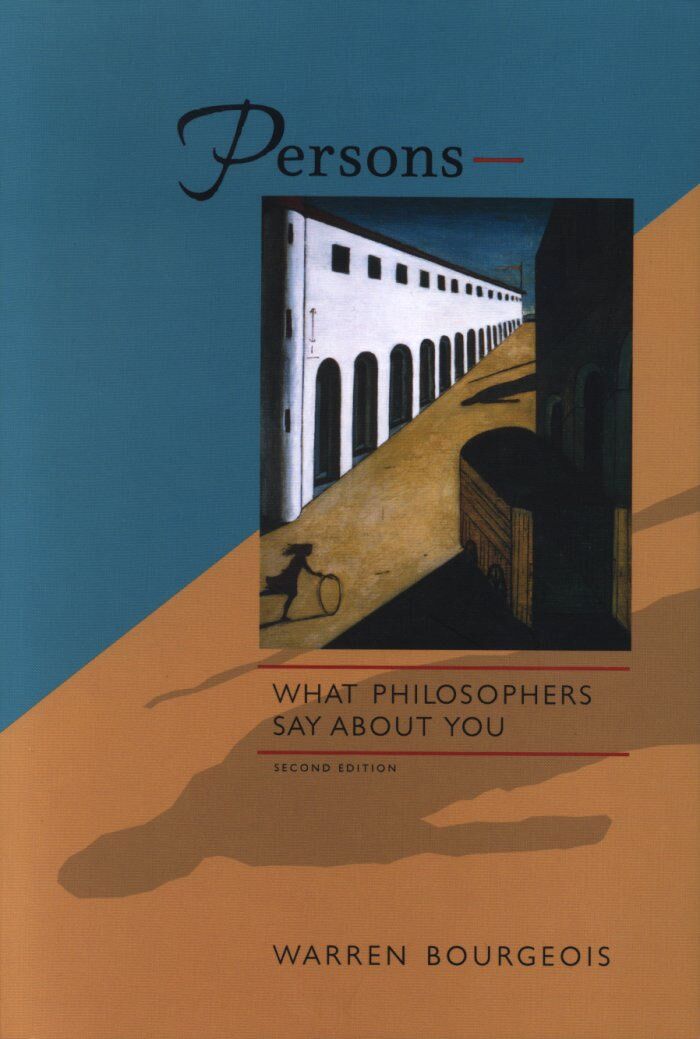
Persons — What Philosophers Say about You
Can a person suffer radical change and still be the same person? Are there human beings who are not persons at all? Western philosophers, from the ancient Greeks to contemporary thinkers, gave the concept of “person” great importance in their discussions. They saw it as crucial to our understanding of our world and our place in it. Prompted by tragedy — a loved one’s descent into dementia — Warren Bourgeois explored Western philosophical ideas to discover what constitutes a “person.” The first edition of Persons — What Philosophers Say About You was the result of his search. This new second edition focuses on making this material easily available and accessible to students, and has been redesigned as an introduction to the philosophy of mind and its history, concentrating on the central concept of “person” in contemporary controversies concerning abortion, euthanasia, genetic engineering, and human rights. Bourgeois has mined Western philosophy for ideas students can apply today as technology challenges their beliefs about what we are. He then uses the concept of person to unite the various subdivisions of philosophy, applying theories of knowledge, reality and value to help students understand what we believe about ourselves. The result is a living philosophy and an “introductory text with a difference.” While the ideas of the great philosophers cannot be meaningfully summarized in one introductory text, this book provides a comparison of what many of them say about the concept of person, and will encourage students to read further.
eBook
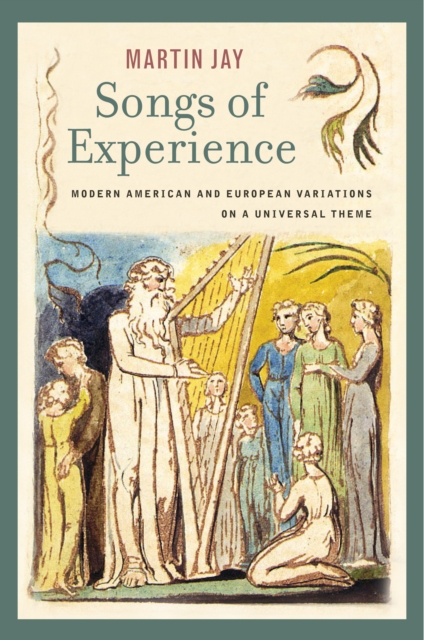
Songs of Experience
Few words in both everyday parlance and theoretical discourse have been as rhapsodically defended or as fervently resisted as \"experience.\" Yet, to date, there have been no comprehensive studies of how the concept of experience has evolved over time and why so many thinkers in so many different traditions have been compelled to understand it.Songs of Experienceis a remarkable history of Western ideas about the nature of human experience written by one of our best-known intellectual historians. With its sweeping historical reach and lucid comparative analysis-qualities that have made Martin Jay's previous books so distinctive and so successful-Songs of Experienceexplores Western discourse from the sixteenth century to the present, asking why the concept of experience has been such a magnet for controversy. Resisting any single overarching narrative, Jay discovers themes and patterns that transcend individuals and particular schools of thought and illuminate the entire spectrum of intellectual history. As he explores the manifold contexts for understanding experience-epistemological, religious, aesthetic, political, and historical-Jay engages an exceptionally broad range of European and American traditions and thinkers from the American pragmatists and British Marxist humanists to the Frankfurt School and the French poststructuralists, and he delves into the thought of individual philosophers as well, including Montaigne, Bacon, Locke, Hume and Kant, Oakeshott, Collingwood, and Ankersmit. Provocative, engaging, erudite, this key work will be an essential source for anyone who joins the ongoing debate about the material, linguistic, cultural, and theoretical meaning of \"experience\" in modern cultures.
eBook

The Archaeology of War
The book analyses the history of violence in the twentieth and twenty-first centuries and traces the many situations, images, motifs and sources for this experience of unbounded violence that characterizes our times.
eBook

The body and shame
This book investigates the concept of body shame and explores its significance when considering philosophical accounts of embodied subjectivity, providing phenomenological reflections on how the body is shaped by social forces.
eBook

Corpus
How have we thought ?the body?? How can we think it anew? The body of mortal creatures, the body politic, the body of letters and of laws, the ?mystical body of Christ??all these (and others) are incorporated in the word Corpus, the title and topic of Jean-Luc Nancy?s masterwork.Corpus is a work of literary force at once phenomenological, sociological, theological, and philosophical in its multiple orientations and approaches. In thirty-six brief sections, Nancy offers us at once an encyclopedia and a polemical program?reviewing classical takes on the ?corpus? from Plato, Aristotle, and Saint Paul to Descartes, Hegel, Husserl, and Freud, while demonstrating that the mutations (technological, biological, and political) of our own culture have given rise to the need for a new understanding of the body. He not only tells the story of this cultural change but also explores the promise and responsibilities that such a new understanding entails.The long-awaited English translation is a bold, bravura rendering. To the title essay are added five closely related recent pieces?including a commentary by Antonia Birnbaum?dedicated in large part to the legacy of the ?mind-body problem? formulated by Descartes and the challenge it poses to rethinking the ancient problems of the corpus. The last and most poignant of these essays is ?The Intruder,? Nancy?s philosophical meditation on his heart transplant. The book also serves as the opening move in Nancy?s larger project called ?The deconstruction of Christianity.?
eBook