
Catalogue Search | MBRL


Are you sure you want to remove the book from the shelf?

{{itemTitle}}
50,477
result(s) for
"PHILOSOPHY / Religious"
Sort by:

The Wisdom to Doubt
The Wisdom to Doubtis a major contribution to the contemporary literature on the epistemology of religious belief. Continuing the inquiry begun in his previous book,Prolegomena to a Philosophy of Religion, J. L. Schellenberg here argues that given our limitations and especially our immaturity as a species, there is no reasonable choice but to withhold judgment about the existence of an ultimate salvific reality. Schellenberg defends this conclusion against arguments from religious experience and naturalistic arguments that might seem to make either religious belief or religious disbelief preferable to his skeptical stance. In so doing, he canvasses virtually all of the important recent work on the epistemology of religion. Of particular interest is his call for at least skepticism about theism, the most common religious claim among philosophers.
The Wisdom to Doubtexpands the author's well-known hiddenness argument against theism and situates it within a larger atheistic argument, itself made to serve the purposes of his broader skeptical case. That case need not, on Schellenberg's view, lead to a dead end but rather functions as a gateway to important new insights about intellectual tasks and religious possibilities.
eBook

God Interrupted
Could the best thing about religion be the heresies it spawns? Leading intellectuals in interwar Europe thought so. They believed that they lived in a world made derelict by God's absence and the interruption of his call. In response, they helped resurrect gnosticism and pantheism, the two most potent challenges to the monotheistic tradition. In God Interrupted, Benjamin Lazier tracks the ensuing debates about the divine across confessions and disciplines. He also traces the surprising afterlives of these debates in postwar arguments about the environment, neoconservative politics, and heretical forms of Jewish identity. In lively, elegant prose, the book reorients the intellectual history of the era. God Interrupted also provides novel accounts of three German-Jewish thinkers whose ideas, seminal to fields typically regarded as wildly unrelated, had common origins in debates about heresy between the wars. Hans Jonas developed a philosophy of biology that inspired European Greens and bioethicists the world over. Leo Strauss became one of the most important and controversial political theorists of the twentieth century. Gershom Scholem, the eminent scholar of religion, radically recast what it means to be a Jew. Together they help us see how talk about God was adapted for talk about nature, politics, technology, and art. They alert us to the abiding salience of the divine to Europeans between the wars and beyond--even among those for whom God was long missing or dead.
eBook

The Monstrosity of Christ
\"What matters is not so much that Žižek is endorsing a demythologized, disenchanted Christianity without transcendence, as that he is offering in the end (despite what he sometimes claims) a heterodox version of Christian belief.\"--John Milbank\"To put it even more bluntly, my claim is that it is Milbank who is effectively guilty of heterodoxy, ultimately of a regression to paganism: in my atheism, I am more Christian than Milbank.\"--Slavoj ŽižekIn this corner, philosopher Slavoj Žižek, a militant atheist who represents the critical-materialist stance against religion's illusions; in the other corner, \"Radical Orthodox\" theologian John Milbank, an influential and provocative thinker who argues that theology is the only foundation upon which knowledge, politics, and ethics can stand. In The Monstrosity of Christ, Žižek and Milbank go head to head for three rounds, employing an impressive arsenal of moves to advance their positions and press their respective advantages. By the closing bell, they have not only proven themselves worthy adversaries, they have shown that faith and reason are not simply and intractably opposed. Žižek has long been interested in the emancipatory potential offered by Christian theology. And Milbank, seeing global capitalism as the new century's greatest ethical challenge, has pushed his own ontology in more political and materialist directions. Their debate in The Monstrosity of Christ concerns the future of religion, secularity, and political hope in light of a monsterful event--God becoming human. For the first time since Žižek's turn toward theology, we have a true debate between an atheist and a theologian about the very meaning of theology, Christ, the Church, the Holy Ghost, Universality, and the foundations of logic. The result goes far beyond the popularized atheist/theist point/counterpoint of recent books by Christopher Hitchens, Richard Dawkins, and others. Žižek begins, and Milbank answers, countering dialectics with \"paradox.\" The debate centers on the nature of and relation between paradox and parallax, between analogy and dialectics, between transcendent glory and liberation. Slavoj Žižek is a philosopher and cultural critic. He has published over thirty books, including Looking Awry, The Puppet and the Dwarf, and The Parallax View (these three published by the MIT Press). John Milbank is an influential Christian theologian and the author of Theology and Social Theory: Beyond Secular Reason and other books. Creston Davis, who conceived of this encounter, studied under both Žižek and Milbank.
eBook
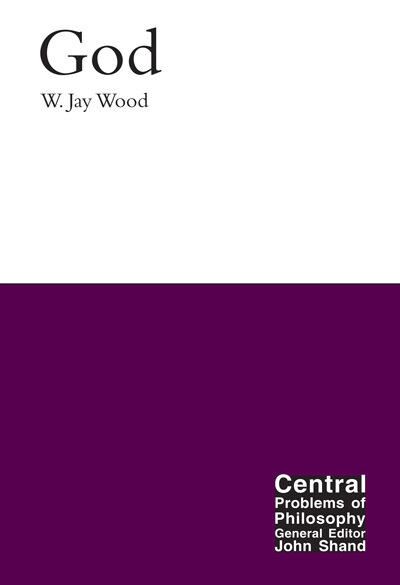
God
Questions of God's existence have exercised philosophers since antiquity. Are there adequate reasons to think that God exists? And, if God exists, what is God like? In this book Jay Wood provides a sustained and fresh examination of these central questions.The first part of the book addresses the epistemological concerns, focusing on arguments for and against the claim that theism is rationally justifiable. These include discussion of cosmological arguments, the ontological argument, the argument from design, and the moral argument for God's existence. Metaphysical questions about God's nature, in particular God's knowledge and power, and the nature of religious experience constitute the second part of the book. Epistemological and metaphysical questions are shown to be related since, if the concept of a God perfect in wisdom, power, and goodness is incoherent, it cannot be reasonable to believe that God exists. Throughout his discussion Wood draws on the most recent writings in the field as well as classic arguments and offers readers a clear, balanced, and incisive analysis of the core philosophical arguments for the existence of God. The book equips readers with the necessary understanding of issues in natural theology that will enable them to tackle more specialized and complex questions in the philosophy of religion.
eBook

Adoration
Adoration is the second volume of the Deconstruction of Christianity, following Dis-Enclosure. The first volume attempted to demonstrate why it is necessary to open reason up not to a religious dimension but to one transcending reason as we have been accustomed to understanding it; the term \"adoration\" attempts to name the gesture of this dis-enclosed reason. Adoration causes us to receive ignorance as truth: not a feigned ignorance, perhaps not even a \"nonknowledge,\" nothing that would attempt to justify the negative again, but the simple, naked truth that there is nothing in the place of God, because there is no place for God. The outside of the world opens us in the midst of the world, and there is no first or final place. Each one of us is at once the first and the last. Each one, each name. And our ignorance is made worse by the fact that we do not know whether we ought to name this common and singular property of all names. We must remain in this suspense, hesitating between and stammering in various possible languages, ultimately learning to speak anew. In this book, Jean-Luc Nancy goes beyond his earlier historical and philosophical thought and tries to think-or at least crack open a little to thinking-a stance or bearing that might be suitable to the retreat of God that results from the self-deconstruction of Christianity. Adoration may be a manner, a style of spirit for our time, a time when the \"spiritual\" seems to have become so absent, so dry, so adulterated. The book is a major contribution to the important strand of attempts to think a \"post-secular\" situation of religion.
eBook

Understanding the Qur’anic Miracle Stories in the Modern Age
he Qur’an contains many miracle stories, from Moses’ staff turning into a serpent to Mary conceiving Jesus as a virgin. In When the Staff Turns into a Serpent, Isra Yazicioglu offers a glimpse of the ways in which meaningful implications have been drawn from these apparently strange narratives, both in the pre-modern and modern era. It fleshes out a fascinating medieval Muslim debate over miracles, and connects its insights with early and late modern turning points in Western thought as well as contemporary Qur’anic interpretation. Building on an apparent tension within the Qur’an and analyzing crucial cases of classical and modern Muslim engagement with these miracle stories, this book illustrates how a site of conflict between faith and reason, or revelation and science, can become a site of fruitful exchange This book is a distinctive contribution to a new trend in Qur’anic Studies in that it reveals the presence of insightful Qur’anic interpretation outside of the traditional line-by-line commentary genre, by engaging with the works of Ghazali, Ibn Rushd and Said Nursi. Moreover, focused as it is on the case of miracle stories, the book also goes beyond these specific passages to reflect more broadly on the issue of Qur’anic hermeneutics. It notes the connections between literal and symbolic approaches, and highlights the importance of looking at reception history of the Quran through the lens of “pragmatic” hermeneutics.
eBook

Erasmus, man of letters
The name Erasmus of Rotterdam conjures up a golden age of scholarly integrity and the disinterested pursuit of knowledge, when learning could command public admiration without the need for authorial self-promotion. Lisa Jardine, however, shows that Erasmus self-consciously created his own reputation as the central figure of the European intellectual world. Erasmus himself-the historical as opposed to the figural individual-was a brilliant, maverick innovator, who achieved little formal academic recognition in his own lifetime. What Jardine offers here is not only a fascinating study of Erasmu.
eBook

The Insistence of God
The Insistence of God presents the provocative idea that God does not exist, God insists, while God's existence is a human responsibility, which may or may not happen. For John D. Caputo, God's existence is haunted by \"perhaps,\" which does not signify indecisiveness but an openness to risk, to the unforeseeable. Perhaps constitutes a theology of what is to come and what we cannot see coming. Responding to current critics of continental philosophy, Caputo explores the materiality of perhaps and the promise of the world. He shows how perhaps can become a new theology of the gaps God opens.
eBook

Believing in Order to See
A phenomenological reflection on central aspects of Christian revelation: the practice of faith, the obligation and role of the baptized Christian, the gift of the sacraments, the future of Catholicism, the role of the Christian intellectual, examined always in light of their inherent rationality and relationship to philosophical reason.
eBook

The Will to Imagine
The Will to Imaginecompletes J. L. Schellenberg's trilogy in the philosophy of religion, following his acclaimedProlegomena to a Philosophy of ReligionandThe Wisdom to Doubt. This book marks a striking reversal in our understanding of the possibility of religious faith. Where other works treat religious skepticism as a dead end,The Will to Imagineargues that skepticism is the only point from which a proper beginning in religious inquiry-and in religion itself-can be made.
For Schellenberg, our immaturity as a species not only makes justified religious belief impossible but also provides the appropriate context for a type of faith response grounded in imagination rather than belief, directed not to theism but to ultimism, the heart of religion. This new and nonbelieving form of faith, he demonstrates, is quite capable of nourishing an authentic religious life while allowing for inquiry into ways of refining the generic idea that shapes its commitments. A singular feature of Schellenberg's book is his claim, developed in detail, that unsuccessful believers' arguments can successfully be recast as arguments for imaginative faith.
Out of the rational failure of traditional forms of religious belief,The Will to Imaginefashions an unconventional form of religion better fitted, Schellenberg argues, to the human species as it exists today and as we may hope it will evolve.
eBook