
Catalogue Search | MBRL


Are you sure you want to remove the book from the shelf?

{{itemTitle}}
4,627
result(s) for
"PHOTOGRAPHY / Criticism."
Sort by:

Through Soviet Jewish Eyes
Most view the relationship of Jews to the Soviet Union through the lens of repression and silence. Focusing on an elite group of two dozen Soviet-Jewish photographers, including Arkady Shaykhet, Alexander Grinberg, Mark Markov-Grinberg, Evgenii Khaldei, Dmitrii Baltermants, and Max Alpert,Through Soviet Jewish Eyespresents a different picture. These artists participated in a social project they believed in and with which they were emotionally and intellectually invested-they were charged by the Stalinist state to tell the visual story of the unprecedented horror we now call the Holocaust.These wartime photographers were the first liberators to bear witness with cameras to Nazi atrocities, three years before Americans arrived at Buchenwald and Dachau. In this passionate work, David Shneer tells their stories and highlights their work through their very own images-he has amassed never-before-published photographs from families, collectors, and private archives.Through Soviet Jewish Eyeshelps us understand why so many Jews flocked to Soviet photography; what their lives and work looked like during the rise of Stalinism, during and then after the war; and why Jews were the ones charged with documenting the Soviet experiment and then its near destruction at the hands of the Nazis.
eBook
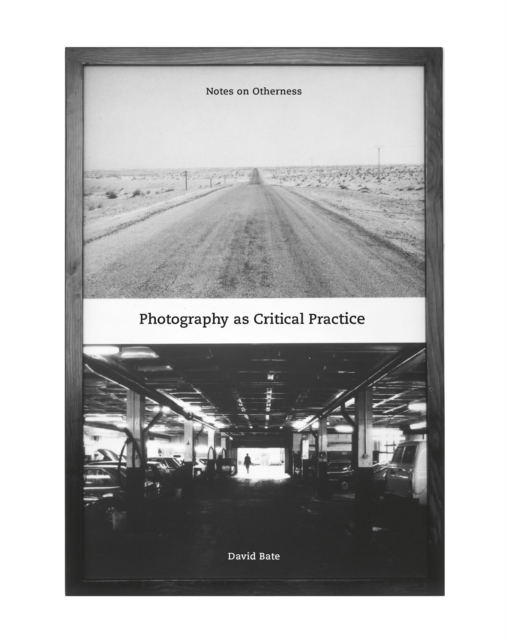
Photography as Critical Practice
The 'other' is a topic of great interest within and across contemporary photographic practice and theory, yet it remains neglected outside the now well-established field of postcolonial studies. This volume brings together photography and written essays that relate to aspects of otherness and visual work. Presented together, the images and critical writings work in concert to construct a new social perspective on questions of otherness and alterity and to highlight photography as a form of critical practice.
In a departure from existing conceptions of otherness in postcolonial discourse, Photography as Critical Practice places emphasis on the human condition not as a liberal concept, but as something formed and framed by a broader dimension of social, sexual and cultural otherness.
Including contributions by Elina Ruka, Katrin Kivimaa, Parveen Adams and Liz Wells, the book provides a fascinating new vista on the otherness of photography.
eBook

A Staggering Revolution
During the 1930s, the world of photography was unsettled, exciting, and boisterous. John Raeburn's A Staggering Revolution recreates the energy of the era by surveying photography's rich variety of innovation, exploring the aesthetic and cultural achievements of its leading figures, and mapping the paths their pictures blazed public's imagination. _x000B_While other studies of thirties photography have concentrated on the documentary work of the Farm Security Administration (FSA), no previous book has considered it alongside so many of the decade's other important photographic projects. A Staggering Revolution includes individual chapters on Edward Steichen's celebrity portraiture; Berenice Abbott's Changing New York project; the Photo League's ethnography of Harlem; and Edward Weston's western landscapes, made under the auspices of the first Guggenheim Fellowship awarded to a photographer. It also examines Margaret Bourke_White's industrial and documentary pictures, the collective undertakings by California's Group f.64, and the fashion magazine specialists, as well as the activities of the FSA and the Photo League. _x000B_Raeburn's expansive study explains how the democratic atmosphere of thirties photography nourished innovation and encouraged new heights of artistic achievement. It also produced the circumstances that permitted artful photography to become such a thriving public enterprise during the decade. A Staggering Revolution offers an illuminating analysis of the sociology of photography's art world and its galleries and exhibitions, but also demonstrates the importance of the novel venues created by impresarios and others that proved essential to photography's extraordinary dissemination. These new channels, including camera magazines and annuals, volumes of pictures enhanced by text, and omnibus exhibitions in unconventional spaces, greatly expanded photography's cultural visibility. They also made its enthusiastic audience larger and more heterogeneous than ever before - or since.
eBook

Argentine, Mexican, and Guatemalan Photography
One of the important cultural responses to political and sociohistorical events in Latin America is a resurgence of urban photography, which typically blends high art and social documentary. But unlike other forms of cultural production in Latin America, photography has received relatively little sustained critical analysis. This pioneering book offers one of the first in-depth investigations of the complex and extensive history of gendered perspectives in Latin American photography through studies of works from Argentina, Mexico, and Guatemala.David William Foster examines the work of photographers ranging from the internationally acclaimed artists Graciela Iturbide, Pedro Meyer, and Marcos López to significant photographers whose work is largely unknown to English-speaking audiences. He grounds his essays in four interlocking areas of research: the experience of human life in urban environments, the feminist matrix and gendered cultural production, Jewish cultural production, and the ideological principles of cultural works and the connections between the works and the sociopolitical and historical contexts in which they were created. Foster reveals how gender-marked photography has contributed to the discourse surrounding the project of redemocratization in Argentina and Guatemala, as well as how it has illuminated human rights abuses in both countries. He also traces photography's contributions to the evolution away from the masculinist-dominated post–1910 Revolution ideology in Mexico. This research convincingly demonstrates that Latin American photography merits the high level of respect that is routinely accorded to more canonical forms of cultural production.
eBook

The paradox of photography
The Paradox of Photography analyzes the discourse on photography by four of the most important modern French poets and theorists (Baudelaire, Breton, Barthes and Valéry). It stresses in particular the importance of this visual language for the development of both new forms of narrative and original critical studies on issues of representation in art. It also reflects upon the integration of photography within the domain of technical modernity while emphasizing its aesthetic identity stemming from the Western tradition of figurative painting.
eBook

A companion to photography
'A Companion to Photography' presents a comprehensive collection of original essays that explore a variety of key areas of current debate relating to the state of photography. Essays are written by both established and emerging photographers and scholars, as well as various experts in their respective areas.
eBook

Seduced by Modernity
Mary O'Connor and Katherine Tweedie tell the story of a dedicated artist in difficult circumstances whose working life spanned a Victorian upbringing in Hamilton, Ontario, and the witnessing of the first Soviet Five-Year Plan. The authors use feminist and historical questions as well as close readings of the photographs to relate Watkins' work to questions of gender, modernity, and visual culture. Watkins' modernism, which involved experimentation and a radical focus on form, transgressed boundaries of conventional, high-art subject matter. Her focus was daily life and her photographs, whether an exploration of the objects in her New York kitchen or the public and industrial spaces of Glasgow, Paris, Cologne, Moscow, and Leningrad in the 1930s, strike a balance between abstraction and an evocation of the everyday, offering a unique gendered perspective on modernism and modernity.
eBook

W.G. Sebald's Artistic Legacies
When the mind turns more than one would wish towards questions of - as W.G. Sebald puts it - the \"natural history of destruction\", comparative consideration by artists and interdisciplinary scholars is directed to the interstices between images, novel, essay, (auto)biography, memorial and travelogue. Artists have been among Sebald's most prolific interpreters - as they are among the more fearless and holistic researchers on questions concerning what it means never to be able to fix an identity, to tell a migrant's story, or to know where a historical trauma ends. Sebald has - as this book attests - also given artists and scholars a means to write with images, to embrace ambiguity, and to turn to today's migrants with empathy and responsibility; as well as to let academic research, creation and institutional engagement blend into or substantially inform one another in order to account for and enable such necessary work in the most diverse contexts.
eBook

The handbook of photography studies
The Handbook of Photography Studies is a state-of-the-art overview of the field of photography studies, examining its thematic interests, dynamic research methodologies and multiple scholarly directions.
eBook

Mariana Griswold Van Rensselaer
Mariana Griswold Van Rensselaer (1851-1934) was one of the premier figures in landscape writing and design at the turn of the twentieth century, a moment when the amateur pursuit of gardening and the increasingly professionalized landscape design field were beginning to diverge. This intellectual biography-the first in-depth study of the versatile critic and author-reveals Van Rensselaer's vital role in this moment in the history of landscape architecture.
Van Rensselaer was one of the new breed of American art and architecture critics, closely examining the nature of her profession and bringing a disciplined scholarship to the craft. She considered herself a professional, leading the effort among women in the Gilded Age to claim the titles of artist, architect, critic, historian, and journalist. Thanks to the resources of her wealthy mercantile family, she had been given a sophisticated European education almost unheard of for a woman of her time. Her close relationship with Frederick Law Olmsted influenced her ideas on landscape gardening, and her interest in botany and geology shaped the ideas upon which her philosophy and art criticism were based. She also studied the works of Charles Darwin, Alexander von Humboldt, Henry David Thoreau, and many other nineteenth-century scientists and nature writers, which influenced her general belief in the relationship between science and the imagination.
Her cosmopolitan education and elevated social status gave her, much like her contemporary Edith Wharton, access to the homes and gardens of the upper classes. This allowed her to mingle with authors, artists, and affluent patrons of the arts and enabled her to write with familiarity about architecture and landscape design. Identifying over 330 previously unattributed editorials and unsigned articles authored by Van Rensselaer in the influential journalGarden and Forest-for which she was the sole female editorial voice-Judith Major offers insight into her ideas about the importance of botanical nomenclature, the similarities between landscape gardening and idealist painting, design in nature, and many other significant topics. Major's critical examination of Van Rensselaer's life and writings-which also includes selections from her correspondence-details not only her influential role in the creation of landscape architecture as a discipline but also her contribution to a broader public understanding of the arts in America.
This is the first intellectual biography of the important turn-of-the-century landscape designer and critic Mariana Griswold van Rensselaer, a pivotal figure at a time when \"gardening\" and \"landscape architecture\" were beginning to diverge from one another. Van Rensselaer's social status granted her access to upper-class homes and gardens, which in turn enabled her to write familiarly and effectively about contemporary landscape design.
eBook