
Catalogue Search | MBRL


Are you sure you want to remove the book from the shelf?

{{itemTitle}}
1,098
result(s) for
"PHOTOGRAPHY / Reference."
Sort by:
The Miracle of Analogy
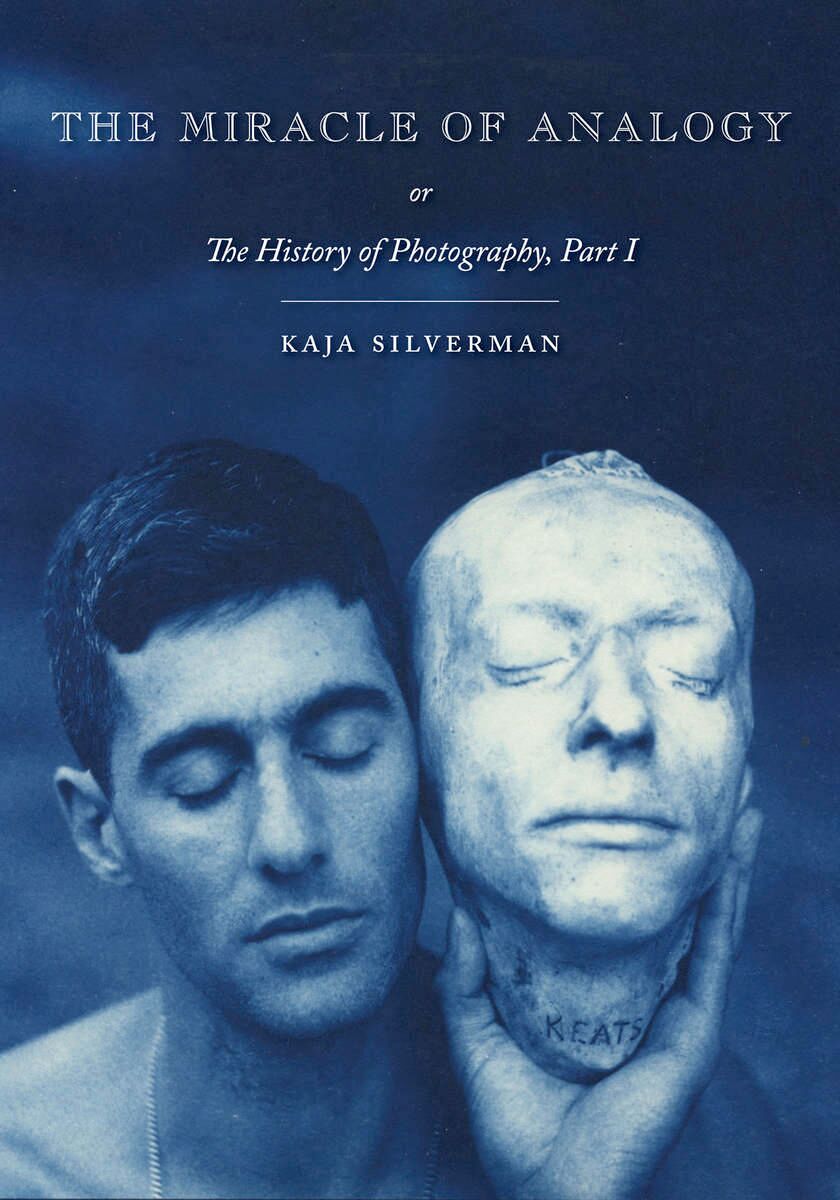
The Miracle of Analogy is the first of a two-volume reconceptualization of photography. It argues that photography originates in what is seen, rather than in the human eye or the camera lens, and that it is the world's primary way of revealing itself to us. Neither an index, representation, nor copy, as conventional studies would have it, the photographic image is an analogy. This principle obtains at every level of its being: a photograph analogizes its referent, the negative from which it is generated, every other print that is struck from that negative, and all of its digital \"offspring.\"
Photography is also unstoppably developmental, both at the level of the individual image and of medium. The photograph moves through time, in search of other \"kin,\" some of which may be visual, but others of which may be literary, architectural, philosophical, or literary. Finally, photography develops with us, and in response to us. It assumes historically legible forms, but when we divest them of their saving power, as we always seem to do, it goes elsewhere.
The present volume focuses on the nineteenth century and some of its contemporary progeny. It begins with the camera obscura, which morphed into chemical photography and lives on in digital form, and ends with Walter Benjamin. Key figures discussed along the way include Nicéphore Niépce, Louis Daguerre, William Fox-Talbot, Jeff Wall, and Joan Fontcuberta.
eBook

The Official Picture
Mandated to foster a sense of national cohesion The National Film Board of Canada's Still Photography Division was the country's official photographer during the mid-twentieth century. Like the Farm Security Administration and other agencies in the US, the NFB used photographs to serve the nation. Division photographers shot everything from official state functions to images of the routine events of daily life, producing some of the most dynamic photographs of the time, seen by millions of Canadians - and international audiences - in newspapers, magazines, exhibitions, and filmstrips. In The Official Picture, Carol Payne argues that the Still Photography Division played a significant role in Canadian nation-building during WWII and the two decades that followed. Payne examines key images, themes, and periods in the Division's history - including the depiction of women munitions workers, landscape photography in the 1950s and 60s, and portraits of Canadians during the Centennial in 1967 - to demonstrate how abstract concepts of nationhood and citizenship, as well as attitudes toward gender, class, linguistic identity, and conceptions of race were reproduced in photographs. The Official Picture looks closely at the work of many Division photographers from staff members Chris Lund and Gar Lunney during the 1940s and 1950s to the expressive documentary photography of Michel Lambeth, Michael Semak, and Pierre Gaudard, in the 1960s and after. The Division also produced a substantial body of Northern imagery documenting Inuit and Native peoples. Payne details how Inuit groups have turned to the archive in recent years in an effort to reaffirm their own cultural identity. For decades, the Still Photography Division served as the country's image bank, producing a government-endorsed \"official picture\" of Canada. A rich archival study, The Official Picture brings the hisotry of the Division, long overshadowed by the Board's cinematic divisions, to light.
eBook
The culture of photography in public space
A range of social, technological, and political issues converge in the rising anxieties and affect the practice, circulation, and consumption of public photography today. The Culture of Photography in Public Space collects essays and photographs that offer a new response to these restrictions, the events, and the anxieties that give rise to them.
eBook

Julia Margaret Cameron's \fancy subjects\
Julia Margaret Cameron's 'fancy subjects' is the first study of Cameron's allegorical photographs and the first to examine the intellectual connections of this imagery to British culture and politics of the 1860s and 1870s. Cameron chose allegory as her primary artistic device because it allowed her to use popular iconography to convey a latent or secondary meaning. She used the term 'fancy subjects' to embed moral, intellectual and political narratives in her photographs. This book reconnects her to the prominent minds in her circle who influenced her thinking, including Benjamin Jowett, George Grote and Henry Taylor, and demonstrates her awareness and responsiveness to popular graphic art, including textiles and wall paper, book illustrations and engravings from period folios, cartoons from Punch and line drawings from the Illustrated London News, cabinet photographs and autotype prints.
eBook

In looking back one learns to see : Marcel Proust and photography
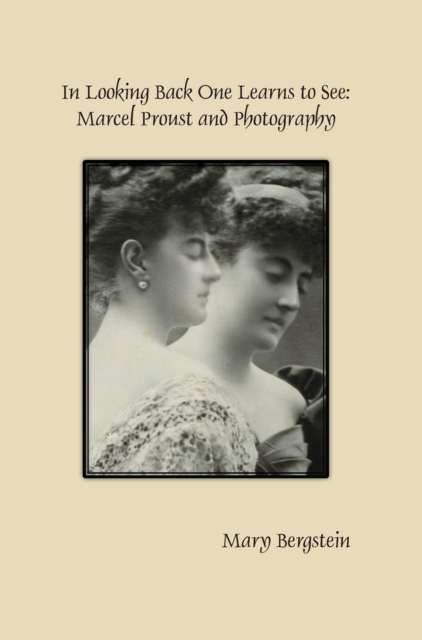
Marcel Proust offered the twentieth century a new psychology of memory and seeing. His novel In Search of Lost Time was written in the modern age of photography and art history. In Looking Back One Learns to See: Marcel Proust and Photography brings to light Proust's photographic resources and his visual imagination. This scrupulously researched book features over 100 illustrations.Distinguished cultural historian Mary Bergstein presents various kinds of photography and photographic systems with regard to the literature of Marcel Proust, including daguerreotypes, stereoscopic cards, cartes-de-visite, postcards, book illustrations, portraiture, medical photography, spirit photography, architectural photography, and Orientalism. Photographs associated with fin-de-siècle studies of Botticelli, Leonardo, and Vermeer, are considered in terms of Proust's tastes and the historiography of art.
eBook
When I was a photographer
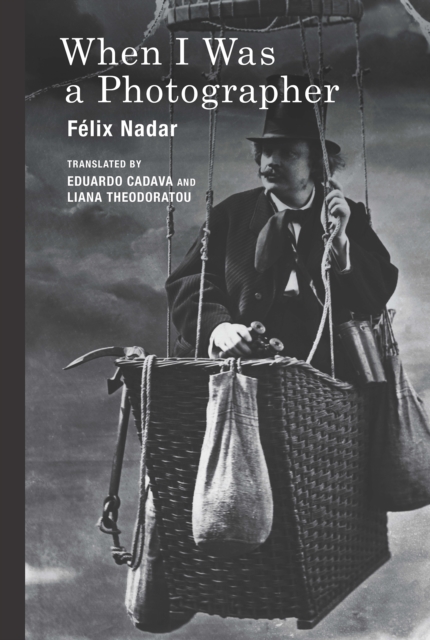
The first complete English translation of Nadar's intelligent and witty memoir, a series of vignettes that capture his experiences in the early days of photography.Celebrated nineteenth-century photographer-and writer, actor, caricaturist, inventor, and balloonist-Félix Nadar published this memoir of his photographic life in 1900 at the age of eighty. Composed as a series of vignettes (we might view them as a series of \"written photographs\"), this intelligent and witty book offers stories of Nadar's experiences in the early years of photography, memorable character sketches, and meditations on history. It is a classic work, cited by writers from Walter Benjamin to Rosalind Krauss. This is its first and only complete English translation.In When I Was a Photographer (Quand j'étais photographe), Nadar tells us about his descent into the sewers and catacombs of Paris, where he experimented with the use of artificial lighting, and his ascent into the skies over Paris in a hot air balloon, from which he took the first aerial photographs. He recounts his \"postal photography\" during the 1870-1871 Siege of Paris-an amazing scheme involving micrographic images and carrier pigeons. He describes technical innovations and important figures in photography, and offers a thoughtful consideration of society and culture; but he also writes entertainingly about such matters as Balzac's terror of being photographed, the impact of a photograph on a celebrated murder case, and the difference between male and female clients. Nadar's memoir captures, as surely as his photographs, traces of a vanished era.
eBook

Projecting citizenship : photography and belonging in the British Empire
In Projecting Citizenship , Gabrielle Moser gives a comprehensive account of an unusual project produced by the British government’s Colonial Office Visual Instruction Committee at the beginning of the twentieth century—a series of lantern slide lectures that combined geography education and photography to teach schoolchildren around the world what it meant to look and to feel like an imperial citizen.
Through detailed archival research and close readings, Moser elucidates the impact of this vast collection of photographs documenting the land and peoples of the British Empire, circulated between 1902 and 1945 in classrooms from Canada to Hong Kong, from the West Indies to Australia. Moser argues that these photographs played a central role in the invention and representation of imperial citizenship. She shows how citizenship became a photographable and teachable subject by tracing the intended readings of the images that the committee hoped to impart to viewers and analyzing how spectators may have used their encounters with these photographs for protest and resistance. Moser shows how the Visual Instruction Committee pictured citizenship within an everyday context and decenters the preoccupation with trauma, violence, atrocity, and conflict that characterizes much of the theoretical literature on visual citizenship and demonstrates that the relationship between photography and citizenship emerged not in the dismantling of modern colonialism but in its consolidation.
Interweaving political and economic history, history of pedagogy, and theories of citizenship with a consideration of the aesthetic and affective dimensions of viewing the lectures, Projecting Citizenship offers important insights into the social inequalities and visual language of colonial rule.
eBook

Seeing America
\"This vibrant and penetrating study. . . .opens a window on American culture between the world wars.\" -- Publishers Weekly Seeing America explores the camera work of five women who directed their visions toward influencing social policy and cultural theory.
eBook

Doing Family Photography
Family photography is now more popular than ever thanks to technological advances which allow the storing and sharing of vast numbers of pictures. Here, case study material drawn from the UK offers a deeper understanding of both domestic family photographs and their public display. Recent work in material culture studies, geography, and anthropology is used to approach photographs as objects embedded in social practices, which produce specific social positions, relations and effects.
eBook