
Catalogue Search | MBRL


Are you sure you want to remove the book from the shelf?

{{itemTitle}}
1,957
result(s) for
"POIDS"
Sort by:

Intermolecular and Surface Forces
This reference describes the role of various intermolecular and interparticle forces in determining the properties of simple systems such as gases, liquids and solids, with a special focus on more complex colloidal, polymeric and biological systems.
eBook
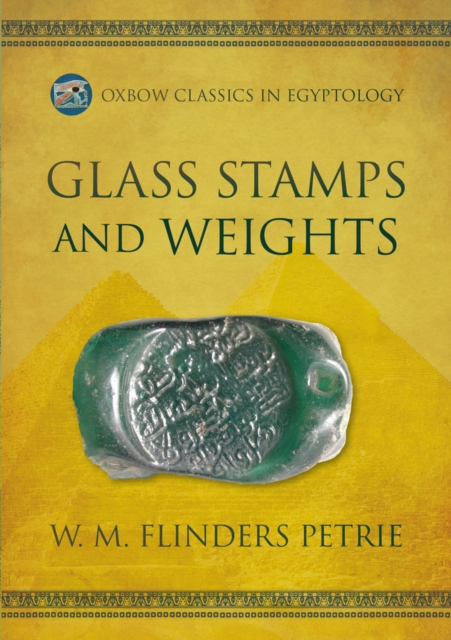
Glass Stamps and Weights
Facsimile of volume of detailed catalog prepared by Flinders Petrie on artifacts largely collected from his Egyptian explorations of a series of glass stamps of Egyptian manufacture that were used from the Roman to Abbasid period variously as tokens, counters, weights, or attached to glass cups as indications of measure. Various categories are identified and described, makers' names discussed, and weight standards considered. Over 700 stamps are illustrated both as photographs and transcribed line drawings.
eBook

Comparison of clinical and ultrasonographic estimation of foetal weight at term and their correlation with birth weight
The study compares the accuracy of clinical and ultrasonographic
estimation of foetal weight at term in predicting birth weight. It was
a prospective comparative study conducted in a tertiary hospital in
Abuja, Nigeria between May and August 2018. Three hundred pregnant
women planned for delivery were recruited. In-utero clinical estimation
of foetal weight was carried out using Dare's clinical method and
sonographic estimation using Hadlock 3 formula. The newborn babies were
weighed within 30 minutes of delivery. The difference in the accuracy
of the clinical method (75.3%) and the ultrasonographic method (82.3%)
was statistically significant (p-value=0.023). The accuracy of the
clinical method among parturients whose BMI were <30kg/m2 and
≥30.0kg/m2 were 83.5% and 68.5% respectively while that of the
ultrasonographic method were 85.2% and 80% respectively. We conclude
that ultrasonographic estimation of foetal weight is more accurate than
the clinical method. However clinical method may be used when an
ultrasound scan is not accessible. (Afr J Reprod Health 2021; 25[4]:
108-117).
L'étude compare l'exactitude de l'estimation clinique et
échographique du poids foetal à terme dans la prédiction
du poids à la naissance. Il s'agissait d'une étude
comparative prospective menée dans un hôpital tertiaire
à Abuja, au Nigeria, entre mai et août 2018. Trois cents
femmes enceintes dont l'accouchement était prévu ont
été recrutées. L'estimation clinique in utero du poids
foetal a été réalisée à l'aide de la
méthode clinique de Dare et l'estimation échographique à
l'aide de la formule Hadlock 3. Les nouveau-nés ont été
pesés dans les 30 minutes suivant l'accouchement. La
différence dans la précision de la méthode clinique
(75,3 %) et de la méthode échographique (82,3 %) était
statistiquement significative (valeur p = 0,023). La précision de
la méthode clinique chez les parturientes dont l'IMC était
<30kg/m2 et ≥30,0kg/m2 était respectivement de 83,5% et
68,5% tandis que celle de la méthode échographique était
de 85,2% et 80% respectivement. Nous concluons que l'estimation
échographique du poids foetal est plus précise que la
méthode clinique. Cependant, la méthode clinique peut
être utilisée lorsque l'échographie n'est pas
accessible. (Afr J Reprod Health 2021; 25[4]: 108-117).
Journal Article

Body weight and mortality among women
Background. The relation between body weight and overall mortality remains controversial despite considerable investigation. Methods. We examined the association between body-mass index (defined as the weight in kilograms divided by the square of the height in meters) and both overall mortality and mortality from specific causes in a cohort of 115,195 U.S. women enrolled in the prospective Nurses' Health Study. These women were 30 to 55 years of age and free of known cardiovascular disease and cancer in 1976. During 16 years of follow-up, we documented 4726 deaths, of which 881 were from cardiovascular disease, 2586 from cancer, and 1259 from other causes. Results. In analyses adjusted only for age, we observed a J-shaped relation between body-mass index and overall mortality. When women who had never smoked were examined separately, no increase in risk was observed among the leaner women, and a more direct relation between weight and mortality emerged (P for trend 0.001). In multivariate analyses of women who had never smoked and had recently had stable weight, in which the first four years of follow-up were excluded, the relative risks of death from all causes for increasing categories of body-mass index were as follows: body-mass index 19.0 (the reference category), relative risk
Journal Article

Preventing childhood obesity
Children's health has made tremendous strides over the past century. In general, life expectancy has increased by more than thirty years since 1900 and much of this improvement is due to the reduction of infant and early
childhood mortality. Given this trajectory toward a healthier childhood, we
begin the 21st-century with a shocking development-an epidemic of obesity
in children and youth. The increased number of obese children
throughout the U.S. during the past 25 years has led policymakers to rank
it as one of the most critical public health threats of the 21st-century.
Preventing Childhood Obesity provides a broad-based examination of the
nature, extent, and consequences of obesity in U.S. children and youth,
including the social, environmental, medical, and dietary factors responsible
for its increased prevalence. The book also offers a prevention-oriented
action plan that identifies the most promising array of short-term and
longer-term interventions, as well as recommendations for the roles and
responsibilities of numerous stakeholders in various sectors of society to
reduce its future occurrence. Preventing Childhood Obesity explores the
underlying causes of this serious health problem and the actions needed to
initiate, support, and sustain the societal and lifestyle changes that can
reverse the trend among our children and youth.
eBook

Editorial note on weight_length relations of fishes
Weight-length relations of fishes are useful for estimation of biomass from length observations, e.g., in fisheries or conservation research. Here we provide some guidance to authors of such papers, in order to facilitate the publication and review process
Journal Article
PBS newshour. Study shows costly weight loss drug may also cut risks of heart attacks
The nation's obesity epidemic is growing. Nearly 42 percent of all American adults are considered obese. Now, new findings about the FDA-approved weight-loss drug Wegovy may lead to even more demand for a medication that can be both life-changing and expensive. William Brangham reports.
Streaming Video

11 beta-Hydroxysteroid dehydrogenase type 1 knockout mice show attenuated glucocorticoid-inducible responses and resist hyperglycemia on obesity or stress
Glucocorticoid hormones, acting via nuclear receptors, regulate many metabolic processes, including hepatic gluconeogenesis. It recently has been recognized that intracellular glucocorticoid concentrations are determined not only by plasma hormone levels, but also by intracellular 11 beta-hydroxysteroid dehydrogenases (11 beta-HSDs), which interconvert active corticosterone (cortisol in humans) and inert 11-dehydrocorticosterone (cortisone in humans). 11 beta-HSD type 2, a dehydrogenase, thus excludes glucocorticoids from otherwise nonselective mineralocorticoid receptors in the kidney. Recent data suggest the type 1 isozyme (11 beta-HSD-1) may function as an 11 beta-reductase, regenerating active glucocorticoids from circulating inert 11-keto forms in specific tissues, notably the liver. To examine the importance of this enzyme isoform in vivo, mice were produced with targeted disruption of the 11 beta-HSD-1 gene. These mice were unable to convert inert 11-dehydrocorticosterone to corticosterone in vivo. Despite compensatory adrenal hyperplasia and increased adrenal secretion of corticosterone, on starvation homozygous mutants had attenuated activation of the key hepatic gluconeogenic enzymes glucose-6-phosphatase and phosphoenolpyruvate carboxykinase, presumably, because of relative intrahepatic glucocorticoid deficiency. The 11 beta-HSD-1 -/- mice were found to resist hyperglycemia provoked by obesity or stress. Attenuation of hepatic 11 beta-HSD-1 may provide a novel approach to the regulation of gluconeogenesis
Journal Article

Changes in Pre-Service Teacher Personal and Professional Attitudes Following a Comprehensive School Health Course
Comprehensive school health (CSH) is a framework that can support teachers in the delivery of health-related content as well as supporting health promotion within the school community. In this study, 222 Bachelor of Education students completed surveys at the beginning and end of a mandatory six-week course on CSH with a body weight-neutral focus. Following the course, participants had significantly positively increased attitudes toward CSH, self-efficacy to teach using CSH, and weight-related attitudes. These results support CSH as a useful framework for teachers in their future practice to improve the wellness of students, teachers, and the broader school community.
Journal Article

Core competencies for strategic grantmaking: lessons learned from the Innovation Strategy
Setting
The Public Health Agency of Canada Innovation Strategy (PHAC-IS) was a national strategic funding program designed to test, deliver, scale up and evaluate complex population health interventions to determine how they bring about change, the context in which they worked best and for which populations.
Intervention
The PHAC-IS experience provides an opportunity to reflect on the core competencies (skills, knowledge and attitudes) for strategic grantmakers to meet the goals of a national strategic funding program focused on population health intervention research.
Outcomes
A literature review, PHAC-IS content analysis, a document review and semi-structured interviews provided insight into a set of core competencies—organized by specific domains—that fostered a team focused on continuous improvement to apply learning and evidence from the funded projects to advance the goals of the strategic funding program.
Implications
Given its multiple complexities and based on the experience of the PHAC-IS team, it is proposed that funding programs aimed toward bringing change at individual and systems levels for population health promotion may draw upon a set of competencies incorporating the fields of strategic grantmaking; intervention research and evaluation; and public administration. The authors suggest that competency in the field of cultural safety is also pertinent to the successful management and leadership of public health programs, innovations and knowledge mobilization.
Journal Article