
Catalogue Search | MBRL


Are you sure you want to remove the book from the shelf?

{{itemTitle}}
14,312
result(s) for
"POLITICAL SCIENCE / Corruption "
Sort by:

Carbon criminals, climate crimes
Carbon Criminals, Climate Crimes analyzes the looming threats posed by climate change from a criminological perspective. It advances the field of green criminology through a examination of the criminal nature of catastrophic environmental harms resulting from the release of greenhouse gases. The book describes and explains what corporations in the fossil fuel industry, the U.S. government, and the international political community did, or failed to do, in relation to global warming. Carbon Criminals, Climate Crimes integrates research and theory from a wide variety of disciplines, to analyze four specific state-corporate climate crimes: continued extraction of fossil fuels and rising carbon emissions; political omission (failure) related to the mitigation of these emissions; socially organized climate change denial; and climate crimes of empire, which include militaristic forms of adaptation to climate disruption. The final chapter reviews policies that could mitigate greenhouse gas emissions, adapt to a warming world, and achieve climate justice.
eBook

Manufacturing versus Corruption
The objective of Manufacturing versus Corruption: Who Wins? is to use scientific methodologies and recommendations to motivate young people to participate in rendering the manufacturing ecosystem successful, by creating a socio-political stability amongst communities, counties, states, and nations in an unprecedented way. This book presents the reader with a practical approach and understanding of key scientific, industrial & managerial concepts that constitute a common policy narrative to be embraced, implemented, and executed across all governmental sectors. As a tool for policy makers, the authors demonstrate the need for a digital manufacturing economy grounded in complete transparency. With over 50 years of experience in engineering and manufacturing, Ramy Harik and Joseph Khoury are on a mission to bring together science, economics, technology, and policy making so all work in tandem for the greater good. Topics include digital manufacturing economies, manufacturing ring, importance of infrastructure and power for successful manufacturing, networks and internet, manufacturing policies, economic policies, education systems, water, importance of data in the manufacturing process, good manufacturing practices, and free-market manufacturing.
eBook

Sociology of Corruption
In Sociology of
Corruption , David Jancsics provides a fresh
approach to the study of corruption in Hungary, which once seemed
to be the most likely of the ex-communist bloc nations to catch up
to the West and is, according to many experts and scholars, a
country with a highly corrupt dynamic.
Based on data from 2022, Hungary is now the most corrupt member
state of the European Union. There is also a consensus among
experts that a small clique of corrupt political actors has
captured most Hungarian state institutions and a significant
portion of the business sector.
What fostered corruption in Hungary? What are the most typical
forms of corruption in this country? What do Hungarians think about
it? What is the role of prime minister Viktor Orbán in this?
Sociology of Corruption proposes a novel sociological
theory of corruption focusing on social status and relationships,
network structures, and power dynamics as important explanatory
factors of corrupt behavior. Although his focus is on Hungary,
Jancsics's findings are applicable to other nations and cultural
contexts.
eBook

Soft Corruption
New Jersey has long been a breeding ground for political corruption, and most of it is perfectly legal. Public officials accept favors from lobbyists, give paid positions to relatives, and rig the electoral process to favor their cronies in a system where campaign money is used to buy government results. Such unethical behavior is known as \"soft corruption,\" and former New Jersey legislator William E. Schluter has been fighting it for the past fifty years.In this searing personal narrative, the former state senator recounts his fight to expose and reform these acts of government misconduct. Not afraid to cite specific cases of soft corruption in New Jersey politics, he paints a vivid portrait of public servants who care more about political power and personal gain than the public good. By recounting events that he witnessed firsthand in the Garden State, he provides dramatic illustrations of ills that afflict American politics nationwide.As he identifies five main forms of soft corruption, Schluter diagnoses the state government's ethical malaise, and offers concrete policy suggestions for how it might be cured. Not simply a dive through the muck of New Jersey politics,Soft Corruptionis an important first step to reforming our nation's political system, a book that will inspire readers to demand that our elected officials can and must do better.Visit:www.softcorruption.com(http://www.softcorruption.com)
eBook

The Rhetorical Rise and Demise of Democracy in Russian Political Discourse, Volume 1
The 1983shootdown of KAL 007 and the 1986 Chernobyl nuclear accident dramatically changedthe Soviet Union in unpredictable ways. The Communist Party, which struggled tomaintain control of political messaging after the KAL crisis, lost control inthe aftermath of Chernobyl.
eBook
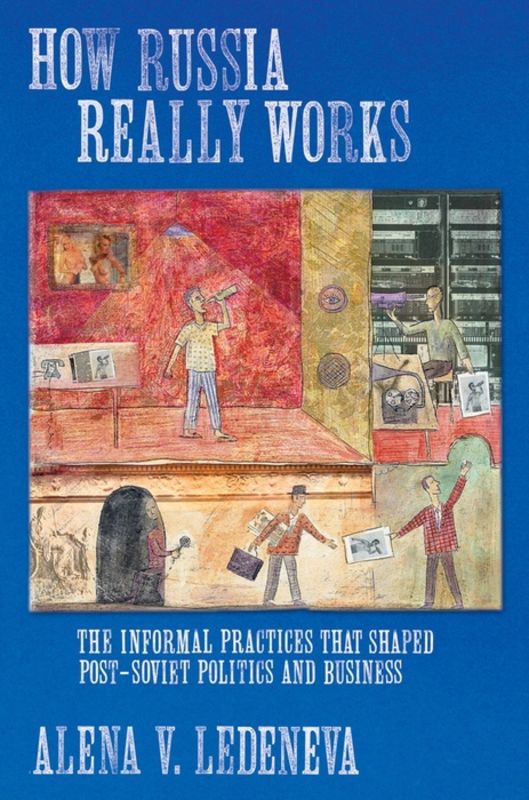
How Russia Really Works
During the Soviet era,blat-the use of personal networks for obtaining goods and services in short supply and for circumventing formal procedures-was necessary to compensate for the inefficiencies of socialism. The collapse of the Soviet Union produced a new generation of informal practices. InHow Russia Really Works, Alena V. Ledeneva explores practices in politics, business, media, and the legal sphere in Russia in the 1990s-from the hiring of firms to create negative publicity about one's competitors, to inventing novel schemes of tax evasion and engaging in \"alternative\" techniques of contract and law enforcement.
Ledeneva discovers ingenuity, wit, and vigor in these activities and argues that they simultaneously support and subvert formal institutions. They enable corporations, the media, politicians, and businessmen to operate in the post-Soviet labyrinth of legal and practical constraints but consistently undermine the spirit, if not the letter, of the law. The \"know-how\" Ledeneva describes in this book continues to operate today and is crucial to understanding contemporary Russia.
eBook

Corruption as a Last Resort
Why do ordinary people engage in corruption? In Corruption as a Last Resort, Kelly M. McMann contends that bureaucrats, poverty, and culture do not force individuals in Central Asia to pay bribes, use connections, or sell political support. Rather, corruption is a last resort when relatives, groups in society, the market, and formal government programs cannot provide essential goods and services. Using evidence from her long-term research in Kazakhstan and Kyrgyzstan, McMann shows that Islamic institutions, secular charities, entrepreneurs, and banks cannot provide the jobs and credit people need. This drives individuals to illicitly seek employment and loans from government officials.
eBook
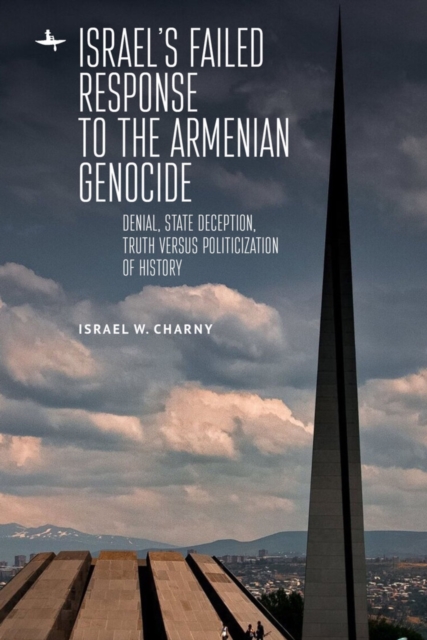
Israel's Failed Response to the Armenian Genocide
When the Turks demanded the cancellation of all lectures on the Armenian Genocide and that Armenian lecturers not be allowed to participate, the Israeli government followed suit, demanding the same of the then forthcoming First International Conference on the Holocaust and Genocide. This book follows the author's gutsy campaign against the Israeli government and his quest to successfully hold the conference in the face of censorship.
eBook

Corruption as a Last Resort
Why do ordinary people engage in corruption? Kelly M. McMann contends that bureaucrats, poverty, and culture do not force individuals in Central Asia to pay bribes, use connections, or sell political support. Rather, corruption is a last resort when relatives, groups in society, the market, and formal government programs cannot provide essential goods and services. Using evidence from her long-term research in Kazakhstan and Kyrgyzstan, McMann shows that Islamic institutions, secular charities, entrepreneurs, and banks cannot provide the jobs and credit people need. This drives individuals to illicitly seek employment and loans from government officials.
A leading cause of this resource scarcity is market reform, as demonstrated by McMann's analysis of these countries as well as of Uzbekistan and global data. Market reform without supporting institutions, such as credit registries and antimonopoly measures, limits the resources available from the market and societal groups. McMann finds that in these circumstances only those individuals who have affluent relatives have an alternative to corruption.By focusing on ordinary people, McMann offers a new understanding of corruption. Previously, our knowledge was largely restricted to government officials' role in illicit exchanges. From her novel approach comes a useful policy insight: supplying ordinary people with alternatives to corruption is a fundamental and important anticorruption strategy.
eBook
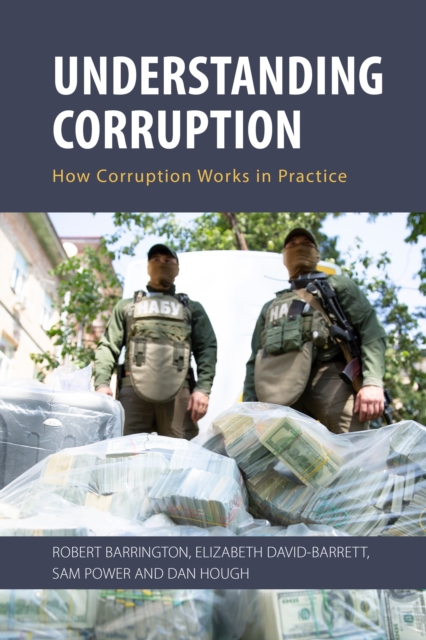
Understanding Corruption
Corruption takes many different forms and the systems that enable it are complex and challenging. To best understand corruption, one needs to examine how it operates in practice. Understanding Corruption tells the story of how corruption happens in the real world, illustrated through detailed case studies of the many different types of corruption that span the globe. Each case study follows a tried and tested analytical approach that provides key insights into the workings of corruption and the measures best used to tackle it. The case studies examined include examples of corporate bribery, political corruption, facilitation payments, cronyism, state capture, kleptocracy, asset recovery, offshore secrecy, reputation laundering and unexplained wealth, and actors include businesses, governments, politicians, governing bodies and public servants.
eBook