
Catalogue Search | MBRL


Are you sure you want to remove the book from the shelf?

{{itemTitle}}
297
result(s) for
"POLITICAL SCIENCE / Political Ideologies / Communism, Post-Communism "
Sort by:

Of Red Dragons and Evil Spirits
The collection of well researched chapters assesses the uses and misuses of history 25 years after the collapse of Soviet hegemony in Eastern Europe. As opposed to the emphasis on the recovery of memory or revival of national histories that seemed to be the prevelant historiographical approaches of the 1990s, the last decade has seen a particular set of narratives equating Nazism and communism and so providing opportunities to exonerate wartime collaboration, cast the nation as victim even when its government was allied with Germany, and acknowledge the Jewish Holocaust while obfuscating its meaning and significance. In their comparative analysis the authors are also interested in new practices of performing ‘Europeanness’. Therefore their presentations of Slovak, Hungarian, Romanian, Bulgarian, Serbian, Bosnian, Croatian and Slovenian post-communist memory politics move beyond the common national myths in order to provide a new insight into transnational interactions and exchanges in Europe in general. The juxtaposition of these politics, the processes in other parts of Europe, the modes of remembering shaped by displacement and the transnational memory practices enable a close encounter with the divergences and assess the potential of the formation of common, European memory practices.
eBook

Totalitarian Societies and Democratic Transition
This book is a tribute to the memory of Victor Zaslavsky (1937–2009), sociologist, émigré from the Soviet Union, Canadian citizen, public intellectual, and keen observer of Eastern Europe.In seventeen essays leading European, American and Russian scholars discuss the theory and the history of totalitarian society with a comparative approach. They revisit and reassess what Zaslavsky considered the most important project in the latter part of his life: the analysis of Eastern European - especially Soviet societies and their difficult “transition” after the fall of communism in 1989–91. The variety of the contributions reflects the diversity of specialists in the volume, but also reveals Zaslavsky’s gift: he surrounded himself with talented people from many different fields and disciplines.In line with Zaslavsky´s work and scholarly method, the book promotes new theoretical and methodological approaches to the concept of totalitarianism for understanding Soviet and East European societies, and the study of fascist and communist regimes in general.
eBook

Growing Up Communist in the Netherlands and Britain
Growing Up Communist in the Netherlands and Britain: Childhood, Political Activism, and Identity Formation documents communists' attempts, successful and otherwise, to overcome their isolation and to connect with the major social and political movements of the twentieth century. Communist parties in Britain and the Netherlands emerged from the Second World War expecting to play a significant role in post-war society, due to their domestic anti-fascist activities and to the part played by the Soviet Union in defeating fascism. The Cold War shattered these hopes, and isolated communist parties and their members. By analysing the accounts of communist children, Weesjes highlights their struggle to establish communities and define their identities within the specific cultural, social, and political frameworks of their countries.
eBook
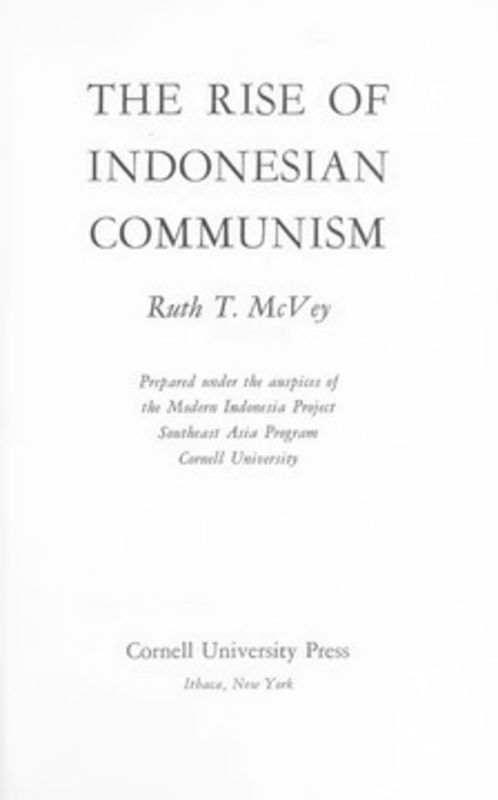
The Rise of Indonesian Communism
No detailed description available for \"The Rise of Indonesian Communism\".
eBook

The St. Louis Commune of 1877
Following the Civil War, large corporations emerged in the United
States and became intent on maximizing their power and profits at
all costs. Political corruption permeated American society as those
corporate entities grew and spread across the country, leaving
bribery and exploitation in their wake. This alliance between
corporate America and the political class came to a screeching halt
during the Great Railroad Strike of 1877, when the U.S. workers in
the railroad, mining, canal, and manufacturing industries called a
general strike against monopoly capitalism and brought the country
to an economic standstill. In The St. Louis Commune of
1877 Mark Kruger tells the riveting story of how workers
assumed political control in St. Louis, Missouri. Kruger examines
the roots of the St. Louis Commune-focusing on the 1848 German
revolution, the Paris Commune, and the First International. Not
only was 1877 the first instance of a general strike in U.S.
history; it was also the first time workers took control of a major
American city and the first time a city was ruled by a communist
party.
eBook
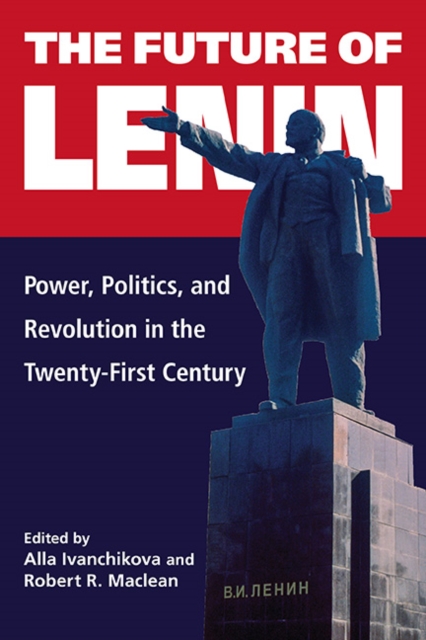
The Future of Lenin
Situated in a particular historical moment marked by the violent
crises of capitalism-the rise of the alt-right, the COVID-19
pandemic, and the Black Lives Matter movement- The Future of
Lenin collects essays by an international cohort of scholars
to assert Lenin's relevance for twenty-first-century politics and
thought. Taking different and sometimes opposing vantage points on
Lenin's value for the future, the contributions to this volume
reveal an unexpected Lenin, one who escapes the stale Cold War-era
discourse of demonization and hagiography. Instead, the
future-oriented Lenin in these pages comes to life as our
contemporary: an interlocutor who is surprisingly relevant for
Black and anticolonial struggles in the US and beyond; for building
the new Left; and for assessing Bernie Sanders' movement as well as
alt-right anti-statism. In short, Lenin's concrete development of
Marxism for his historical conditions may yet offer lessons for
revolutionaries to come.
eBook
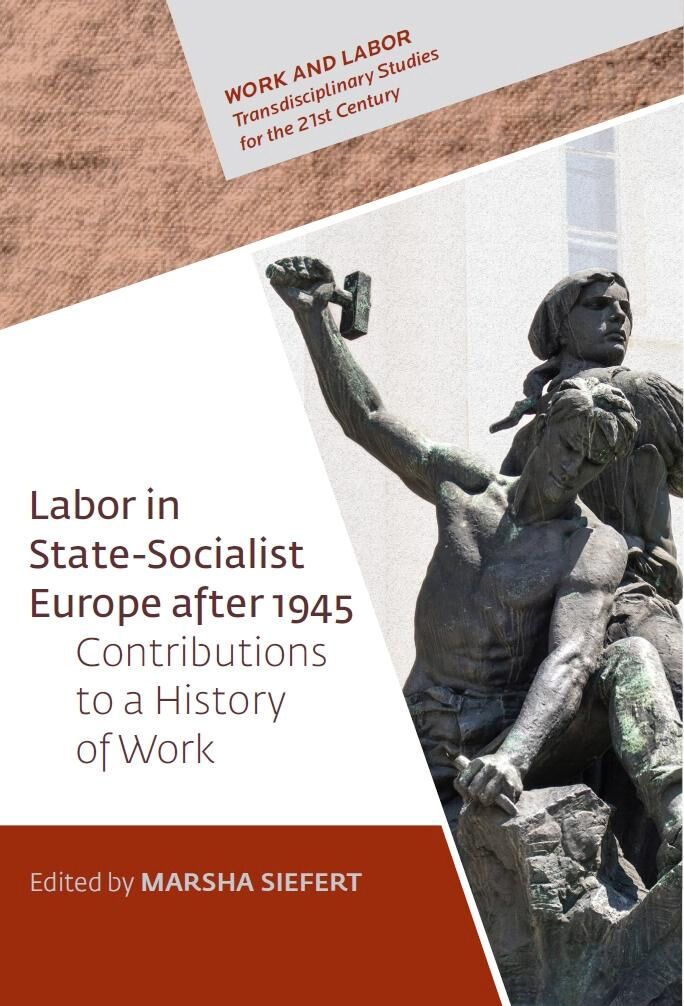
Labor in State-Socialist Europe, 1945–1989
Labor regimes under communism in East-Central Europe were complex, shifting, and ambiguous. This collection of sixteen essays offers new conceptual and empirical ways to understand their history from the end of World War II to 1989, and to think about how their experiences relate to debates about labor history, both European and global.
The authors reconsider the history of state socialism by re-examining the policies and problems of communist regimes and recovering the voices of the workers who built them. The contributors look at work and workers in Albania, Bulgaria, Czechoslovakia, the German Democratic Republic, Hungary, Poland, Romania, and Yugoslavia. They explore the often contentious relationship between politics and labor policy, dealing with diverse topics including workers' safety and risks; labor rights and protests; working women's politics and professions; migrant workers and social welfare; attempts to control workers' behavior and stem unemployment; and cases of incomplete, compromised, or even abandoned processes of proletarianization. Workers are presented as active agents in resisting and supporting changes in labor policies, in choosing allegiances, and in defining the very nature of work.
eBook

Time for socialism : dispatches from a world on fire, 2016-2021
\"Over the last four years, world-renowned economist Thomas Piketty documented his close observations on current events in a regular column in the French newspaper Le Monde. His pen captured the rise and fall of Trump, the drama of Brexit, Macron's ascendance to the French presidency, the unfolding of a global pandemic, and much else besides, always through the lens of Piketty's fight for a more equitable world. This collection brings together those articles and is prefaced by an extended introductory essay, in which Piketty argues that the time has come to support an inclusive and expansive conception of socialism as a counterweight against the hypercapitalism that defines our current economic ideology. These essays offer a first draft of history from one of the world's leading economists and public figures, detailing the struggle against inequalities and tax evasion, in favor of a federalist Europe and a globalization more respectful of work and the environment.\"
eBook

The Kurdish Women's Movement
'One the foremost writers and participants in the Kurdish women's movement' - Harsha WaliaThe Kurdish women's movement is at the heart of one of the most exciting revolutionary experiments in the world today: Rojava. Forged over decades of struggle, most recently in the fight against ISIS, Rojava embodies a radical commitment to ecology, democracy and women's liberation. But while striking images of Kurdish women in military fatigues proliferate, a true understanding of the women's movement remains elusive.Taking apart the superficial and Orientalist frameworks that dominate, Dilar Dirik offers instead an empirically rich account of the women's movement in Kurdistan. Drawing on original research and ethnographic fieldwork, she surveys the movement's historical origins, ideological evolution, and political practice over the past forty years. Going beyond abstract ideas, Dirik locates the movement's culture and ideology in its concrete work for women's revolution in the here and now.Taking the reader from the guerrilla camps in the mountains to radical women's academies and self-organised refugee camps, readers around the world can engage with the revolution in Kurdistan, both theoretically and practically, as a vital touchstone in the wider struggle for a militant anti-fascist, anti-capitalist feminist internationalism.
eBook