
Catalogue Search | MBRL


Are you sure you want to remove the book from the shelf?

{{itemTitle}}
7,839
result(s) for
"POLITICAL SCIENCE / Political Ideologies / Conservatism "
Sort by:

The architecture of neoliberalism : how contemporary architecture became an instrument of control and compliance
The Architecture of Neoliberalism pursues an uncompromising critique of the neoliberal turn in contemporary architecture.This book reveals how a self-styled parametric and post-critical architecture serves mechanisms of control and compliance while promoting itself, at the same time, as progressive.
eBook
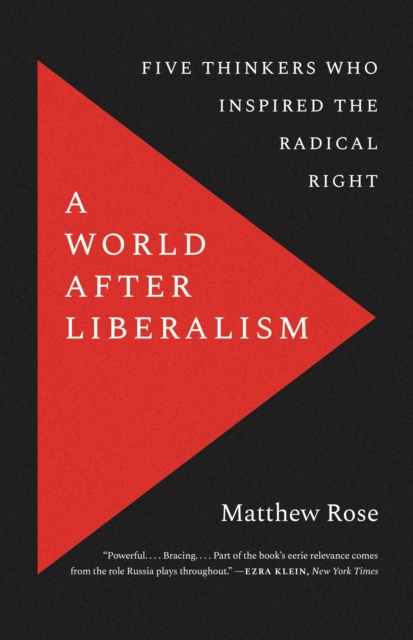
A World after Liberalism
A bracing account of liberalism's most radical critics,
introducing one of the most controversial movements of the
twentieth century In this eye-opening book, Matthew Rose
introduces us to one of the most controversial intellectual
movements of the twentieth century, the \"radical right,\" and
discusses its adherents' different attempts to imagine political
societies after the death or decline of liberalism. Questioning
democracy's most basic norms and practices, these critics rejected
ideas about human equality, minority rights, religious toleration,
and cultural pluralism not out of implicit biases, but out of
explicit principle. They disagree profoundly on race, religion,
economics, and political strategy, but they all agree that a
postliberal political life will soon be possible. Focusing on the
work of Oswald Spengler, Julius Evola, Francis Parker Yockey, Alain
de Benoist, and Samuel Francis, Rose shows how such thinkers are
animated by religious aspirations and anxieties that are ultimately
in tension with Christian teachings and the secular values those
teachings birthed in modernity.
eBook

The Social Contract in the Ruins
Most scholars who write on social contract and classical natural law perceive an irreconcilable tension between them. Social contract theory is widely considered the political-theoretic concomitant of modern philosophy. Against the regnant view, The Social Contract in the Ruins, argues that all attempts to ground political authority and obligation in agreement alone are logically self-defeating. Political authority and obligation require an antecedent moral ground. But this moral ground cannot be constructed by human agreement or created by sheer will—human or divine. All accounts of morality as constructed or made collapse into self-referential incoherence. Only an uncreated, real good can coherently ground political authority and obligation or the proposition that rightful government depends on the consent of the governed. Government by consent requires classical natural law for its very coherence.
eBook

Allow Me to Retort
Finalist, ABA Silver Gavel Award for Books The New York Times bestseller that has cemented Elie Mystals reputation as one of our sharpest and most acerbic legal minds After reading Allow Me to Retort, I want Elie Mystal to explain everything I dont understandquantum astrophysics, the infield fly rule, why people think Bob Dylan is a good singer . . . Michael Harriot, The Root Allow Me to Retort is an easily digestible argument about what rights we have, what rights Republicans are trying to take away, and how to stop them. Mystal explains how to protect the rights of women and people of color instead of cowering to the absolutism of gun owners and bigots. He explains the legal way to stop everything from police brutality to political gerrymandering, just by changing a few judges and justices. He strips out all of the fancy jargon conservatives like to hide behind and lays bare the truth of their project to keep America forever tethered to its slaveholding past. Mystal brings his trademark humor, expertise, and rhetorical flair to explain concepts like substantive due process and the right for the LGBTQ community to buy a cake, and to arm readers with the knowledge to defend themselves against conservatives who want everybody to live under the yoke of eighteenth-century white men. The same tactics Mystal uses to defend the idea of a fair and equal society on MSNBC and CNN are in this book, for anybody who wants to deploy them on social media. You dont need to be a legal scholar to understand your own rights. You dont need to accept the whites only theory of equality pushed by conservative judges. You can read this book to understand that the Constitution is trash, but doesnt have to be.
eBook

The ideology of the extreme right
Though the extreme right was not particularly successful in the 1999 European elections, it continues to be a major factor in the politics of Western Europe. This book, newly available in paperback, provides a comprehensive and detailed analysis of the extreme right in the Netherlands (Centrumdemocraten, Centrumpartij'86), Belgium (Vlaams Blok) and Germany (Die Republikaner, Deutsche Volksunion). On the basis of original research - using party literature - the author concludes that though individual parties might stress different issues, the extreme right party family does share a core ideology of nationalism, xenophobia, welfare chauvinism, and law and order. The author's research and conclusions clearly have broader implications for the study of the extreme right phenomenon and party ideology in general, and the book should be of interest to anyone studying or researching in the areas of European politics, political ideologies, political parties, extremism, racism or nationalism.
eBook
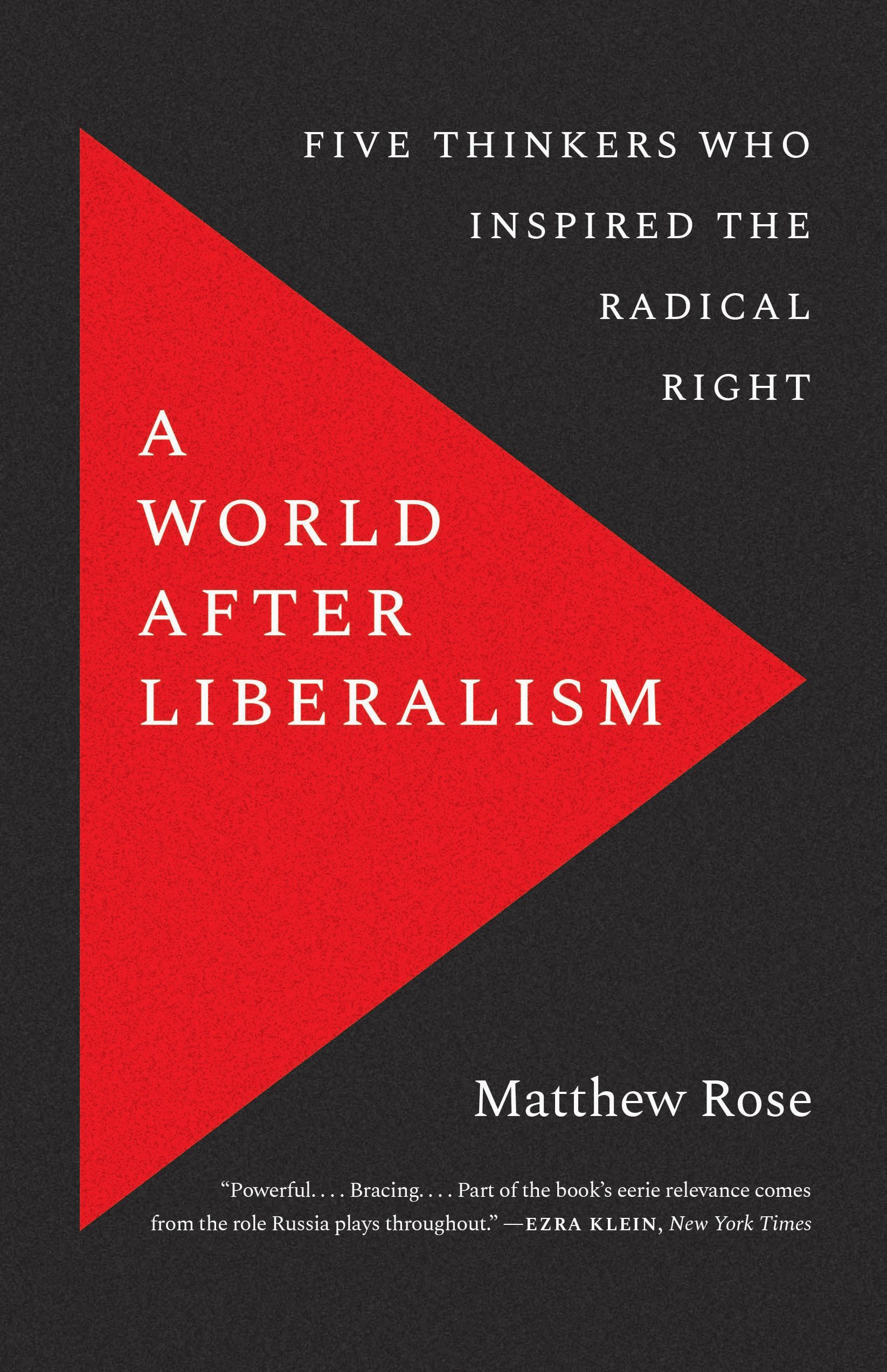

Underdog Politics
In the first comprehensive study of the subject in decades, political scholar Matthew Green disputes the conventional belief that the minority party in the U.S. House of Representatives is an unimportant political player. Examining the record of the House minority party from 1970 to the present, and drawing from a wide range of quantitative and qualitative data, Green shows how and why the minority seeks to influence legislative and political outcomes and demonstrates that the party's efforts can succeed. The result is a fascinating appreciation of what the House minority can do and why it does it, providing readers with new insights into the workings of this famously contentious legislative chamber.
eBook

Antifascism
A conservative take on the antifascist
movement
Antifascism argues that
current self-described antifascists are not struggling against a
reappearance of interwar fascism, and that the Left that claims to
be opposing fascism has little in common with any earlier Left,
except for some overlap with critical theorists of the Frankfurt
School. Paul Gottfried looks at antifascism from its roots
in early twentieth-century Europe to its American manifestation in
the present. The pivotal development for defining the present
political spectrum, he suggests, has been the replacement of a
recognizably Marxist Left by an intersectional one. Political and
ideological struggles have been configured around this new Left,
which has become a dominant force throughout the Western world.
Gottfried discusses the major changes undergone by antifascist
ideology since the 1960s, fascist and antifascist models of the
state and assumptions about human nature, nationalism versus
globalism, the antifascism of the American conservative
establishment, and Antifa in the United States. Also included is an
excursus on the theory of knowledge presented by Thomas Hobbes in
Leviathan .
In Antifascism Gottfried concludes that promoting a
fear of fascism today serves the interests of the powerful-in
particular, those in positions of political, journalistic, and
educational power who want to bully and isolate political
opponents. He points out the generous support given to the
intersectional Left by multinational capitalists and examines the
movement of the white working class in Europe-including former
members of Communist parties-toward the populist Right, suggesting
this shows a political dynamic that is different from the older
dialectic between Marxists and anti-Marxists.
eBook
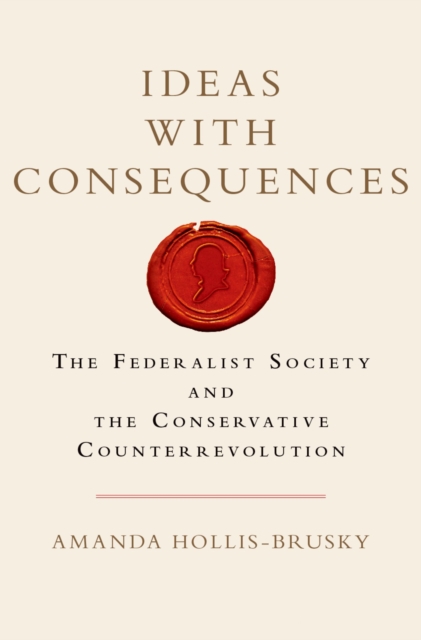
Ideas with Consequences
The Federalist Society, which has been in existence for three decades, is one of the most successful intellectual movements in modern American political history. It began as a relatively small organization of conservative lawyers dedicated to eroding the national government's power in virtually every arena except defense and enhancing the power of states vis-a-vis the federal government. It now has 40,000 members, including four Supreme Court Justices, dozens of federal judges, and every Republican attorney general since the 1980s. Indeed, when Republican presidents have nominated judges, Federalist Society membership has served as the seal of approval. The Federalist Society's influence on American politics is well-known. But how, exactly, does it exert that influence? In Ideas with Consequences, Amanda Hollis-Brusky brilliantly traces how the Federalist Society does this. Drawing on a database of over 2,000 original and primary documents, including personal interviews with Federalist Society members, archival data, and a complete database of transcripts from Federalist Society National Conferences, Hollis-Brusky constructs the most complete and social scientific narrative of Federalist Society influence to date. In doing so, she shows how the Federalist Society serves as the hub of a complex circulatory system and how the ideas it generates have become the lifeblood of the conservative movement. In the areas of gun rights, campaign finance, federalism, and state sovereignty, Hollis-Brusky demonstrates how the Federalist Society's investment in ideas, professional education, and networking has resulted in some of the most revolutionary Supreme Court decisions of the past three decades. Hollis-Brusky also illustrates the ways in which the Federalist Society network worked to help bring these constitutional revolutions about in the first place-by identifying, credentialing, and getting the right kinds of judges and Justices on the bench, and by reducing the stigma associated with once-radical constitutional theories. Not only a rich story of the conservative legal movement, Ideas with Consequences also develops a powerful social scientific framework for analyzing the ways in which interest groups and networks influence legal and judicial policy in America.
eBook