
Catalogue Search | MBRL


Are you sure you want to remove the book from the shelf?

{{itemTitle}}
2,620
result(s) for
"POLITICAL SCIENCE / Political Process / Leadership."
Sort by:

Presidents and the dissolution of the union
The United States witnessed an unprecedented failure of its political system in the mid-nineteenth century, resulting in a disastrous civil war that claimed the lives of an estimated 750,000 Americans. In his other acclaimed books about the American presidency, Fred Greenstein assesses the personal strengths and weaknesses of presidents from George Washington to Barack Obama. Here, he evaluates the leadership styles of the Civil War-era presidents.
Using his trademark no-nonsense approach, Greenstein looks at the presidential qualities of James K. Polk, Zachary Taylor, Millard Fillmore, Franklin Pierce, James Buchanan, and Abraham Lincoln. For each president, he provides a concise history of the man's life and presidency, and evaluates him in the areas of public communication, organizational capacity, political skill, policy vision, cognitive style, and emotional intelligence. Greenstein sheds light on why Buchanan is justly ranked as perhaps the worst president in the nation's history, how Pierce helped set the stage for the collapse of the Union and the bloodiest war America had ever experienced, and why Lincoln is still considered the consummate American leader to this day.
Presidents and the Dissolution of the Unionreveals what enabled some of these presidents, like Lincoln and Polk, to meet the challenges of their times--and what caused others to fail.
eBook

Russia's postcolonial identity : a subaltern empire in a Eurocentric world
01
02
This book applies postcolonial theory to Russia by looking at it as a subaltern empire. It pushes postcolonial studies and constructivist International Relations towards an uneasy dialogue, which produces tensions and reveals multiple blind spots in both approaches. A critical re-evaluation of the existing literature enables the author to produce a comprehensive account of how Russia's position in the international system has conditioned its domestic development, and how this in turn generated specific foreign policy outcomes. Having internalised the Eurocentric worldview, Russia is nevertheless different from the core European countries. This difference is not determined by 'culture', but rather by uneven and combined development of global capitalism, in which Russia is integrated as a semi-peripheral nation. The Russian state has colonised its own periphery on behalf of the Western core, but has never been able to overcome economic and normative dependency on the West. The peculiar dialectic of the subaltern and the imperial during the post-Soviet period has given rise to a regime which claims to defend 'genuine Russian values', while in fact there is nothing behind this new traditionalism but the negation of Western hegemony. Trying to 'defend' the nation from the postulated threat of Western interventionism, the regime engages in a disavowal of politics and thus suppresses popular subjectivity. The only political subject that remains on the horizon of Russian politics is the West, while the Russian people, as any other subaltern, are being spoken for, and thus silenced, by the country's Eurocentric elites and the Western intellectuals.
02
02
Pushing postcolonial studies and constructivist International Relations towards an uneasy dialogue, this book looks at Russia as a subaltern empire. It demonstrates how the dialectic of the subaltern and the imperial has produced a radically anti-Western regime, which nevertheless remains locked in a Eurocentric outlook.
04
02
1. The Postcolonial and the Imperial in the Space and Time of World Politics
2. Russia in/and Europe: Sources of Ambiguity
3. Material Dependency: Postcolonialism, Development and Russia's 'Backwardness'
4. Normative Dependency: Putinite Paleoconservatism and the Missing Peasant
5 The People are Speechless: Russia, the West and the Voice of the Subaltern
6. Conclusion
13
02
Viatcheslav Morozov is Professor of EU-Russia Studies at the University of Tartu. Before moving to Estonia in 2010, he taught for thirteen years at the St Petersburg State University, Russia. He is the author of Russia and the Others: Identity and Boundaries of a Political Communit y and the editor of Decentring the West: The Idea of Democracy and the Struggle for Hegemony .
eBook
Bob Crow
Bob Crow was the most well-known and most militant union leader of his generation. This biography examines his leadership of the RMT union, examining and exposing a number of popular myths created about him by political opponents. Using the schema of his personal characteristics (including his public persona), his politics and the power of his members, it explains how and why he was able to punch above his weight in industrial relations and on the political stage, helping the small RMT union become as influential as many of its much larger counterparts. As RMT leader, he oversaw a rise in membership, a more assertive and successful bargaining approach, and led the realignment of radical left politics in response to the hegemony of 'new' Labour. While he failed to unite all socialists into one new party, he established himself as the leading popular critic of neo-liberalism, 'new' Labour and the age of austerity.
eBook

Shared leadership : reframing the hows and whys of leadership
Shared Leadership: Reframing the Hows and Whys of Leadership brings together the foremost thinkers on the subject and is the first book of its kind to address the conceptual, methodological, and practical issues for shared leadership. Its aim is to advance understanding along many dimensions of the shared leadership phenomenon: its dynamics, moderators, appropriate settings, facilitating factors, contingencies, measurement, practice implications, and directions for the future. The volume provides a realistic and practical discussion of the benefits, as well as the risks and problems, associated with shared leadership. It will serve as an indispensable guide for researchers and practicing managers in identifying where and when shared leadership may be appropriate for organizations and teams.
eBook

War powers
Armed interventions in Libya, Haiti, Iraq, Vietnam, and Korea challenged the US president and Congress with a core question of constitutional interpretation: does the president, or Congress, have constitutional authority to take the country to war? War Powers argues that the Constitution doesn't offer a single legal answer to that question. But its structure and values indicate a vision of a well-functioning constitutional politics, one that enables the branches of government themselves to generate good answers to this question for the circumstances of their own times.
Mariah Zeisberg shows that what matters is not that the branches enact the same constitutional settlement for all conditions, but instead how well they bring their distinctive governing capacities to bear on their interpretive work in context. Because the branches legitimately approach constitutional questions in different ways, interpretive conflicts between them can sometimes indicate a successful rather than deficient interpretive politics. Zeisberg argues for a set of distinctive constitutional standards for evaluating the branches and their relationship to one another, and she demonstrates how observers and officials can use those standards to evaluate the branches' constitutional politics. With cases ranging from the Mexican War and World War II to the Cold War, Cuban Missile Crisis, and Iran-Contra scandal, War Powers reinterprets central controversies of war powers scholarship and advances a new way of evaluating the constitutional behavior of officials outside of the judiciary.
eBook

A feminist in the White House : Midge Costanza, the Carter years, and America's culture wars
Midge Costanza was one of the unlikeliest of White House insiders. But for a time during the seventies, this \"loud-mouthed, pushy little broad\" with no college education was a prominent focal point of the American culture wars. In this book, Doreen J. Mattingly draws on Costanza's life to tell a wider, but heretofore neglected, story of the hopeful yet fraught era of gender politics in late 70s Washington - a history that is not just important to US women's and presidential history but which continues to resonate in politics today.
eBook

Hume's Politics
Hume's Politicsprovides a comprehensive examination of David Hume's political theory, and is the first book to focus on Hume's monumentalHistory of Englandas the key to his distinctly political ideas. Andrew Sabl argues that conventions of authority are the main building blocks of Humean politics, and explores how theHistoryaddresses political change and disequilibrium through a dynamic treatment of coordination problems. Dynamic coordination, as employed in Hume's work, explains how conventions of political authority arise, change, adapt to new social and economic conditions, improve or decay, and die. Sabl shows how Humean constitutional conservatism need not hinder--and may in fact facilitate--change and improvement in economic, social, and cultural life. He also identifies how Humean liberalism can offer a systematic alternative to neo-Kantian approaches to politics and liberal theory.
At once scholarly and accessibly written,Hume's Politicsbuilds bridges between political theory and political science. It treats issues of concern to both fields, including the prehistory of political coordination, the obstacles that must be overcome in order for citizens to see themselves as sharing common political interests, the close and counterintuitive relationship between governmental authority and civic allegiance, the strategic ethics of political crisis and constitutional change, and the ways in which the biases and injustices endemic to executive power can be corrected by legislative contestation and debate.
eBook

The Campaign Manager
Successful campaign manager and three-time mayor of Ashland, Oregon, Catherine Shaw presents a clear and concise, must-have handbook for navigating local campaigns. The Campaign Manager gives political novices and veterans alike a comprehensive and detailed plan for organizing, funding, publicizing, and winning local political campaigns. Finding the right message and targeting the right voters are clearly explained through specific examples, anecdotes, and illustrations. Shaw also provides in-depth information on assembling campaign teams, precinct analysis, canvassing, and dealing with the media. Significant features of the fifth edition include an entirely new chapter on social media and its influence on campaigning, new coverage on how to put together a campaign plan, and a new appendix on how to campaign on a budget.
eBook
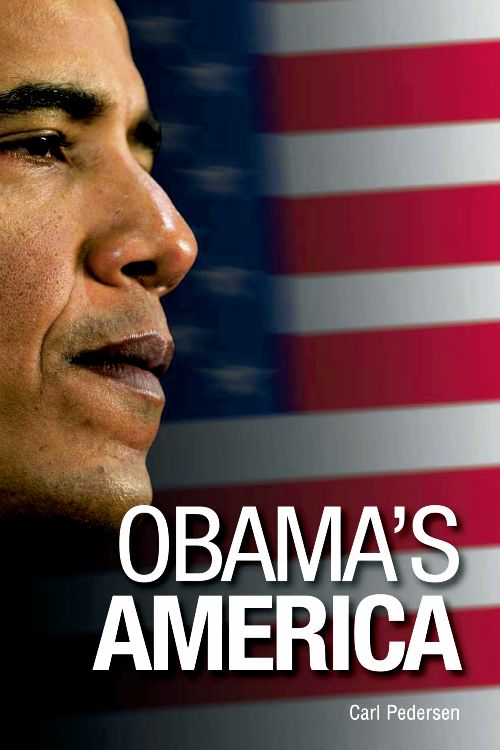
Obama's America
The year 2008 will be remembered as the moment when the US elected its first African American president. This revealing book seeks to place the extraordinary rise of Barack Obama within the larger context of a possible historic political realignment in the US and of limits to US power in the world.For 2008 also offered a number of history lessons that will surely inform studies of the election and its aftermath. Carl Pedersen's book is an attempt to engage with these history lessons. It examines the demographic changes that will likely change the nature of American national identity. And it assesses the extent to which the grassroots organizations that were crucial in winning the election for Obama may influence the way he will govern the nation. Obama's America also attempts to map out the contours of an Obama Doctrine in foreign policy by looking at how his identity has shaped his views on the role of the US in the world and how he, in turn, has been influenced by his foreign policy advisers. It examines the challenges Obama faces in confronting a post-American world in which the US is no longer the sole superpower. Will Obama be a transformative president?
eBook

Political hypocrisy : the mask of power, from Hobbes to Orwell and beyond
What kind of hypocrite should voters choose as their next leader? The question seems utterly cynical. But, as David Runciman suggests, it is actually much more cynical to pretend that politics can ever be completely sincere. Political Hypocrisy is a timely, and timeless, book on the problems of sincerity and truth in politics, and how we can deal with them without slipping into hypocrisy ourselves. Runciman draws on the work of some of the great truth-tellers in modern political thought--Hobbes, Mandeville, Jefferson, Bentham, Sidgwick, and Orwell--and applies his ideas to different kinds of hypocritical politicians from Oliver Cromwell to Hillary Clinton. He argues that we should accept hypocrisy as a fact of politics--the most dangerous form of political hypocrisy is to claim to have a politics without hypocrisy. Featuring a new foreword that takes the story up to Donald Trump, this book examines why, instead of vainly searching for authentic politicians, we should try to distinguish between harmless and harmful hypocrisies and worry only about the most damaging varieties.
eBook