
Catalogue Search | MBRL


Are you sure you want to remove the book from the shelf?

{{itemTitle}}
3,054
result(s) for
"POLITICAL SCIENCE - World - African"
Sort by:

Until we have won our liberty : South Africa after apartheid
\"A fresh and compelling account of South Africa's post-Apartheid democracyAt a time when many democracies are under strain around the world, Until We Have Won Our Liberty shines new light on the signal achievements of one of the contemporary era's most closely watched transitions away from minority rule. South Africa's democratic development has been messy, fiercely contested, and sometimes violent. But as Evan Lieberman argues, it has also offered a voice to the voiceless, unprecedented levels of government accountability, and tangible improvements in quality of life.Lieberman opens with a first-hand account of the hard-fought 2019 national election, and how it played out in Mogale City, a post-Apartheid municipality created from Black African townships and White Afrikaner suburbs. From this launching point, he examines the complexities of South Africa's multiracial society and the unprecedented democratic experiment that began with the election of Nelson Mandela in 1994. While acknowledging the enormous challenges many South Africans continue to face-including unemployment, inequality, and discrimination-Lieberman draws on the country's history and the experience of comparable countries to demonstrate that elected Black-led governments have, without resorting to political extremism, improved the lives of millions. In the context of open and competitive politics, citizens have gained access to housing, basic services, and dignified treatment to a greater extent than during any prior period.Countering much of the conventional wisdom about contemporary South Africa, Until We Have Won Our Liberty offers hope for the enduring impact of democratic ideals\"-- Provided by publisher.
BOOK

Post-colonial Cameroon
In this unique volume, leading scholars examine how Cameroonians organize and experience their lives under Cameroonian leadership and local responses to that leadership. The volume offers essential case studies that allow us to examine the lives of ordinary people in post-colonial Africa through five lenses: politics, society and culture, economy, international relations, and migration. It places the nation’s contemporary challenges within a broader political, economic, and socio-cultural context, and uses that to make recommendations for future directions. The book also celebrates areas in which the country has done well and calls on its citizens to build on those achievements. This volume is forward-looking and as such raises important questions about issues of development, ethnicity, wealth, poverty, and class.
eBook

Understanding Eritrea : inside Africa's most repressive state
The most secretive, repressive state in Africa is hemorrhaging its citizens. In some months as many Eritreans as Syrians arrive on European shores, yet the country is not convulsed by civil war. Young men and women risk all to escape. Many do not survive - their bones littering the Sahara; their bodies floating in the Mediterranean. Still they flee, to avoid permanent military service and a future without hope. As the United Nations reported: 'Thousands of conscripts are subjected to forced labor that effectively abuses, exploits and enslaves them for years.' Eritreans fought for their freedom from Ethiopia for thirty years, only to have their revered leader turn on his own people. Independent since 1993, the country has no constitution and no parliament. No budget has ever been published. Elections have never been held and opponents languish in jail. International organizations find it next to impossible to work in the country. Nor is it just a domestic issue. By supporting armed insurrection in neighboring states it has destabilized the Horn of Africa. Eritrea is involved in the Yemeni civil war, while the regime backs rebel movements in Somalia, Ethiopia and Djibouti. This book tells the untold story of how this tiny nation became a world pariah.
Book

The Ideological Scramble for Africa
In The Ideological Scramble for
Africa , Frank Gerits examines how African
leaders in the 1950s and 1960s crafted an anticolonial
modernization project. Rather than choose Cold War sides between
East and West, anticolonial nationalists worked to reverse the
psychological and cultural destruction of colonialism.
Kwame Nkrumah's African Union was envisioned as a federation of
liberation to challenge the extant imperial forces: the US empire
of liberty, the Soviet empire of equality, and the European empires
of exploitation. In the 1950s, the goal of proving the potency of a
pan-African ideology shaped the agenda of the Bandung Conference
and Ghana's support for African liberation, while also determining
what was at stake in the Congo crisis and in the fight against
white minority rule in southern and eastern Africa. In the 1960s,
the attempt to remake African psychology was abandoned, and
socioeconomic development came into focus. Anticolonial
nationalists did not simply resist or utilize imperial and Cold War
pressures but drew strength from the example of the Haitian
Revolution of 1791, in which Toussaint Louverture demanded the
universal application of Europe's Enlightenment values. The
liberationists of the postwar period wanted to redesign society in
the image of the revolution that had created them.
The Ideological Scramble for Africa demonstrates that
the Cold War struggle between capitalism and Communism was only one
of two ideological struggles that picked up speed after 1945; the
battle between liberation and imperialism proved to be more
enduring.
eBook

Amazigh Politics in the Wake of the Arab Spring
On television, the Arab Spring took place in Cairo, Tunis, and
the city-states of the Persian Gulf. Yet the drama of 2010, and the
decade of subsequent activism, extended beyond the cities-indeed,
beyond Arabs. Bruce Maddy-Weitzman brings to light the sustained
post-Arab Spring political movement of North Africa's Amazigh
people.
The Amazigh movement did not begin with the Arab Spring, but it
has changed significantly since then. Amazigh Politics in the
Wake of the Arab Spring details the increasingly material
goals of Amazigh activism, as protest has shifted from the arena of
ethnocultural recognition to that of legal and socioeconomic
equality. Amazigh communities responded to the struggles for
freedom around them by pressing territorial and constitutional
claims while rejecting official discrimination and neglect. Arab
activists, steeped in postcolonial nationalism and protective of
their hegemonic position, largely refused their support, yet
flailing regimes were forced to respond to sharpening Amazigh
demands or else jeopardize their threadbare legitimacy. Today the
Amazigh question looms larger than ever, as North African
governments find they can no longer ignore the movement's
interests.
eBook

Independent Africa
Independent Africa explores Africa's political economy
in the first two full decades of independence through the joint
projects of nation-building, economic development, and
international relations.
Drawing on the political careers of four heads of states: Kwame
Nkrumah of Ghana, Ahmed Sékou Touré of Guinea, Léopold Sédar
Senghor, and Julius Kambarage Nyerere of Tanzania, Independent
Africa engages four major themes: what does it mean to
construct an African nation-state and what should an African
nation-state look like; how does one grow a tropical economy
emerging from European colonialism; how to explore an indigenous
model of economic development, a \"third way,\" in the context of a
Cold War that had divided the world into two camps; and how to
leverage internal resources and external opportunities to diversify
agricultural economies and industrialize.
Combining aspects of history, economics, and political science,
Independent Africa examines the important connections
between the first generation of African leaders, and the shared
ideas that informed their endeavors at nation-building and
worldmaking.
eBook

Neoliberal moral economy
This book offers a fresh take on a major question of global debate: what explains the rise in economic fraud in so many societies around the world? The author argues that the current age of fraud is an outcome of not only political-economic but also moral transformations that have taken place in societies reshaped by neoliberalism. Using the case of Uganda, the book traces these socio-cultural and especially moral repercussions of embedding neoliberalism. Uganda offers an important case of investigation for three reasons: the high level of foreign intervention by donors, aid agencies, international organisations, NGOs and corporations that have tried to produce the first fully-fledged market society in Africa there; the country’s reputation as having adopted neoliberal reforms most extensively, and the intensification of fraud in many sectors of the economy since the early 2000s. The book explores the rise and operation of the neoliberal moral economy and its world of hard and fraudulent practices. It analyses especially the moral-economic character of agricultural produce markets in eastern Uganda. It shows that neoliberal moral restructuring is a highly political, contested and conflict-ridden process, predominantly works via recalibrating the political-economic structure of a country, and deeply affects how people think and go about earning a living and treat others with whom they do business. The book offers an in-depth, data-based analysis of the moral climate of a market society in motion and in so doing offers insights and lessons for elsewhere in the Global South and North.
eBook
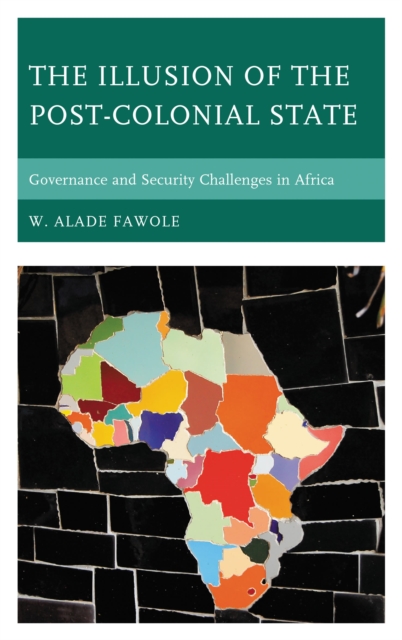
The illusion of the post-colonial state
This book challenges the long-held conventional wisdom that Africa is a post-colonial society of sovereign nation-states despite the outward attributes of statehood: demarcated territories, permanent populations, governments, national currencies, police, and armed forces. While it is true that African nation-states have been gifted flag independence by their respective colonial masters, few have reached fully developed status as a secure nation-state. Most African nation-states have, since independence, been grappling with the crisis of state-building, nation-building, governance, and myriad security challenges which have been chronically exacerbated by the dynamics of the post-Cold War era. To focus merely on the agency of the African political elite and their inability to sustain functional modern nation-states misses the point. The central argument of the book is that an understanding of Africa’s contemporary governance and security challenges requires us to historicize the discourse surrounding nation-building and state-building throughout Africa.
eBook
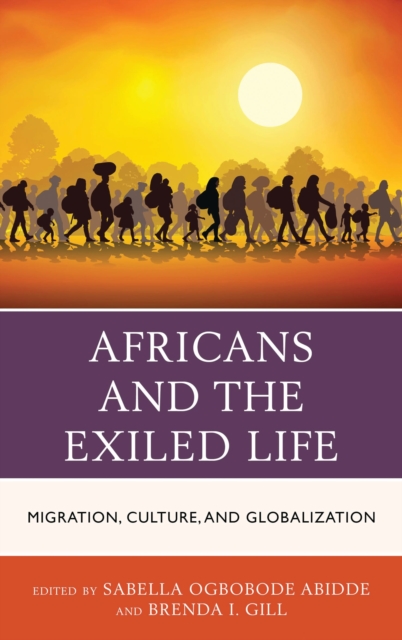
Africans and the exiled life
Since their early beginning in Africa as foragers, hunters and gatherers, humans have been on the move. In modern times, their movements have been compelled by geographical, economic, political, cultural, social and personal reasons. However, beginning in the second-half of the twentieth century and into the twenty-first century their reasons for and pattern of migration have been largely influenced by globalization. Globalization, by its very nature, cuts across virtually every aspect of the human life and human society. And especially in the United States, African immigrants are subject to the undercurrents of globalization – particularly in the areas of culture, religion, interpersonal relationships, and the assimilation and acculturation process. Relying on the vast theoretical and practical experience of academics and public intellectuals across three continents, this book succinctly interrogates some of the pull/push factors of migration, the challenges of globalizing forces, and the daily reality of relocation. The everyday reality and experiences of blacks in the diaspora (Latin America, Caribbean, and Europe) are also part of the discourse and the subject matters are approached from different perspectives and paradigms. Africans and the Exiled Life, therefore, is a compelling and rich addition to the ongoing global debate and understanding of migration and exile.
eBook

Colonial Extractions
Challenging Canada’s image as a humane, enlightened global actor, Colonial Extractions examines the troubling racial logic that underpins Canadian mining operations in several African countries. Drawing on colonial, postcolonial, and critical race theory, Paula Butler investigates Canadian mining activities and the discourses which serve to legitimate this work.
Through a series of interviews with senior personnel of businesses with mining operations in Africa, Butler identifies a continuation of the same colonialist mindset that saw resource ownership and racial dominance over Indigenous peoples in Canada as part of Canada’s nation-building project. Financially, culturally, and psychologically, Canadians are invested in extracting resource-based wealth in the Global South, and – as Butler’s analysis of Canada’s influence over South Africa’s first post-apartheid mining legislation shows – they look to legitimize that extraction through neoliberal legal frameworks and a powerful national myth of benevolence.
Complementing analyses of the industry through political economy or critical development studies, Colonial Extractions is a powerful and unsettling critique of the cultural dimension of Canada’s mining industry overseas.
eBook