
Catalogue Search | MBRL


Are you sure you want to remove the book from the shelf?

{{itemTitle}}
419,172
result(s) for
"POLITICIAN"
Sort by:

Friendship and Politics in Post-Revolutionary France
In Friendship and Politics in Post-Revolutionary France, Sarah Horowitz brings together the political and cultural history of post-revolutionary France to illuminate how French society responded to and recovered from the upheaval of the French Revolution. The Revolution led to a heightened sense of distrust and divided the nation along ideological lines. In the wake of the Terror, many began to express concerns about the atomization of French society. Friendship, though, was regarded as one bond that could restore trust and cohesion. Friends relied on each other to serve as confidantes and men and women described friendship as a site of both pleasure and connection. Because trust and cohesion were necessary to the functioning of post-revolutionary parliamentary life, politicians turned to friends and ideas about friendship to create this solidarity. Relying on detailed analyses of politicians’ social networks, new tools from arising from the digital humanities, and examinations of their behind-the-scenes political transactions, Horowitz makes clear the connection between politics and emotions in the early nineteenth century, and she reevaluates the role of women in political life by showing the ways in which the personal was the political in the post-revolutionary era.
eBook

Democracy in America? Partisanship, Polarization, and the Robustness of Support for Democracy in the United States
Is support for democracy in the United States robust enough to deter undemocratic behavior by elected politicians? We develop a model of the public as a democratic check and evaluate it using two empirical strategies: an original, nationally representative candidate-choice experiment in which some politicians take positions that violate key democratic principles, and a natural experiment that occurred during Montana’s 2017 special election for the U.S. House. Our research design allows us to infer Americans’ willingness to trade-off democratic principles for other valid but potentially conflicting considerations such as political ideology, partisan loyalty, and policy preferences. We find the U.S. public’s viability as a democratic check to be strikingly limited: only a small fraction of Americans prioritize democratic principles in their electoral choices, and their tendency to do so is decreasing in several measures of polarization, including the strength of partisanship, policy extremism, and candidate platform divergence. Our findings echo classic arguments about the importance of political moderation and cross-cutting cleavages for democratic stability and highlight the dangers that polarization represents for democracy.
Journal Article
Acting Capitol Police chief asked about officer who died by suicide after Capitol attack
In a Feb. 25 hearing, Rep. Jennifer Wexton (D-Va.) asked acting Capitol Police chief Yogananda D. Pittman about Howard Liebengood, a Capitol Police officer who died by suicide three days after the Jan. 6 riot at the Capitol.
Streaming Video
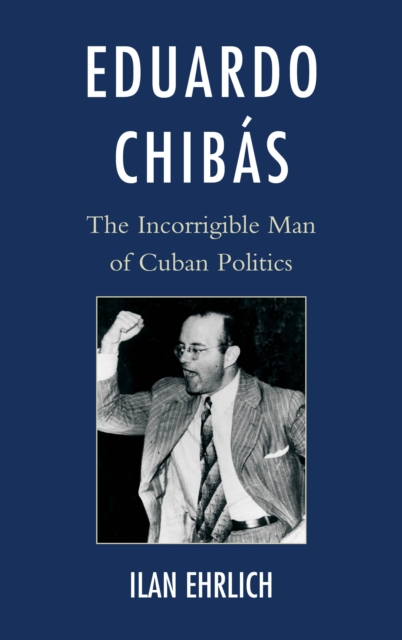
Eduardo Chibâas: the incorrigible man of Cuban politics
This comprehensive biography of Eduardo René Chibás (1907-1951) traces the life and times of Cuba's most popular and charismatic politician during the late 1940s and early 1950s. Chibás, whose admirers included young Fidel Castro, emphasized honesty in Cuban public life and promised to sweep away corrupt politicians during his popular Sunday broadcasts. His ties with supporters, many of whom knew him simply as \"Eddy,\" were closer and more informal than any previous Cuban politician. During his 1948 presidential campaign, Chibás often hurled himself into the arms of adoring supporters after speeches. Such gestures were met with wonder and disgust by politicians more accustomed to buying votes than winning hearts. His suicide in 1951 dashed the dreams of his followers-who hoped he would deliver an honest government that provided services for the island's poor and respected Cuba's progressive 1940 constitution. His death, which was followed seven months hence by a military coup and eight years later by Castro's revolution, represents one of the great what ifs of Cuban politics. This seminal work explores Chibás's life in order to explain the nature of Cuban politics from the mid-twentieth century to today.
eBook
Rationalizing Democracy: The Perceptual Bias and (Un)Democratic Behavior
Democracy often confronts citizens with a dilemma: stand firm on democracy while losing out on policy or accept undemocratic behavior and gain politically. Existing literature demonstrates that citizens generally choose the latter—and that they do so deliberately. Yet there is an alternative possibility. Citizens can avoid this uncomfortable dilemma altogether by rationalizing their understandings of democracy. When a politician advances undesired policies without violating democratic rules and norms, people find ways to perceive the behavior as undemocratic. When a politician acts undemocratically to promote desired policies, citizens muster up arguments for considering it democratic. Original survey experiments in the United States, and 22 democracies worldwide, provide strong support for this argument. It is thus not deliberate acceptance, but a fundamentally different perceptual logic that drives the widespread approval of undemocratic behavior in today’s democracies.
Journal Article
Who Leads? Who Follows? Measuring Issue Attention and Agenda Setting by Legislators and the Mass Public Using Social Media Data
Are legislators responsive to the priorities of the public? Research demonstrates a strong correspondence between the issues about which the public cares and the issues addressed by politicians, but conclusive evidence about who leads whom in setting the political agenda has yet to be uncovered. We answer this question with fine-grained temporal analyses of Twitter messages by legislators and the public during the 113th US Congress. After employing an unsupervised method that classifies tweets sent by legislators and citizens into topics, we use vector autoregression models to explore whose priorities more strongly predict the relationship between citizens and politicians. We find that legislators are more likely to follow, than to lead, discussion of public issues, results that hold even after controlling for the agenda-setting effects of the media. We also find, however, that legislators are more likely to be responsive to their supporters than to the general public.
Journal Article

Does politician turnover affect foreign subsidiary performance? Evidence in China
While research has acknowledged the importance of political risks in affecting multinational companies’behavior and performance outcomes, the roles of political agents in this process have largely been ignored. This study explores one important dimension of political risks caused by politician turnover at the sub-national level and examines its influence on the performance of foreign subsidiaries. We contend that policy uncertainty arising from politician turnover adversely affects the performance of foreign subsidiaries. We further develop a multi-level framework identifying contingent factors at event (i.e., internal promotion), firm (i.e., international joint venture), and environment (i.e., market intermediary development) levels that moderate the relationship between politician turnover and MNC performance. Analyses of foreign subsidiaries located in 310 Chinese cities from 1998 to 2007 largely support our thesis that politician turnover dampens the performance of foreign subsidiaries. This negative performance impact is then alleviated for internal promotions, international joint ventures, and firms located in regions with a high degree of market intermediary development. Our study opens a new avenue for examining the role of host-country political agents in affecting MNC performance.
Journal Article
Race in America: A Conversation with House Majority Whip James Clyburn
House Majority Whip Rep. James Clyburn joined The Post to discuss the issues driving thousands to demonstrate against police brutality.
Streaming Video
Bias in Perceptions of Public Opinion among Political Elites
The conservative asymmetry of elite polarization represents a significant puzzle. We argue that politicians can maintain systematic misperceptions of constituency opinion that may contribute to breakdowns in dyadic representation. We demonstrate this argument with original surveys of 3,765 politicians’ perceptions of constituency opinion on nine issues. In 2012 and 2014, state legislative politicians from both parties dramatically overestimated their constituents’ support for conservative policies on these issues, a pattern consistent across methods, districts, and states. Republicans drive much of this overestimation. Exploiting responses from politicians in the same district, we confirm these partisan differences within individual districts. Further evidence suggests that this overestimation may arise due to biases in who contacts politicians, as in recent years Republican citizens have been especially likely to contact legislators, especially fellow Republicans. Our findings suggest that a novel force can operate in elections and in legislatures: Politicians can systematically misperceive what their constituents want.
Journal Article

Gender Quotas and the Crisis of the Mediocre Man: Theory and Evidence from Sweden
We develop a model where party leaders choose the competence of politicians on the ballot to trade off electoral success against their own survival. The predicted correlation between the competence of party leaders and followers is strongly supported in Swedish data. We use a novel approach, based on register data for the earnings of the whole population, to measure the competence of all politicians in 7 parties, 290 municipalities, and 10 elections (for the period 1982-2014). We ask how competence was affected by a zipper quota, requiring local parties to alternate men and women on the ballot, implemented by the Social Democratic Party in 1993. Far from being at odds with meritocracy, this quota raised the competence of male politicians where it raised female representation the most. We argue that resignation of mediocre male leaders was a key driver of this effect.
Journal Article