
Catalogue Search | MBRL


Are you sure you want to remove the book from the shelf?

{{itemTitle}}
531,923
result(s) for
"PORT"
Sort by:


An Overview on Bonded Marine Hoses for Sustainable Fluid Transfer and
Due to the demand for oil production in varying water depth regions, the advantage of flexible buoyant conduits has led to an increase in bonded marine hoses for fluid transfer and (un)loading operations. The fluid transfer system for bonded marine hoses is dependent on floating offshore structures (FOS). This paper presents an overview of different systems for sustainable fluid transfer and (un)loading operations via FOS, such as Single Point Mooring (SPM) systems. SPMs are component aspects of the techno-economic design and FOS operation. This review aims to present sustainable fluid transfer technologies while addressing the subject of bonded marine hoses based on application, configuration, test models, hose selection criteria, hose-mooring configurations and operational views. This paper also includes an overview of the hose dynamics, with the loading and unloading (or discharging) techniques for sustainable fluid transfer via marine bonded hoses, based on operational challenges encountered. To dynamically present the hose performance in this review, an overview of the test methods’ guidance as specified in available industry standards was conducted. The pros and cons of marine hose application were also presented. Finally, this study presents different marine hose types and novel design configurations applied in implementing hose-mooring systems. Some concluding remarks with recommended solutions on the technology were presented in this review.
Journal Article
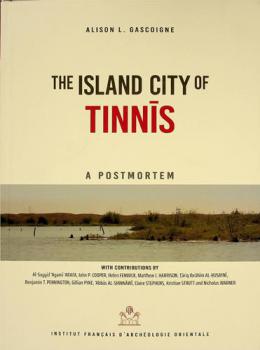
The island city of Tinnīs : a postmortem
\"On an island in Lake Manzala in the north-east corner of the Nile Delta lie the ruins of the once-prosperous late Roman and medieval port and manufacturing centre of Tell Tinnīs. Although little can be seen above ground, beneath the surface lie archaeological deposits that can be accessed by geophysical and geoarchaeological survey, and remote sensing. In addition, some excavation has taken place, providing evidence for the existence of structures such as cisterns, while ceramics and artefacts from the site's surface provide indications of the lifestyles of the town's occupants and their regional connections. This volume presents the results of archaeological work undertaken at the site between 2004 and 2012, which has produced a relatively detailed impression of the form and nature of the town from its inception around the 3rd century AD to its abandonment in the 13th century in the face of Crusader raids. This new information is discussed in light of the town's relationship to and connectedness with its surrounding landscape, and likewise considers Tinnīs in comparison to contemporary settlements of Egypt's Mediterranean coast\"--Page 4 of cover.
Book
Port of Spain
In this wide-ranging study, Stephen Stuempfle explores the transformation of the landscape (material environment) of Port of Spain from the cocoa boom era at the turn of the twentieth century through Trinidad and Tobago's independence from Britain in 1962. In addition to outlining the creative work of planners, architects, engineers and builders, he examines depictions of the city in journalism, travel literature, fiction, photographs and maps, and elucidates how diverse social groups employed urban spaces both in their day-to-day lives and for public celebrations and protests.
Over the course of the seven decades considered, Port of Spain was a dynamic centre for interactions among British officials; American entrepreneurs, military personnel and tourists; and a rapidly growing local population that both perpetuated and challenged the colonial regime. Many people perceived the city as a vanguard space – a locale for pursuing new opportunities and experiences.
By drawing on a rich array of written and visual sources, Stuempfle immerses the reader in the sights and sounds of the city's streets, parks, yards and various buildings to reveal how this complex environment evolved as a realm of collective endeavour and imagination. He argues that the urban landscape served as a key site for the display and negotiation of Trinidad's social order during its gradual transition from colonial rule to self-government. For Port of Spain's inhabitants, the construction of a modern capital city was interrelated, both practically and symbolically, with the building of a society and a new nation-state.
eBook


Maritime Histories, Indian Ocean and Port-Towns
Maritime histories is a very important tool in the study of the development of Port towns in Pre-modern India - as it enables researchers to come closer to the crucial dynamics of the urban historical process, embracing aspects such as international politics, navigation, oceanic currents, oceanic society, maritime transportation, sea-borne trade and commerce, port-hinterland relations and heritage aligned with it. The changing social character of these port towns are also indicative of the changing roles that were ascribed to them and the type of meanings that the new power wielders inscribed onto their urban spaces. In the transition phase of eighteenth century, the English towns of Bombay, Madras and Calcutta, which had a large number of Indo-Portuguese population and were relatively lying on the commercial periphery in the second half of seventeenth century, emerged as principal maritime exchange centres and towns in maritime India attracting traders, artisans, and financiers from other economic enclaves of India. This paper is an attempt to explore the dynamics of change and evolution of these port towns, not only as a conduit for providing trade and commerce, but also as a space for communication and the development of tangible and intangible heritage.
Journal Article