
Catalogue Search | MBRL


Are you sure you want to remove the book from the shelf?

{{itemTitle}}
3,116
result(s) for
"POVERTY LEVEL"
Sort by:

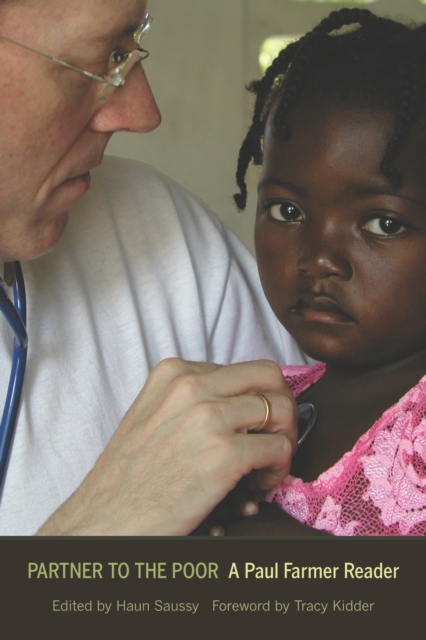
Partner to the Poor
For nearly thirty years, anthropologist and physician Paul Farmer has traveled to some of the most impoverished places on earth to bring comfort and the best possible medical care to the poorest of the poor. Driven by his stated intent to \"make human rights substantial,\" Farmer has treated patients-and worked to address the root causes of their disease-in Haiti, Boston, Peru, Rwanda, and elsewhere in the developing world. In 1987, with several colleagues, he founded Partners In Health to provide a preferential option for the poor in health care. Throughout his career, Farmer has written eloquently and extensively on these efforts.Partner to the Poorcollects his writings from 1988 to 2009 on anthropology, epidemiology, health care for the global poor, and international public health policy, providing a broad overview of his work. It illuminates the depth and impact of Farmer's contributions and demonstrates how, over time, this unassuming and dedicated doctor has fundamentally changed the way we think about health, international aid, and social justice. A portion of the proceeds from the sale of this book will be donated to Partners In Health.
eBook

Understanding changes in poverty
Understanding Changes in Poverty brings together different methods to decompose the contributions to poverty reduction. A simple approach quantifies the contribution of changes in demographics, employment, earnings, public transfers, and remittances to poverty reduction. A more complex approach quantifies the contributions to poverty reduction from changes in individual and household characteristics, including changes in the sectoral, occupational, and educational structure of the workforce, as well as changes in the returns to individual and household characteristics. Understanding Changes in Poverty implements these approaches and finds that labor income growththat is, growth in income per worker rather than an increase in the number of employed workerswas the largest contributor to moderate poverty reduction in 21 countries experiencing substantial reductions in poverty over the past decade. Changes in demographics, public transfers, and remittances helped, but made relatively smaller contributions to poverty reduction. Further decompositions in three countries find that labor income grew mainly because of higher returns to human capital endowments, signaling increases in productivity, higher relative price of labor, or both. Understanding Changes in Poverty will be of particular relevance to development practitioners interested in better understanding distributional changes over time. The methods and tools presented in this book can also be applied to better understand changes in inequality or any other distributional change.
eBook

Dancing with broken bones : poverty, race, and spirit-filled dying in the inner city
This book gives voice and face to a vulnerable and disempowered population whose stories often remain untold: the urban dying poor. Drawing on complex issues surrounding poverty, class, and race, the book illuminates the unique sufferings that often remain unknown and hidden within a culture of broad invisibility. The book demonstrates how a complex array of factors, such as mistrust of physicians, regrettable indignities in care, and inadequate communication among providers, patients, and families, shape the experience of the dying poor in the inner city. This book challenges readers to look at reality in a different way. Demystifying stereotypes that surround poverty, the book illuminates how faith, remarkable optimism, and an unassailable spirit provide strength and courage to the dying poor. The book serves as a rallying call for compassionate individuals everywhere to understand and respond to the needs of the especially vulnerable, yet inspiring, people who comprise the world of the inner city dying poor.
eBook

Delivering on the promise of pro-poor growth : insights and lessons from country experiences
Broad-based growth is critical for accelerating poverty reduction. But income inequality also affects the pace at which growth translates into gains for the poor. Despite the attention researchers have given to the relative roles of growth and inqequality in reducing poverty, little is known about how the microunderpinnings of growth strategies affect poor households' ability to participate in and profit from growth. Delivering on the Promise of Pro-Poor Growth contributes to the debate on how to accelerate poverty reduction by providing insights from eight countries that have been relatively successful in delivering pro-poor growth: Bangladesh, Brazil, Ghana, India, Indonesia, Tunisia, Uganda, and Vietnam. It integrates growth analytics with the microanalysis of household data to determine how country policies and conditions interact to reduce poverty and to spread the benefits of growth across different income groups. This title is a useful resource for policy makers, donor agencies, academics, think tanks, and government officials seeking a practical framework to improve country level diagnostics of growth-poverty linkages.
eBook


Poor Families in America's Health Care Crisis
Poor Families in America's Health Care Crisis examines the implications of the fragmented and two-tiered health insurance system in the United States for the health care access of low-income families. For a large fraction of Americans their jobs do not provide health insurance or other benefits and although government programs are available for children, adults without private health care coverage have few options. Detailed ethnographic and survey data from selected low-income neighborhoods in Boston, Chicago, and San Antonio document the lapses in medical coverage that poor families experience and reveal the extent of untreated medical conditions, delayed treatment, medical indebtedness, and irregular health care that women and children suffer as a result. Extensive poverty, the increasing proportion of minority households, and the growing dependence on insecure service sector work all influence access to health care for families at the economic margin.
eBook


Using VPI to Measure Poverty-Stricken Villages in China
Revealing the comprehensive poverty levels and spatial diversities of povertystricken villages is a prerequisite for “Entire-village Advancement” anti-poverty policy of China. In response, we build a multidimensional poverty assessment model from the perspective of spatial poverty, adopting VPI (village-level poverty index) to examine multiscale and multidimensional situations and characteristics of poverty-stricken villages in rural China, then adopting spatial geostatistics to explore their multidimensional and multiscale spatial point pattern distribution. Further, we also introduce LSE model to examine their poverty types. Our tests show that, Firstly, the validity and reliability of the VPI model can be justified in terms of village-level targeting ratio and policy-coverage ratio. Then, the poverty level of poverty-stricken villages follows a normal-right distribution, presenting an “olive” structure with a shape of “large middle, and small at two ends”, poverty levels and poverty sizes of different counties obviously increasing from east to west, and different classifications of counties also representing different poverty levels. On the other hand, there exists three kinds of multi-scale poverty clusters among different contiguous destitute areas, namely, clustering-randomness-dispersion, randomness-clustering and dispersion/randomness distribution. Villages with poverty type of three-factor dominance account for over 50 % of the total villages, their poverty are mainly caused by harsh geographical environment, disadvantaged production and living conditions, and poor labor forces. This research helps know well about the relationships among different villages from the multiscale and multidimensional views, so as to provide decision basis for optimal development and reorganization of the poverty-stricken villages in rural China, which is of vital practical significance to make overall arrangement of rural development-oriented poverty elimination and to boost new round of precise poverty elimination and new countryside construction.
Journal Article

Life, Death, and In-Between on the U.S.-Mexico Border: Asi es la vida
Loustaunau and Sánchez-Bane combine their many years of association and collaboration dealing with health issues in the U.S.-Mexico border area to bring together a series of chapters illustrating that así es la vida, that's life, need not indicate a fatalistic acceptance that poverty, sickness, misery, and misfortune must be taken in stride. The authors of the chapters have researched, studied, worked with, or have been borderlanders themselves. The chapters focus on the impact of the social structure and on the power and determination of people to change their conditions for the better, increasing their choices and enlarging their worlds. They look beyond political and economic barriers to find the spark in the human spirit that must be identified and nurtured to produce a better life for the benefit of peoples and nations on both sides of the border and to nourish the third culture as a bridge between nations. The authors note the dangers and pitfalls along the way, and the need for more realistic policies and programs to empower people to define their own problems and to participate in fashioning the solutions.
eBook