
Catalogue Search | MBRL


Are you sure you want to remove the book from the shelf?

{{itemTitle}}
94,253
result(s) for
"PRISONERS OF WAR"
Sort by:

The narrow road to the deep north
\"Moving deftly from a Japanese POW camp to present-day Australia, from the experiences of Dorrigo Evans and his fellow prisoners to that of the Japanese guards, this savagely beautiful novel tells a story of the many forms of love and death, of war and truth, as one man comes of age, prospers, only to discover all that he has lost.\" --Amazon.com.
Book

The Colditz Myth
Though only one among hundreds of prison camps in which British servicemen were held between 1939 and 1945, Colditz enjoys unparalleled name recognition both in Britain and in other parts of the English-speaking world. Made famous in print, on film, and through television, Colditz remains a potent symbol of key virtues-including ingenuity and perseverance against apparently overwhelming odds-that form part of the popular mythology surrounding the British war effort in World War II. Colditz has played a major role in shaping perceptions of the prisoner-of-war experience in Nazi Germany, an experience in which escaping is assumed to be paramount and ‘Outwitting the Hun’ a universal sport. This book chronicles the development of the Colditz myth and puts what happened inside the castle in the context of British and Commonwealth POW life in Germany as a whole. Being a captive of the Third Reich-from the moment of surrender down to the day of liberation and repatriation-was more complicated and a good deal tougher than the popular myth would suggest. The physical and mental demands of survival far outweighed escaping activity in order of importance in most camps almost all of the time, and even in Colditz the reality was in some respects very different from the almost Boy's Own caricature that developed during the post-war decades. This book seeks to place Colditz-both the camp and the legend-in a wider historical context.
eBook

Captive Anzacs : Australian POWs of the Ottomans during the First World War
Captive Anzacs explores the experiences of the 198 Australians who became prisoners of the Ottomans during the First World War.
Book
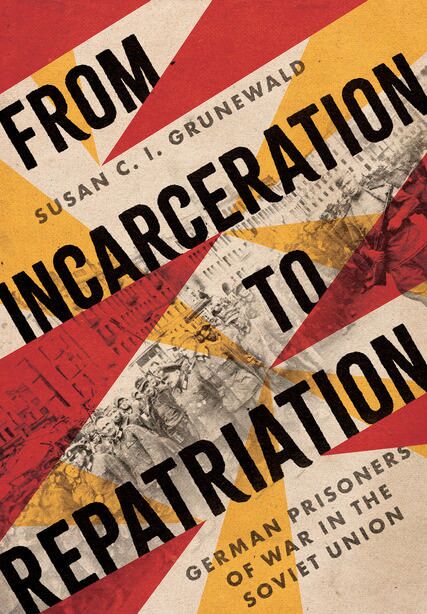
From Incarceration to Repatriation
From Incarceration to Repatriation
explores the lives and memories of the nearly 1.5 million
German POWs who were held by the Soviet Union during and after
World War II and released in phases through 1956, seven years
longer than the prisoners of any other Allied nation.
Susan C. I. Grunewald argues that Soviet leadership deliberately
kept able-bodied German POWs to supplement their labor force after
the end of the war. The Soviet Union lost 27 million citizens and a
quarter of its physical assets during the war, motivating Soviet
leadership to harness the labor of German POWs for as long as
possible.
Engaging with recently declassified documents in former Soviet
archives, archival material from multiple German governments, as
well as innovative use of digital humanities methods and geographic
information system (GIS) mapping, Grunewald demonstrates that
Soviet authorities detained German POWs primarily for economic
rather than punitive reasons. In fact, the GIS mapping of the
historical materials makes it clear that most of the four thousand
POW camps across the USSR were strategically located near
industrial, infrastructure, and natural resource sites that were
critical to postwar economic reconstruction.
From Incarceration to Repatriation is the first book to
draw together the distinct fields of Soviet and German history to
provide a more nuanced and comprehensive understanding of German
POW captivity in the USSR during and after World War II. Attending
to the ways that the memory of German POWs remains in circulation
in both the former Soviet Union and Germany, Grunewald tracks the
political repercussions of war commemoration.
eBook


Andersonvilles of the North
Soon after the close of military operations in the American Civil War, another war began over how it would be remembered by future generations. The prisoner-of-war issue has figured prominently in Northern and Southern writing about the conflict. Northerners used tales of Andersonville to demonize the Confederacy, while Southerners vilified Northern prison policies to show the depths to which Yankees had sunk to attain victory. Over the years the postwar Northern portrayal of Andersonville as fiendishly designed to kill prisoners in mass quantities has largely been dismissed. The Lost Cause characterization of Union prison policies as criminally negligent and inhumane, however, has shown remarkable durability. Northern officials have been portrayed as turning their military prisons into concentration camps where Southern prisoners were poorly fed, clothed, and sheltered, resulting in inexcusably high numbers of deaths. Andersonvilles of the North, by James M. Gillispie, represents the first broad study to argue that the image of Union prison officials as negligent and cruel to Confederate prisoners is severely flawed. This study is not an attempt to “whitewash” Union prison policies or make light of Confederate prisoner mortality. But once the careful reader disregards unreliable postwar polemics, and focuses exclusively on the more reliable wartime records and documents from both Northern and Southern sources, then a much different, less negative, picture of Northern prison life emerges. While life in Northern prisons was difficult and potentially deadly, no evidence exists of a conspiracy to neglect or mistreat Southern captives. Confederate prisoners’ suffering and death were due to a number of factors, but it would seem that Yankee apathy and malice were rarely among them. In fact, likely the most significant single factor in Confederate (and all) prisoner mortality during the Civil War was the halting of the prisoner exchange cartel in the late spring of 1863. Though Northern officials have long been condemned for coldly calculating that doing so aided their war effort, the evidence convincingly suggests that the South’s staunch refusal to exchange black Union prisoners was actually the key sticking point in negotiations to resume exchanges from mid-1863 to 1865. Ultimately Gillispie concludes that Northern prisoner-of-war policies were far more humane and reasonable than generally depicted. His careful analysis will be welcomed by historians of the Civil War, the South, and of American history.
eBook


The Yankee Plague
During the winter of 1864, more than 3,000 Federal prisoners of war escaped from Confederate prison camps into South Carolina and North Carolina, often with the aid of local slaves. Their flight created, in the words of contemporary observers, a \"Yankee plague,\" heralding a grim end to the Confederate cause. In this fascinating look at Union soldiers' flight for freedom in the last months of the Civil War, Lorien Foote reveals new connections between the collapse of the Confederate prison system, the large-scale escape of Union soldiers, and the full unraveling of the Confederate States of America. By this point in the war, the Confederacy was reeling from prison overpopulation, a crumbling military, violence from internal enemies, and slavery's breakdown. The fugitive Federals moving across the countryside in mass numbers, Foote argues, accelerated the collapse as slaves and deserters decided the presence of these men presented an opportune moment for escalated resistance.Blending rich analysis with an engaging narrative, Foote uses these ragged Union escapees as a lens with which to assess the dying Confederate States, providing a new window into the South's ultimate defeat.
eBook

Escaping a POW camp
Engages readers with incredible stories of people who made daring escapes from prisoner of war camps. From the Revolutionary War to the Vietnam War, these soldiers who were captured behind enemy lines had to use their courage and wits to escape.
Book

All the Little Hopes
\"Will break your heart, but Leah Weiss's beautiful writing will sew it back together again\" --Wiley Cash, New York Times bestselling author A Southern story of friendship forged by books and bees, when the timeless troubles of growing up meet the murky shadows of World War II.
eBook