
Catalogue Search | MBRL


Are you sure you want to remove the book from the shelf?

{{itemTitle}}
16,797
result(s) for
"PRIVATE SECTOR FINANCE"
Sort by:


The impact of economic growth, inflation, and exports on domestic credit to the private sector in Turkey
Type of the article: Research Article AbstractThis study analyzes the causal relationships between economic growth, inflation, exports, and domestic credit to the private sector in Turkey using annual data covering the period from 1990 to 2024, obtained from the World Bank and the Turkish Statistical Institute. The empirical strategy is based on a Vector Autoregressive (VAR) modeling framework combined with the Toda–Yamamoto Granger causality approach, with the long-run interactions among the variables further examined through Johansen cointegration analysis. This integrated methodology allows for a comprehensive assessment of both short-run dynamics and long-term equilibrium relationships in the Turkish macro-financial system. The empirical findings from the Toda–Yamamoto causality tests reveal statistically significant causal effects running from exports of goods and services, economic growth, and inflation to domestic credit to the private sector. Specifically, exports (EXGS), GDP growth (GDPG), and inflation (INF) each exert a meaningful influence on domestic private sector credit (DOCR), indicating that historical movements in these macroeconomic variables possess substantial explanatory and predictive power for credit dynamics. These results underscore the importance of real economic activity, external trade performance, and price stability in shaping the evolution of financial intermediation in Turkey. From a policy perspective, the results imply that maintaining export competitiveness, promoting stable and inclusive economic growth, and ensuring low and predictable inflation are essential for improving private sector credit access, reinforcing financial sector performance, and fostering sustainable economic development and macroeconomic stability in Turkey.
Journal Article

Project finance in construction : a structured guide to assessment
This work provides a structured process for determining the commercial viability of large construction projects - from gas pipelines and bridges to hospitals and schools - procured with project finance (PF). With this guide, readers can develop their own assessment structures as required using the assessment mechanism described.
Book

Funding for nature conservation: a study of public finance networks at World Wide Fund for nature (WWF)
One of the greatest challenges in nature conservation is funding. In the pursuit of new financing sources critical to fight biodiversity and ecosystem loss, nature conservation organisations increasingly aim to create networks between states, markets and civil society. Using Manuel Castells’ network theory and World Wide Fund for nature (WWF) as a case study, this article aims at understanding how large conservation NGOs utilise networking in their pursuit for funding. Apart from increasing income by attracting public funds from governments and aid agencies, around 2010 WWF’s public sector finance strategy expanded to influencing and leveraging finance—both public and private—using public funds. During WWF’s engagement with private sector financing, paradoxically its public sector financing grew at the average rate of 7.5% per year. Our network analysis shows that WWF has continuously reworked and renegotiated its position in order to stay connected to the ‘space of flows’. WWF and other large conservation organisations have to be in the right networks, speak the right language, and connect to relevant social, informational and political flows to stay relevant and connected to substantial flows of funding.
Journal Article

Fundraising and strategic planning : innovative approaches for museums
\"Fundraising and Strategic Planning : Innovative Approaches for Museums appraise strategies museums employ to raise funds including admission prices, membership categories, donor and affinity groups, and specialized event-driven efforts while examining new crowdfunding models such as Kickstarter and Indiegogo\"--Provided by publisher.
Book
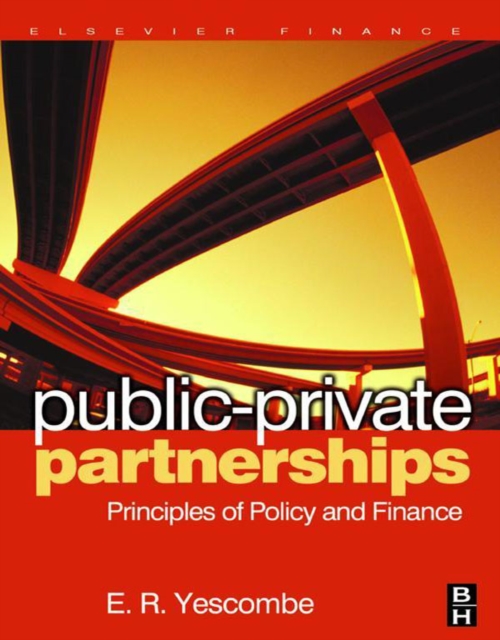
Public-private partnerships : principles of policy and finance
Over the last decade or so, private-sector financing through public-private partnerships (PPPs) has become increasingly popular around the world as a way of procuring and maintaining public-sector infrastructure, in sectors such as transportation (roads, bridges, tunnels, railways, ports, airports), social infrastructure (hospitals, schools, prisons, social housing) public utilities (water supply, waste water treatment, waste disposal), government offices and other accommodation, and other specialised services (communications networks or defence equipment). This book, based on the author's practical experience on the public- and private-sector sides of the table, reviews the key policy issues which arise for the public sector in considering whether to adopt the PPP procurement route, and the specific application of this policy approach in PPP contracts, comparing international practices in this respect. It offers a systematic and integrated approach to financing PPPs within this public-policy framework, and explains the project-finance techniques used for this purpose. The book deals with both the Concession and PFI models of PPP, and provides a structured introduction for those who are new to the subject, whether in the academic, public-sector, investment, finance or contracting fields, as well as an aide memoire for those developing PPP policies or negotiating PPPs. The author focuses on practical concepts, issues and techniques, and does not assume any prior knowledge of PPP policy issues or financing techniques. The book describes and explains:* The different types of PPPs and how these have developed* Why PPPs are attractive to governments* General policy issues for the public sector in developing a PPP programme* PPP procurement procedures and bid evaluation* The use of project-finance techniques for PPPs* Sources of funding* Typical PPP contracts and sub-contracts, and their relationship with the project's financial structure * Risk assessment from the points of view of the public sector, investors, lenders and other project parties* Structuring the investment and debt financing* The key issues in negotiating a project-finance debt facility. In addition the book includes an extensive glossary, as well as cross-referencing. *Reviews the PPP policy framework and development from an international perspective*Covers public- and private-sector financial analysis, structuring and investment in PPPs*No prior knowledge of project financing required
eBook

The privatisation and nationalisation of European roads : success and failure in public-private partnerships
This distinctive and timely book examines the current state and trends in the ownership, management and financing of European high capacity roads. Offering an analysis of three pioneer countries in road privatization, Spain, France and Italy, from their origins to their recent developments, it evaluates how the design of privatisation policies may lead to their success or failure. Describing the trend in favouring public-private collaboration and road charging, Professor Daniel Albalate presents the theoretical framework of road privatisation and its relevant design issues. Exhaustively studying the national experiences in historical perspective, he aims at providing lessons on the good, the bad and the ugly of road privatisation. As a result, this excellent study shows the increasing role of private financing and ownership in Europe, a trend mainly explained by fiscal motivations and the thrust of the European Commission. Presenting an evaluation of the critical elements of the contractual and regulatory design of the public-private collaboration that determines the likelihood of success and failure, this unique book will be of special interest to academics, graduate students and policy makers interested in the public provision and financing of road infrastructure, and public finance more generally. --Publisher description.
Book

How to engage with the private sector in public-private partnerships in emerging markets
What transforms a desirable project on a government wish list to an attractive investment opportunity in the eyes of a potential private sector partner? This guide seeks to enhance the chances of developing effective partnerships between the public and the private sectors by addressing one of the main obstacles to the effective delivery of public-private partnership (PPP) projects: having the right information on the right project for the right partners at the right time. Data from the World Bank and the Public-Private Infrastructure Advisory Facility (PPIAF) private participation in infrastructure (PPI) project database indicate that private sector investment in infrastructure in developing economies grew steadily over the past decade. By 2007 the levels had finally surpassed the peak levels seen in 1997, the end of the previous growth spurt. This guide focuses specifically on what should be done, and when, in order to prepare projects to attract the right long-term private partners, procure their involvement, and manage the partnership. This guide is not a detailed project preparation manual; rather, it seeks to provide an overview of the process and what is involved so that greater realism can be applied to this challenging task and adequate resource plans can be developed.
eBook

An Operational Framework for Managing Fiscal Commitments from Public-Private Partnerships
The National policy on public-private partnerships (PPP) recently approved by the Government of Ghana (GoG) sets out the government's intention to use PPPs to improve the quality, cost-effectiveness, and timely provision of public infrastructure in Ghana. The PPP policy highlights the role of the government's financial support to PPPs, as well as the importance of putting in place a system to manage the associated fiscal commitments (FCs). As noted in the policy, the government's contribution to a PPP may include remuneration to the private party from government budgets, which may be fixed or partially fixed, periodic payments (annuities) and contingent. This report proposes an operational framework for managing fiscal obligations arising from PPPs in Ghana. This framework aims to ensure that PPP FCs are consistently identified and assessed during PPP project preparation, and that these assessments are fed into project approval. The report outlines roles and responsibilities, concepts, and processes for managing PPP FCs, drawing on international standards and practices, bearing in mind existing institutions and capacities in Ghana. The report also suggests legislative additions and capacity building needed to establish this framework in practice. This report focuses primarily on managing long-term FCs to PPPs, including regular payments or contingent liabilities (CL) that typically last throughout a project's lifetime. This report is structured as follows: chapter 1 is introduction; chapter; 2 introduces the concept of FCs from PPPs: how and why PPPs create FCs, why managing them is important, and an overview of what it entails; chapter 3 presents institutional roles and responsibilities; chapter 4 describes how FC management should be incorporated in the PPP development and approval process; chapter 5 describes how FCs can be managed during PPP implementation by monitoring, reporting, and budgeting adequately; and chapter 6 sets out the steps needed to begin to implement this PPP framework-to build its core requirements into the forthcoming PPP Law, and to build capacity in the relevant entities to carry out those requirements in practice.
eBook