
Catalogue Search | MBRL


Are you sure you want to remove the book from the shelf?

{{itemTitle}}
10,123
result(s) for
"PRIVATE TRAINING"
Sort by:
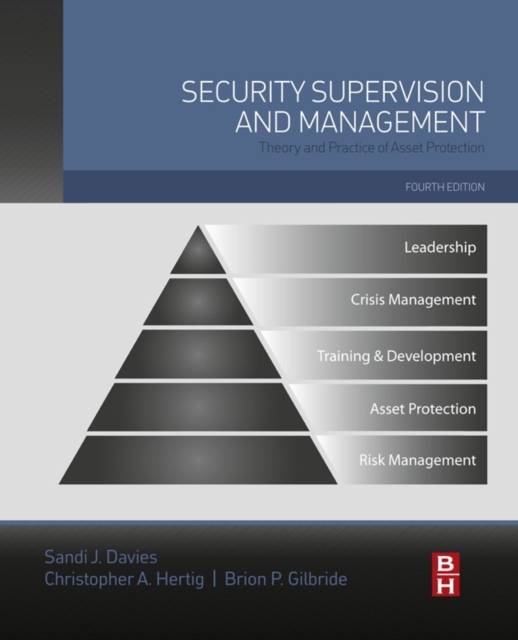
Security supervision and management : theory and practice of asset protection
Security Supervision and Management, Fourth Edition, fills the basic training needs for security professionals who want to move into supervisory or managerial positions.Covering everything needed from how to work with today's generation security force employees to the latest advances in the security industry, Security Supervision and Management.
eBook

Skills for the labor market in the Philippines
This book investigates trends in skills demand and supply over the past two decades for insights into ways to build (and use) the critical skills needed to sustain competitiveness of the Philippine economy. Part one of the book investigates trends in demand for skills in the country overall and by sectors, explores its possible determinants, and attempts to identify emerging skills gaps. Part two turns to the analysis of the supply of skills in the country with a focus on the ability of education and training to provide highly skilled labor, keeping workers' skills updated, and providing skills development opportunities for the unskilled. It explores employers' perceptions on the quality of institutions and provides detailed analysis of the main characteristics, outcomes, and challenges in four key (or growing) subsectors of the provision of skills in the country: higher education, postsecondary technical-vocational education, non-formal secondary education, and postemployment training. It concludes with a summary of policy recommendations.
eBook

Youth employment and skills development in The Gambia
The report aims to gain a better understanding of youth employment outcomes in the hope of crafting more sound and responsive policies. The first part of this study provides an analysis of how youth spend their time and the determinants of this time use. The second part of the study provides an overview and analysis of the technical and vocational education and training sector. It also provides recommendations on how the sector can be made more responsive to the needs of youth in the light of the findings of the first part of the study.
eBook
Security supervision and management : the theory and practice of asset protection
The International Foundation for Protection Officers (IFPO) has for many years provided materials to support its certification programs. The current edition of this book is being used as the core text for the Security Supervision and Management Training/Certified in Security Supervision and Management (CSSM) Program at IFPO. The CSSM is unique and was designed in 1988 to meet the needs of the security supervisor or senior protection officer. The book has enjoyed tremendous acceptance and success in the past, but after seven years, it has become dated. The changes, vetted by IFPO, make the third edition more current and relevant. Updates include 14 new chapters, 3 completely revised chapters, Student Performance Objectives added to each chapter, and added information on related resources (both print and online). * Completion of the Security Supervision and Management Program is the initial step toward the Certified in Security Supervision and Management (CSSM) designation * Over 40 experienced security professionals contribute chapters in their area of specialty * Revised throughout, and completely updated with 14 new chapters on topics such as Leadership, Homeland Security, Strategic Planning and Management, Budget Planning, Career Planning, and much more. * Quizzes at the end of each chapter allow for self testing or enhanced classroom work
eBook

Vocational education in the new EU member states
Vocational education often is ignored during discussions of secondary education reform even though it accounts for between 25 percent and 79 percent of upper secondary enrollment in the former centrally-planned countries of the European Union. Based on information, data, and feedback from most of these countries, this paper develops a set of propositions about vocational education reform, not with a view to prescribing a detailed one-size-fits-all strategy, but rather it derives some principles that continued reform of vocational education could take into account, to the benefit of fiscal efficiency.
eBook


Training of new managers: why are we kidding ourselves?
Purpose
The purpose of this paper is to provide an update on a longitudinal research study that examines the content delivery of courses provided by private training providers (PTPs) for first level managers (FLMs). It measures, against a contemporary soft skill model, the relevance of “off the shelf” training which is aimed at FLMs managerial soft skills, as opposed to “technical” or “hard skill” training. The research has been carried out over three phases. The paper will critically compare and contrast the results and determine if there are any prevailing management paradigms in the content of the courses.
Design/methodology/approach
There were three key phases undertaken during the research. Phase 1 involved developing a multi-dimensional best practise core soft skills framework for professional managers. The second phase involved a pilot study conducted as desk research using various online and direct marketing channels in researching 45 PTPs first line manager courses in the UK over a period of two months during October to November 2011, and this exercise was repeated in phase 3 during February and March 2015 using a sample (20) of the same 45 PTPs. Both exercises involved comparing and contrasting the Core Soft Skills Framework to the PTP courses using thematic and coding techniques.
Findings
The studies have revealed surprising omissions and contrary positions when it comes to teaching FLMs non-technical skills. On some PTP courses there appeared contrary positions taken up on key managerial concepts such as leadership. In both research phases, “delegation” is an area which FLMs receive significant training. The activity of delegation is an example of top down management used to demonstrate command and control paradigms within the workplace, and fails to take into account todays cultural behavioural shifts. There is also a total lack of acknowledgement on the impact technology is having on a younger generation of managers interpersonal and intrapersonal skills.
Research limitations/implications
The best practise core soft skill framework is based on three key soft skill models which do not take into account soft skills for FLMs. These models do not presently exist. Both the initial study and 2015 follow-up are undertaken by desk research and the content marketing collateral as promoted by the PTPs. What actually happens on the courses themselves: broader management discussions, role play, sharing experiences, etc. cannot be evaluated as part of this research. No distinction has been made in the research with regard the length of the courses.
Practical implications
PTP FLM training is not irrelevant; it is necessary for managers. An issue is the training is pitched at concepts and skills which are too advanced for the FLM who are missing out on the basic non-technical skills. Without this fundamental introduction, it is teaching FLMs to run before they can walk. Of all the FLM courses now researched, there has only been one which covers all the soft skills identified in the framework. With so many core soft skills from the framework omitted from PTP FLM courses, how can FLMs be expected to grasp the basics of soft skills and apply them?
Originality/value
By breaking down the findings, this research can have considerable impact with regard the provision of training for new managers. It informs HR departments about the inconsistencies of new manager training between the providers, but it also highlights areas to new management which are not covered by the courses. For training providers it will act as a reminder that training courses need to be continually reviewed and redesigned to remain relevant as culture rapidly changes from a personal interaction society to a technology interaction society. As a result more emphasis needs to be placed on communication, teamwork, interaction type activities to build intuition and “nous”. Today’s young people are “streetwise” – in technology but not in personal relationships….
Journal Article
A Domain-Finetuned Semantic Matching Framework Based on Dynamic Masking and Contrastive Learning for Specialized Text Retrieval
Semantic matching is essential for understanding natural language, but traditional models like BERT face challenges with random masking strategies, limiting their ability to capture key information. Additionally, BERT’s sentence vectors may “collapse,” making it difficult to distinguish between different sentences. This paper introduces a domain-finetuned semantic matching framework that uses dynamic masking and contrastive learning techniques to address these issues. The dynamic masking strategy enhances the model’s ability to retain critical information, while contrastive learning improves sentence vector representations using a small amount of unlabeled text. This approach helps the model better align with the needs of various downstream tasks. Experimental results show that after private domain training, the model improves semantic similarity between entities by 16.9%, outperforming existing models. It also demonstrates an 8.0% average improvement in semantic matching for diverse text. Performance metrics such as A@1, A@3, and A@5 are at least 26.1% higher than those of competing models. For newly added entities, the model achieves a 44.3% average improvement, consistently surpassing other models by at least 30%. These results collectively validate the effectiveness and superiority of the proposed framework in domain-specific semantic matching tasks.
Journal Article

The challenge of expanding secondary education and training in Madagascar
This report, produced with the help of Madagascars national education team in 2006-07, is designed to contribute to ongoing education reform discussions. It analyzes the constraints to system expansion and presents possible next steps for an appropriate course of action. This report aims to encourage discussion among policymakers, stakeholders and donors, and does not promote one approach over another. To promote a more competitive economy in Madagascar in the 21st century, the government expects to increase the average years of schooling from the current 4.5 years to about 9-10 years by 2015 for the relative age groups. This report discusses the ongoing reform and its impact and provides suggestions for implementation. This report is intended to be used as a discussion instrument and to be disseminated among Madagascars stakeholders in education. We hope this report will contribute to improved implementation of the secondary education reform in Madagascar.This study was prepared as part of the Secondary Education and Training in Africa (SEIA) initiative which aims to assist countries to develop sustainable strategies for expansion and quality improvements in secondary education and training.
eBook

In-Service Education and Training for Teachers in Korea and the Role of the Private Sector from 1945 to 1970s
It has been argued that the provision and organization of In-Service Education and Training (INSET) for teachers in Korea has been carried out under the strong leadership of government authorities. However, it was not until the early 1970s that laws and government institutes specifically for INSET provision were established and began to fulfill the function that they have today. This study investigates the historical context and development of INSET in Korea prior to the formation of the current system, with a particular focus on the major actors and their respective roles. The findings indicate that there existed a variety of private organizations which provided INSET for teachers, ranging from research institutes, voluntary groups, and universities to overseas educational commissions. Their participation not only contributed to diversifying the contents of the training, but could also stand in for the government in the areas in which its influence was not yet fully extended.
Journal Article