
Catalogue Search | MBRL


Are you sure you want to remove the book from the shelf?

{{itemTitle}}
1,174
result(s) for
"PROPHETS (OLD TESTAMENT)"
Sort by:

Thus Speaks Ishtar of Arbela
Thus Speaks Ishtar is a collection of essays about prophets and prophecy in the ancient Near East during the “Neo-Assyrian Period.” This was the time when some of Israel’s greatest prophets emerged, and we also have from the same general period a number of prophetic texts found on the site of the ancient Assyrian city of Nineveh. The book examines the basic idea of prophecy and how this is shaped by the way we study the subject, and it then presents a number of fresh insights on a range of prophetic topics. These include the relationship between Israelite and other forms of prophecy in Assyria and Egypt and the relationship between what prophets said and the written forms in which their words were passed on. Other topics of contemporary interest include what these prophetic texts have to say about the environment, the place of intercession in Israelite and Assyrian religion, and whether the message of the trailblazing Israelite prophets of the eighth century was basically about judgment and community ruin or about hope and community well-being.
eBook
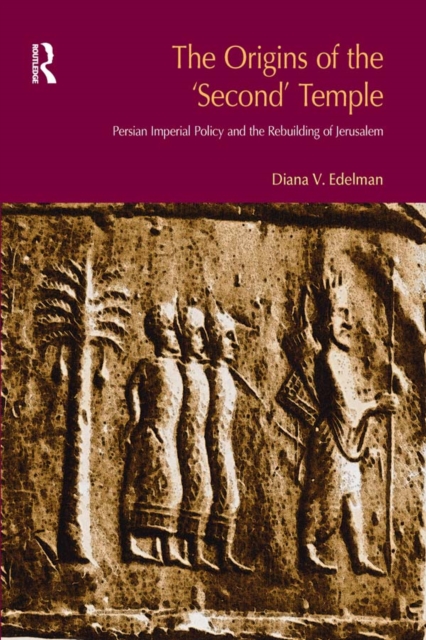
The origins of the 'Second' Temple : Persian imperial policy and the rebuilding of Jerusalem
Darius I, King of Persia, claims to have accomplished many deeds in the early years of his reign, but was one of them the rebuilding of the temple in Jerusalem? The editor who added the date to the books of Haggai and Zechariah thought so, and the author of Ezra 1-6 then relied on his dates when writing his account of the rebuilding process. The genealogical information contained in the book of Nehemiah, however, suggests otherwise; it indicates that Zerubbabel and Nehemiah were either contemporaries, or a generation apart in age, not some 65 years apart. Thus, either Zerubabbel and the temple rebuilding needs to be moved to the reign of Artaxerxes I, or Nehemiah and the rebuilding of the city walls needs to be moved to the reign of Darius I.;In this ground-breaking volume, the argument is made that the temple was built during the reign of Artaxerxes I. The editor of Haggai and Zechariah mistakenly set the event under Darius I because he was influenced by both a desire to show the fulfillment of inherited prophecy and by Darius' widely circulated autobiography of his rise to power. In light of the settlement patterns in Yehud during the Persian period, it is proposed that Artaxerxes I instituted a master plan to incorporate Yehud into the Persian road, postal, and military systems. The rebuilding of the temple was a minor part of the larger plan that provided soldiers stationed in the fortress in Jerusalem and civilians living in the new provincial seat with a place to worship their native god while also providing a place to store taxes and monies collected on behalf of the Persian administration.
eBook
The Composition and Redaction of the Book of Amos
In der Reihe Beihefte zur Zeitschrift für die alttestamentliche Wissenschaft (BZAW) erscheinen Arbeiten zu sämtlichen Gebieten der alttestamentlichen Wissenschaft. Im Zentrum steht die Hebräische Bibel, ihr Vor- und Nachleben im antiken Judentum sowie ihre vielfache Verzweigung in die benachbarten Kulturen der altorientalischen und hellenistisch-römischen Welt. Die BZAW akzeptiert Manuskriptvorschläge, die einen innovativen und signifikanten Beitrag zu Erforschung des Alten Testaments und seiner Umwelt leisten, sich intensiv mit der bestehenden Forschungsliteratur auseinandersetzen, stringent aufgebaut und flüssig geschrieben sind.
eBook

Prophets, Prophecy, and Ancient Israelite Historiography
The 18 essays by members of the Canadian Society for Biblical
Studies published in this volume showcase the work of leading
authorities on ancient Israelite and Jewish historiography as it
intersects with the phenomenon of prophecy. A deep divide exists
between the traditions of historiography and prophecy in the
academic study of the Hebrew Bible, and the concern of the
contributors is to close that gap, to expose the close relationship
between these two traditions in the literature of the Hebrew
Bible.
The first section of the book explores prophecy and prophets in
ancient Israelite and Jewish historiographic books (Torah,
Deuteronomistic History, Chronicles, Ezra-Nehemiah, Second Temple
Jewish historiography). The second section surveys historiography
in Israelite and Jewish prophetic books (Isaiah, Jeremiah, Ezekiel,
Book of the Twelve, Daniel, 1 Enoch ). The contributors
engage diverse methodological perspectives in these studies, the
goal first being to show the role that the prophets played within
the great Hebrew historiographic works and, second, to demonstrate
the role that historiography plays within the great Hebrew
prophetic works; this makes it clear that the influence is
bidirectional.
Prophets, Prophecy, and Ancient Israelite
Historiography will be of value for advanced students and
scholars working on historiographic and prophetic materials in the
ancient Israelite and Jewish traditions, featuring the best of
research and analysis and interacting with many major ancient
literary traditions of historiography and prophecy.
eBook
Perspectives on the Formation of the Book of the Twelve
The series Beihefte zur Zeitschrift für die alttestamentliche Wissenschaft (BZAW) covers all areas of research into the Old Testament, focusing on the Hebrew Bible, its early and later forms in Ancient Judaism, as well as its branching into many neighboring cultures of the Ancient Near East and the Greco-Roman world. _x000D_.
eBook

LXX Isaiah 24
Explore how interpretation affects translation
In this volume Cunha argues that the differences found between the Septuagint text of Isaiah and the Hebrew of the Masoretic Text must be weighed against the literary context in which they are found. The author demonstrates that LXX Isa 24:1-26:6 can be seen as a coherent ideological composition that differs greatly from the way scholars have interpreted MT Isa 24:1-26:6. This coherence comes across through the use of certain lexemes and conjunctions throughout the passage. The book lays the case that a scribe or translator already had an interpretation before he started the process of translation that shaped his translation of the Hebrew text into Greek.
Features:
An introduction sketching the history of research on LXX Isa 24:1-26:6A focused comparision of the Masoretic Text to the SeptuagintA thorough discussion of the coherence of LXX Isa 24:1-26:6
eBook
Philosophical Interpretations of the Old Testament
The series Beihefte zur Zeitschrift für die alttestamentliche Wissenschaft (BZAW) covers all areas of research into the Old Testament, focusing on the Hebrew Bible, its early and later forms in Ancient Judaism, as well as its branching into many neighboring cultures of the Ancient Near East and the Greco-Roman world. _x000D_.
eBook

Path of the Prophets
Illuminating the ethical legacy of the biblical prophets,Path of the Prophetsidentifiestheprophetic moment in the lives of eighteen biblical figures and demonstrates their compelling relevance to us today.While the Bible almost exclusively names men as prophets, Rabbi Barry L. Schwartz celebrates heroic, largely unknown biblical women such as Shiphrah, Tirzah, and Hannah. He also deepens readers' interpretations of more familiar biblical figures not generally thought of as prophets, such as Joseph, Judah, and Caleb.Schwartz introduces the prophets with creative, first-person retellings of their decisive experiences, followed by key biblical narratives, context, and analysis. He weighs our heroes' and heroines' legacies-their obstacles and triumphs-and considers how their ethical examples live on; he guides us on how to integrate biblical-ethical values into our lives; and he challenges each of us to walk the prophetic path today.
eBook