
Catalogue Search | MBRL


Are you sure you want to remove the book from the shelf?

{{itemTitle}}
9
result(s) for
"PSAJ"
Sort by:

Social Learning
Many animals, including humans, acquire valuable skills and knowledge by copying others. Scientists refer to this as social learning. It is one of the most exciting and rapidly developing areas of behavioral research and sits at the interface of many academic disciplines, including biology, experimental psychology, economics, and cognitive neuroscience.Social Learningprovides a comprehensive, practical guide to the research methods of this important emerging field. William Hoppitt and Kevin Laland define the mechanisms thought to underlie social learning and demonstrate how to distinguish them experimentally in the laboratory. They present techniques for detecting and quantifying social learning in nature, including statistical modeling of the spatial distribution of behavior traits. They also describe the latest theory and empirical findings on social learning strategies, and introduce readers to mathematical methods and models used in the study of cultural evolution. This book is an indispensable tool for researchers and an essential primer for students.
Provides a comprehensive, practical guide to social learning researchCombines theoretical and empirical approachesDescribes techniques for the laboratory and the fieldCovers social learning mechanisms and strategies, statistical modeling techniques for field data, mathematical modeling of cultural evolution, and more
eBook

The Evolution of Animal Communication
Gull chicks beg for food from their parents. Peacocks spread their tails to attract potential mates. Meerkats alert family members of the approach of predators. But are these--and other animals--sometimes dishonest? That's what William Searcy and Stephen Nowicki ask in The Evolution of Animal Communication. They take on the fascinating yet perplexing question of the dependability of animal signaling systems. The book probes such phenomena as the begging of nesting birds, alarm calls in squirrels and primates, carotenoid coloration in fish and birds, the calls of frogs and toads, and weapon displays in crustaceans. Do these signals convey accurate information about the signaler, its future behavior, or its environment? Or do they mislead receivers in a way that benefits the signaler? For example, is the begging chick really hungry as its cries indicate or is it lobbying to get more food than its brothers and sisters? Searcy and Nowicki take on these and other questions by developing clear definitions of key issues, by reviewing the most relevant empirical data and game theory models available, and by asking how well theory matches data. They find that animal communication is largely reliable--but that this basic reliability also allows the clever deceiver to flourish. Well researched and clearly written, their book provides new insight into animal communication, behavior, and evolution.
eBook

Phosphorus Chemistry
The book is the first thorough study of the role of phosphorus chemistry in the origin of life. This book starts with depiction of the phosphorus role in life creation and evolution. Then it outlines in vital processes how different phosphorus-containing compounds participate as biomarker in life evolution. Written by renowned scientists, it is suitable for researchers and students in organic phosphorus chemistry and biochemistry.
eBook

Studying Genetic Variability of Pomegranate (Punica granatum L.) Based on Chloroplast DNA and Barcode Genes
Chloroplast DNA has been used extensively to analyze plant phylogenies at different taxonomic levels because of its size, organization and sequence conservation. In the present research, two chloroplastic regions,
petA
–
psaJ
,
trnC
–
trnD
and four DNA barcodes (
trnH
–
psbA,
ITS
, rbcL, matK
), were used to introduce suitable regions for the assessment of genetic diversity among
P.
granatum
L. genotypes. Analysis of
psbE
–
petL
in
petA
–
psaJ
region revealed 1,300 nucleotides with 4.29 % genetic diversity among genotypes, while
trnC
–
petN
in
trnC
–
trnD
region showed 1.8 % genetic diversity. Therefore, despite the results obtained from the study of other plants, the
trnC
–
trnD
region had a low potential for the evaluation of diversity among pomegranate genotypes. Analysis of DNA barcodes in pomegranate showed that
trnH
–
psbA
(genetic diversity 2.91 %) provides the highest intra-species variation, followed by ITS (genetic diversity 0.44 %). Eighteen genotypes from different geographical origins of Iran were used to investigate
psbE
–
petL
and
trnH
–
psbA
potential as novel barcodes to determine genetic polymorphism and characterize pomegranate genotypes. The results suggested that two regions,
psbE
–
petL
and
trnH
–
psbA
, were more suitable for determining intra-species relationships of pomegranate.
Journal Article

Resource Strategies of Wild Plants
Over millions of years, terrestrial plants have competed for limited resources, defended themselves against herbivores, and resisted a myriad of environmental stresses. These struggles have helped generate more than a quarter million terrestrial plant species, each possessing a unique strategy for success. Yet, as Resource Strategies of Wild Plants demonstrates, the constraints on plant growth are universal enough that a few survival strategies hold true for all seed-producing plants. This book describes the five major strategies of growth for terrestrial plants, details how plants succeed when resources are scarce, delves into the history of research into plant strategies, and resets the foundational understanding of ecological processes. Drawing from recent findings in plant-herbivore interactions, ecosystem ecology, and evolutionary ecology, Joseph Craine explains how plants attain available nutrients, withstand the immense stresses of drying soils, and flourish in the race for light. He shows that the competition for resources has shaped plant evolution in newly discovered ways, while the scarcity of such resources has affected how plants interact with herbivores, wind, fire, and frost. An understanding of the major resource strategies of wild plants remains central to learning about the ecology of plant communities, global changes in the biosphere, methods for species conservation, and the evolution of life on earth.
eBook

Cells to Civilizations
Cells to Civilizationsis the first unified account of how life transforms itself--from the production of bacteria to the emergence of complex civilizations. What are the connections between evolving microbes, an egg that develops into an infant, and a child who learns to walk and talk? Award-winning scientist Enrico Coen synthesizes the growth of living systems and creative processes, and he reveals that the four great life transformations--evolution, development, learning, and human culture--while typically understood separately, actually all revolve around shared core principles and manifest the same fundamental recipe. Coen blends provocative discussion, the latest scientific research, and colorful examples to demonstrate the links between these critical stages in the history of life.
Coen tells a story rich with genes, embryos, neurons, and fascinating discoveries. He examines the development of the zebra, the adaptations of seaweed, the cave paintings of Lascaux, and the formulations of Alan Turing. He explores how dogs make predictions, how weeds tell the time of day, and how our brains distinguish a Modigliani from a Rembrandt. Locating commonalities in important findings, Coen gives readers a deeper understanding of key transformations and provides a bold portrait for how science both frames and is framed by human culture.
A compelling investigation into the relationships between our biological past and cultural progress,Cells to Civilizationspresents a remarkable story of living change.
eBook

The Princeton Guide to Evolution
The Princeton Guide to Evolution is a comprehensive,
concise, and authoritative reference to the major subjects and key
concepts in evolutionary biology, from genes to mass extinctions.
Edited by a distinguished team of evolutionary biologists, with
contributions from leading researchers, the guide contains some 100
clear, accurate, and up-to-date articles on the most important
topics in seven major areas: phylogenetics and the history of life;
selection and adaptation; evolutionary processes; genes, genomes,
and phenotypes; speciation and macroevolution; evolution of
behavior, society, and humans; and evolution and modern society.
Complete with more than 100 illustrations (including eight pages in
color), glossaries of key terms, suggestions for further reading on
each topic, and an index, this is an essential volume for
undergraduate and graduate students, scientists in related fields,
and anyone else with a serious interest in evolution.
Explains key topics in some 100 concise and authoritative
articles written by a team of leading evolutionary biologists
Contains more than 100 illustrations, including eight pages in
color
Each article includes an outline, glossary, bibliography, and
cross-references
Covers phylogenetics and the history of life; selection and
adaptation; evolutionary processes; genes, genomes, and phenotypes;
speciation and macroevolution; evolution of behavior, society, and
humans; and evolution and modern society
eBook
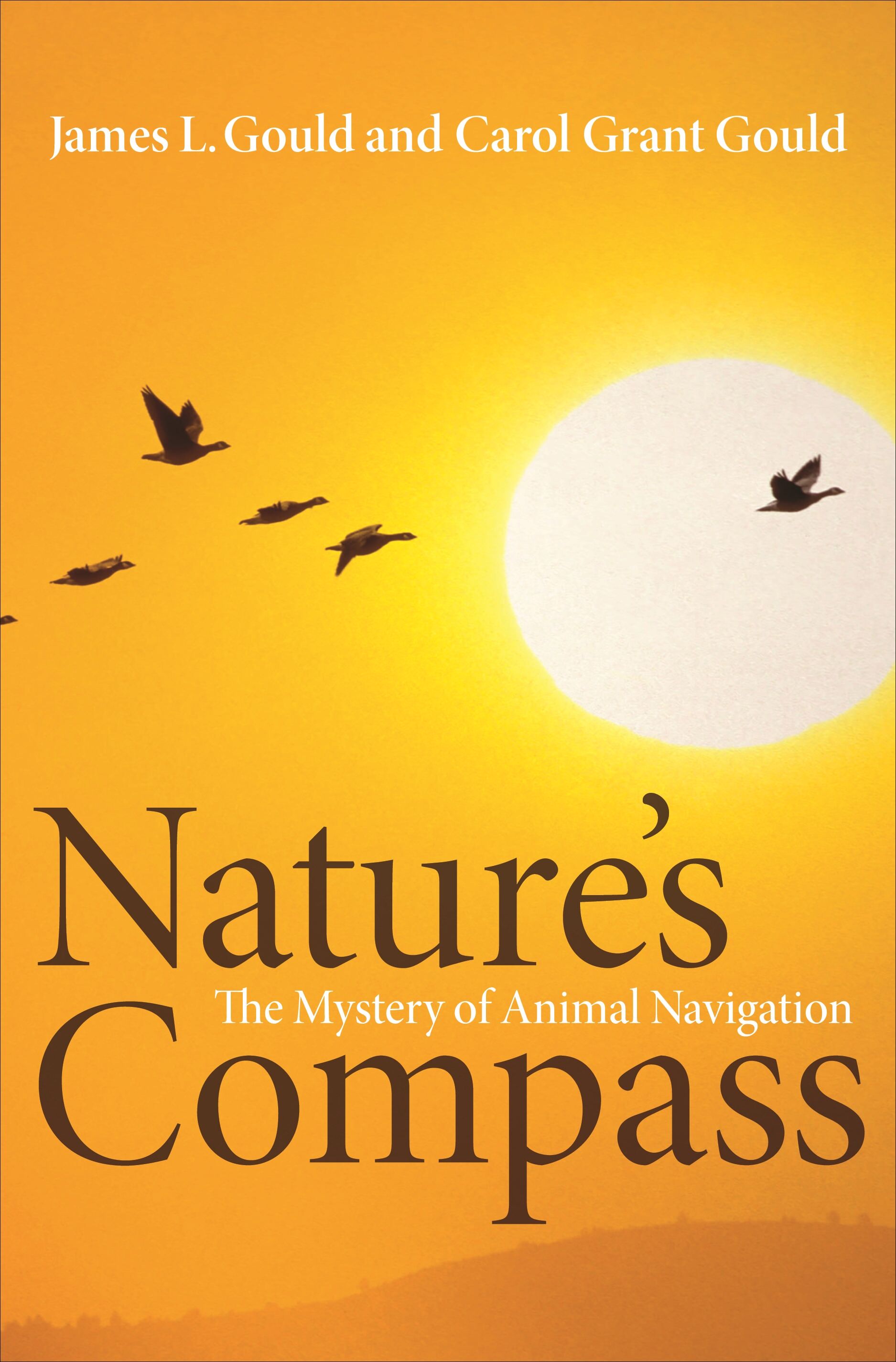
Nature's Compass
The mysterious and remarkable ways that animals navigateWe know that animals cross miles of water, land, and sky with pinpoint precision on a daily basis. But it is only in recent years that scientists have learned how these astounding feats of navigation are actually accomplished. With colorful and thorough detail, Nature's Compass explores the remarkable methods by which animals find their way both near home and around the globe. Noted biologist James Gould and popular science writer Carol Gould delve into the elegant strategies and fail-safe backup systems, the invisible sensitivities and mysterious forces, and incredible mental abilities used by familiar and rare species, as they investigate a multitude of navigation strategies, from the simple to the astonishing.The Goulds discuss how animals navigate, without instruments and training, at a level far beyond human talents. They explain how animals measure time and show how the fragile monarch butterfly employs an internal clock, calendar, compass, and map to commence and measure the two-thousand-mile annual journey to Mexico—all with a brain that weighs only a few thousandths of an ounce. They look at honey bees and how they rely on the sun and mental maps to locate landmarks such as nests and flowers. And they examine whether long-distance migrants, such as the homing pigeon, depend on a global positioning system to let them know where they are. Ultimately, the authors ask if the disruption of migratory paths through habitat destruction and global warming is affecting and endangering animal species.Providing a comprehensive picture of animal navigation and migration, Nature's Compass decodes the mysteries of this extraordinary aspect of natural behavior.
eBook

The War of the Sexes
As countless love songs, movies, and self-help books attest, men and women have long sought different things. The result? Seemingly inevitable conflict. Yet we belong to the most cooperative species on the planet. Isn't there a way we can use this capacity to achieve greater harmony and equality between the sexes? InThe War of the Sexes, Paul Seabright argues that there is--but first we must understand how the tension between conflict and cooperation developed in our remote evolutionary past, how it shaped the modern world, and how it still holds us back, both at home and at work.
Drawing on biology, sociology, anthropology, and economics, Seabright shows that conflict between the sexes is, paradoxically, the product of cooperation. The evolutionary niche--the long dependent childhood--carved out by our ancestors requires the highest level of cooperative talent. But it also gives couples more to fight about. Men and women became experts at influencing one another to achieve their cooperative ends, but also became trapped in strategies of manipulation and deception in pursuit of sex and partnership. In early societies, economic conditions moved the balance of power in favor of men, as they cornered scarce resources for use in the sexual bargain. Today, conditions have changed beyond recognition, yet inequalities between men and women persist, as the brains, talents, and preferences we inherited from our ancestors struggle to deal with the unpredictable forces unleashed by the modern information economy.
Men and women today have an unprecedented opportunity to achieve equal power and respect. But we need to understand the mixed inheritance of conflict and cooperation left to us by our primate ancestors if we are finally to escape their legacy.
eBook