
Catalogue Search | MBRL


Are you sure you want to remove the book from the shelf?

{{itemTitle}}
41,879
result(s) for
"PSYCHOLOGY / Cognitive Neuroscience "
Sort by:
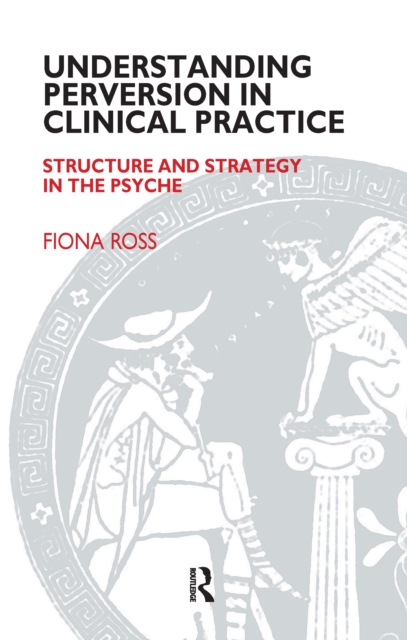
Understanding perversion in clinical practice
Part of a new series of monographs from the SAP, aimed primarily at trainees on psychotherapy and psychodynamic counseling courses. This monograph provides a comprehensive study of the nature of perversion in its numerous manifestations and the therapeutic relationship needed for treatment. It provides a firm foundation in the subject.
eBook

Fundamentalism or Tradition
Traditional, secular, and fundamentalist-all three categories are contested, yet in their contestation they shape our sensibilities and are mutually implicated, the one with the others. This interplay brings to the foreground more than ever the question of what it means to think and live as Tradition. The Orthodox theologians of the twentieth century, in particular, have emphasized Tradition not as a dead letter but as a living presence of the Holy Spirit. But how can we discern Tradition as living discernment from fundamentalism? What does it mean to live in Tradition when surrounded by something like the \"secular\"? These essays interrogate these mutual implications, beginning from the understanding that whatever secular or fundamentalist may mean, they are not Tradition, which is historical, particularistic, in motion, ambiguous and pluralistic, but simultaneously not relativistic.
Contributors: R. Scott Appleby, Nikolaos Asproulis, Brandon Gallaher, Paul J. Griffiths, Vigen Guroian, Dellas Oliver Herbel, Edith M. Humphrey, Slavica Jakelić, Nadieszda Kizenko, Wendy Mayer, Brenna Moore, Graham Ward, Darlene Fozard Weaver
eBook

Infinite awareness
Book Award of the Parapsychological Association, 2017 Winner of the Eric Hoffer Book Awards 2017 (Spiritual) First Place, Nautilus Book Awards 2017 (Science, Cosmology and Expanding Consciousness) First Place, International Excellence Mind, Body Spirit Book Awards, 2017 (Human Consciousness) Bronze Medal, Feathered Quill Book Awards, 2017 (Best Religious/Spiritual) First Place, Great Northwest Book Festival, 2017 (Spiritual Books) First Place, New England Book Festival, 2016 (Spiritual Books) As a neuroscientist, Marjorie Woollacott had no doubts that the brain was a purely physical entity controlled by chemicals and electrical pulses. When she experimented with meditation for the first time, however, her entire world changed. Woollacott’s journey through years of meditation has made her question the reality she built her career upon and has forced her to ask what human consciousness really is. Infinite Awareness pairs Woollacott’s research as a neuroscientist with her self-revelations about the mind’s spiritual power. Between the scientific and spiritual worlds, she breaks open the definition of human consciousness to investigate the existence of a non-physical and infinitely powerful mind.
eBook

Cognitive behavioural therapy for dummies
Retrain your thinking and your life with these simple, scientifically proven techniques! Cognitive behavioral therapy, or CBT for short, is often cited as the gold standard of psychotherapy. Its techniques allow you to identify the negative thought processes that hold you back and exchange them for new, productive ones that can change your life. Increasingly popular among healthcare professionals, the CBT approach can be used by anyone to overcome common problems ranging from depression or anxiety to more complex disorders like OCD, PTSD and addiction. CBT can also be used to simply developing a healthier, more productive outlook on life. This book shows you how you can easily incorporate the techniques of CBT into your day-to-day life and produce tangible results.. You'll learn how to take your negative thoughts to boot camp and retrain them, establishing new habits that tackle your toxic thoughts and retool your awareness, allowing you be free of the weight of past negative thinking biases. Move on: take a fresh look at your past and maybe even overcome it Mellow out: relax yourself through techniques that reduce anger and stress Lighten up: read practical advice on healthy attitudes for living and ways to nourish optimism Look again: discover how to overcome low self-esteem and body image issues Whatever the issue, don't let your negative thoughts have the last say-buy a copy of Cognitive Behavioral Therapy for Dummies and start developing your new outlook on life today!
eBook
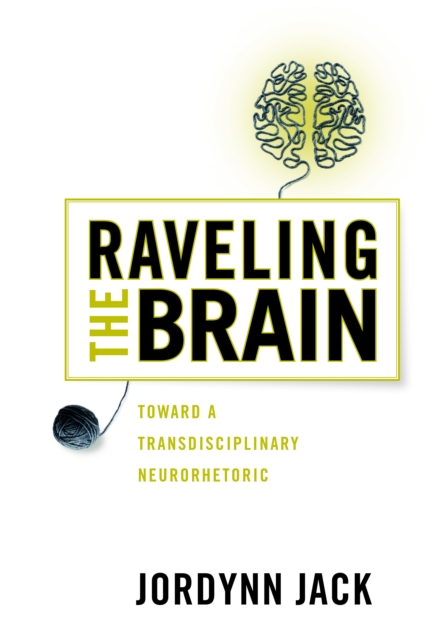
Raveling the Brain
Humans have always been fascinated by the workings of the mind and
now, more than ever, neuroscience has become a popular area of
inquiry. While neuroscience advertises itself as an
interdisciplinary field, drawing on biology, physics, engineering,
and psychology, to date it has engaged less often with the
humanities. In this transdisciplinary work, Jordynn Jack aims to
show how the humanities-and in particular, rhetoric-have much to
add to the neurosciences, offering rich insights into the ways in
which the brain is enmeshed in the body, in culture, and in
discourse. Jack first looks at the problem of
\"neurohype\"-exaggerated or oversimplified claims that essentialize
brains and make them \"uncritically real\"-questioning some of the
fundamental assumptions about the brain that experimental protocols
and psychological concepts rely on. Then, through examples of
research on sex and gender, political orientation, and affect, Jack
demonstrates how a rhetorical-material approach can help to
generate alternative approaches to studying the brain that might
mitigate the problem of neurohype. By raveling out the
roots of neurohype and raveling back its use through time,
Raveling the Brain shows how rhetoric and neuroscience
might be raveled together, or intertwined, to create a
stronger transdisciplinary approach that might enrich our
understanding of those issues of interest to neuroscientists and
humanists alike.
eBook

People are less likely to selfishly deceive those who achieved status through virtue rather than dominance or competence
Moral behaviour varies across contexts, yet the influence of the recipient’s social status—the person towards whom the behaviour is directed—remains largely underexplored. The strategies used to achieve status can vary substantially and play a crucial role in shaping social perception and behaviour. For instance, dominance-based status triggers negative evaluations, whereas people who attain status through competence or virtue often gain respect and admiration. This preregistered study (n = 151) investigated how an opponent’s social status (high, middle or low) and the strategies used to achieve it (dominance, competence or virtue) influenced participants’ tendency to lie for self-gain during a card game. Results indicate that participants were significantly less likely to lie for self-gain to virtuous high-status opponents compared to dominant or competent ones. Dominance-based high-status opponents elicited negative emotions (e.g. anger, disgust), while virtuous and competent opponents inspired admiration and respect. These findings highlight that moral behaviour is shaped by both the status of the recipient and the means by which it was acquired, with honesty more likely directed towards virtuous high-status individuals. This research has implications for education and leadership, suggesting that strategies involving virtuous and prosocial behaviours can protect leaders from being deceived by their followership.
Journal Article
Correction to: ‘How the pandemic affected psychological research’
[This corrects the article DOI: 10.1098/rsos.241311.].
Journal Article
Regulation of pupil size in natural vision across the human lifespan
Vision is mediated by light passing through the pupil, which changes in diameter from approximately 2 to 8 mm between bright and dark illumination. With age, mean pupil size declines. In laboratory experiments, factors affecting pupil size can be experimentally controlled. How the pupil reflects the change in retinal input from the visual environment under natural viewing conditions is unclear. We address this question in a field experiment ( N = 83, 43 female, 18–87 years) using a custom-made wearable video-based eye tracker with a spectroradiometer measuring near-corneal spectral irradiance. Participants moved in and between indoor and outdoor environments varying in spectrum and engaged in a range of everyday tasks. Our data confirm that light-adapted pupil size is determined by light level, with a better model fit of melanopic over photopic units, and that it decreased with increasing age, yielding steeper slopes at lower light levels. We found no indication that sex, iris colour or reported caffeine consumption affects pupil size. Our exploratory results point to a role of photoreceptor integration in controlling steady-state pupil size. The data provide evidence for considering age in personalized lighting solutions and against the use of photopic illuminance alone to assess the impact of real-world lighting conditions.
Journal Article
Correction to: ‘Inconclusive evidence for associations between adverse experiences in adulthood and working memory performance’ (2025), by Vermeent et al
[This corrects the article DOI: 10.1098/rsos.241837.].
Journal Article