
Catalogue Search | MBRL


Are you sure you want to remove the book from the shelf?

{{itemTitle}}
79,199
result(s) for
"PSYCHOLOGY / Developmental / Child"
Sort by:

Developing Self and Self-Concepts in Early Childhood Education and Beyond
Drawing on analysis of children at home and in school, including transcripts of conversations at home, and teachers' notes based on their observations and response to each child's school experiences, Bridie Raban presents a cutting-edge insight into the adjustment of the first experience of school, reflected against the background of home life.
eBook

Current Issues in Developmental Disorders
Cognitive development in children is a highly complex process which, while remarkably resilient, can be disrupted in a variety of ways. This volume focuses on two types of neurodevelopmental disorder: syndromic conditions such as fragile X syndrome, Down syndrome, Williams syndrome and velocardiofacial syndrome; and non-syndromic conditions including dyslexia, specific language impairment, autism spectrum disorder and attention deficit hyperactivity disorder.
This book provides a state-of-the-art review of current research and covers key topics across the full range of developmental disorders. Topics covered include:
diagnosis and comorbidity
genetics
longitudinal studies
computational models
distinguishing disorder from disadvantage
language and culture
the modern beginnings of research into developmental disorders
The book also looks at how the study of developmental disorders has contributed to our understanding of typical development, and themes emerge that are common across chapters, including intervention and education, and the neurobiological bases of developmental disorders. The result is a fascinating and thought-provoking volume that will be indispensable to advanced students, researchers and practitioners in the fields of developmental psychology, neuropsychology, speech and language therapy, and developmental disorders.
Chloe R. Marshall, PhD, is Senior Lecturer in Psychology and Human Development at the Institute of Education, University of London, and a former Montessori nursery teacher and teacher-trainer. Her research investigates typical and atypical language acquisition in hearing and deaf children, with a focus on specific language impairment and dyslexia.
C. Marshall , Glossary and Introduction. Part 1. Current issues in the study of developmental disorders: 1. D. Williams, S. Lind Comorbidity and diagnosis of developmental disorders. 2. D. Newbury , The genetics of developmental disorders. 3. B. Byrne, R. Olson, S. Samuelsson, The longitudinal perspective on developmental disorders. 4. M. Thomas, F. Baughman, T. Karaminis, C. Addyman, Modelling developmental disorders. 5. P. Roy, S. Chiat, Teasing apart disadvantage from disorder: The case of poor language. 6. S. Wong, M. Xiao, K. Chung, Issues of culture and language in developmental disorders: The case of dyslexia in Chinese learners. Part 2. Reflections on the study of developmental disorders. 7. P. Hellal, M. Lorch, Why study the history of research into developmental disorders? 8. R. Filippi, A. Karmiloff-Smith, What can neurodevelopmental disorders teach us about typical development?
eBook


Deaf education beyond the western world : context, challenges, and prospects
This volume disseminates academically informed knowledge about deaf education constructed by scholars and practitioners in countries in Central and Eastern Europe, Africa, Asia, and Latin America in order to identify the strengths and needs of deaf learners and deaf educators in those countries and to help move deaf education forward. It includes chapters about best practices and challenges from nineteen countries across the world, countries in Africa, Asia, Latin America, and Central and Eastern Europe. The chapters are written by scholars and practitioners who live and work in these countries, sometimes co-authored by colleagues from Western countries. The volume thus offers a picture of deaf education beyond the Western world from the perspective of local scholars associated with educating deaf and hard-of-hearing learners, the people who live it and know it best. The picture that emerges about deaf education in mostly vast countries is one that often reflects considerable regional and local variation. The chapters in this volume are embedded in discourses about international knowledge exchange, international development support, and the ambition to realize Goal 4 of the worldwide Sustainable Development Goals of the United Nations: to ensure by 2030 inclusive and equitable education and promote lifelong learning opportunities for all, including deaf and hard-of-hearing children and adults.
eBook

Plugged In
An illuminating study of the complex relationship between children and media in the digital ageNow, as never before, young people are surrounded by media-thanks to the sophistication and portability of the technology that puts it literally in the palms of their hands. Drawing on data and empirical research that cross many fields and continents, authors Valkenburg and Piotrowski examine the role of media in the lives of children from birth through adolescence, addressing the complex issues of how media affect the young and what adults can do to encourage responsible use in an age of selfies, Twitter, Facebook, and Instagram.This important study looks at both the sunny and the dark side of media use by today's youth, including why and how their preferences change throughout childhood, whether digital gaming is harmful or helpful, the effects of placing tablets and smartphones in the hands of toddlers, the susceptibility of young people to online advertising, the legitimacy of parental concerns about media multitasking, and more.
eBook

Nonverbal Learning Disabilities
Increasing numbers of children and adolescents are being diagnosed with nonverbal learning disabilities (NLD), yet clinicians and educators have few scientific resources to guide assessment and intervention. This book presents up-to-date knowledge on the nature of NLD and how to differentiate it from DSM-5 disorders such as autism spectrum disorder and developmental coordination disorder. Effective strategies for helping K-12 students and their families address the challenges of NLD in and outside of the classroom are illustrated with vivid case material. The authors thoughtfully consider controversies surrounding NLD, discuss why the diagnosis is not included in the current DSM and ICD classification systems, and identify important directions for future research.
eBook

Forensic Interviews Regarding Child Sexual Abuse
This wide-ranging volume combines the current findings and frontline knowledge working practitioners need to know about forensic interviewing of children in sexual abuse cases.Coverage begins with the basics: legal and ethical principles, interview planning and procedure, psychometric and cultural issues, pitfalls and how to avoid them.
eBook
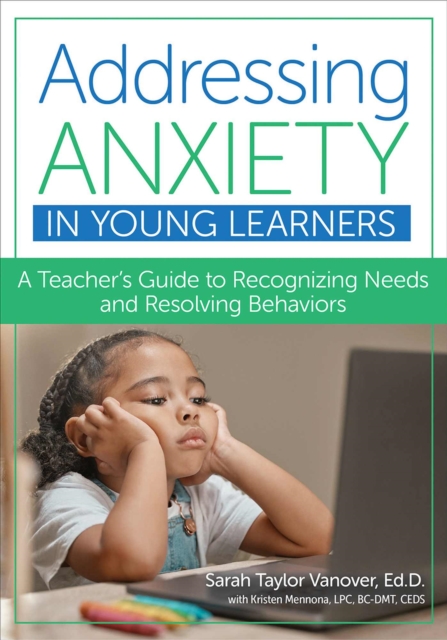
Addressing Anxiety in Young Learners
Anxiety rates are skyrocketing among young learners--and their teachers need explicit training on how to understand and support these students. A concise, reader‐friendly guide written especially for teachers, this urgently needed book will prepare early educators to recognize anxiety issues in children ages 3-8, identify the associated behaviors, and work effectively with students who have anxiety symptoms. Teachers will start with a well‐organized primer on the different types of anxiety in children, featuring symptoms, causes, triggers, treatment options, and case stories. Then they'll get expert guidance on addressing anxiety and challenging behaviors in the classroom, with dedicated chapters on key topics like assessment, intervention, and the parents' experience. Ideal for both preservice and in‐service professional development, this introductory guide gives teachers the accessible information they need to understand learners with anxiety and support their success inside and outside the classroom.
eBook

Designing the Creative Child
The postwar American stereotypes of suburban sameness, traditional gender roles, and educational conservatism have masked an alternate self-image tailor-made for the Cold War. The creative child, an idealized future citizen, was the darling of baby boom parents, psychologists, marketers, and designers who saw in the next generation promise that appeared to answer the most pressing worries of the age. Designing the Creative Child reveals how a postwar cult of childhood creativity developed and continues to this day. Exploring how the idea of children as imaginative and naturally creative was constructed, disseminated, and consumed in the United States after World War II, Amy F. Ogata argues that educational toys, playgrounds, small middle-class houses, new schools, and children's museums were designed to cultivate imagination in a growing cohort of baby boom children. Enthusiasm for encouraging creativity in children countered Cold War fears of failing competitiveness and the postwar critique of social conformity, making creativity an emblem of national revitalization. Ogata describes how a historically rooted belief in children's capacity for independent thinking was transformed from an elite concern of the interwar years to a fully consumable and aspirational ideal that persists today. From building blocks to Gumby, playhouses to Playskool trains, Creative Playthings to the Eames House of Cards, Crayola fingerpaint to children's museums, material goods and spaces shaped a popular understanding of creativity, and Designing the Creative Child demonstrates how this notion has been woven into the fabric of American culture.
eBook

Play = Learning
Why is it that the best and brightest of our children are arriving at college too burned out to profit from the smorgasbord of intellectual delights that they are offered? Why is it that some preschools and kindergartens have a majority of children struggling to master cognitive tasks that are inappropriate for their age? Why is playtime often considered to be time unproductively spent? This book contends that the answers to these questions stem from a single source: in the rush to create a generation of Einsteins, our culture has forgotten about the importance of play for children's development. Presenting a powerful argument about the pervasive and long-term effects of play, this book urges us to reconsider the ways play facilitates development across domains. Over forty years of developmental research indicates that play has enormous benefits to offer children, not the least of which is physical activity in this era of obesity and hypertension. Play provides children with the opportunity to maximize their attention spans, learn to get along with peers, cultivate their creativity, improve their emotional health, and gain the academic skills that are the foundation for later learning. Using a variety of methods and studying a wide range of populations, this book demonstrates the powerful effects of play in the intellectual, social, and emotional spheres.
eBook