
Catalogue Search | MBRL


Are you sure you want to remove the book from the shelf?

{{itemTitle}}
83,369
result(s) for
"PSYCHOLOGY / History."
Sort by:

Thinking Sex with the Early Moderns
What do we know about early modern sex, and how do we know it? How, when, and why does sex become history? In Thinking Sex with the Early Moderns, Valerie Traub addresses these questions and, in doing so, reorients the ways in which historians and literary critics, feminists and queer theorists approach sexuality and its history. Her answers offer interdisciplinary strategies for confronting the difficulties of making sexual knowledge.Based on the premise that producing sexual knowledge is difficult because sex itself is often inscrutable, Thinking Sex with the Early Moderns leverages the notions of opacity and impasse to explore barriers to knowledge about sex in the past. Traub argues that the obstacles in making sexual history can illuminate the difficulty of knowing sexuality. She also argues that these impediments themselves can be adopted as a guiding principle of historiography: sex may be good to think with, not because it permits us access but because it doesn't.
eBook

Socialist Escapes
During much of the Cold War, physical escape from countries in the East Bloc was a near impossible act. There remained, however, possibilities for other socialist escapes, particularly time away from party ideology and the mundane routines of everyday life. The essays in this volume examine sites of socialist escapes, such as beaches, camp sites, nightclubs, concerts, castles, cars, and soccer matches. The chapters explore the effectiveness of state efforts to engineer society through leisure, entertainment, and related forms of cultural programming and consumption, as it was in leisure and tourism that the party's intentions encountered Eigen-Sinn, the pursuit of individual interests. This volume leads to a deeper understanding of state- society relations in the East Bloc, where the state did not simply \"dictate from above\" and inhabitants had some opportunities to shape solidarities, identities, and meaning.
eBook

A special issue in honor of the contributions of Professor Nicola S. Clayton FRS
It has been an honor to edit this special issue of Learning & Behavior to recognize the exceptional contributions of Prof. Nicky S. Clayton FRS to the fields of comparative cognition and developmental and experimental psychology. Prof. Clayton has also provided supervision, mentorship, and support for many students, researchers, and colleagues throughout her career, including over 52 PhD candidates and postdoctoral researchers, helping to pave the way for a generation of future scientists in academia and industry. Indeed, all four of the co-editors on this special issue worked with Prof. Clayton in her Cambridge University Comparative Cognition Lab as PhD candidates and/or postdoctoral researchers (from 2011 to 2022), and we happily continue to collaborate together. Prof. Clayton was awarded the 2024 Comparative Cognition Society (CCS) Research Award and delivered the Master Lecture at the 31st International Conference on Comparative Cognition (CO3, April 2024). Dr. Rachael Miller and Prof. Joshua Plotnik (co-editors) co-organized a symposium at the CO3 conference dedicated to Prof. Clayton. The invited symposium speakers were Prof. Mike Beran (Georgia State University), Prof. Jon Crystal (Indiana University), Dr. Christelle Jozet-Alves (Université de Caen Normandie), and Prof. Thomas Bugnyar (University of Vienna). Dr Elias Garcia-Pelegrin (co-editor) served as Master of Ceremony for an evening CO3 banquet, which included a video compilation of “thank you” messages from many of Prof. Clayton’s colleagues, students, and friends.
Journal Article

The Disappearance of the Social in American Social Psychology
The Disappearance of the Social in American Social Psychology is a critical conceptual history of American social psychology. In this challenging work, John Greenwood demarcates the original conception of the social dimensions of cognition, emotion and behaviour and of the discipline of social psychology itself, that was embraced by early twentieth-century American social psychologists. He documents how this fertile conception of social psychological phenomena came to be progressively neglected as the century developed, to the point that scarcely any trace of the original conception of the social remains in contemporary American social psychology. In a penetrating analysis. Greenwood suggests a number of subtle historical reasons why the original conception of the social came to be abandoned, stressing that none of these were particularly good reasons for the neglect of the original conception of the social. By demonstrating the historical contingency of this neglect, Greenwood indicates that what has been lost may once again be regained. This engaging work will appeal to social psychologists, sociologists, anthropologists and other social scientists and historians and philosophers of social and psychological science.
eBook

Internationalizing the History of Psychology
While the United States was dominant in the development of psychology for much of the twentieth century, other countries have experienced significant growth in this area since the end of World War II. The percentage of those in the discipline who live and work in the United States has been growing smaller, and it is now impossible to completely understand the field if developments in psychology outside of the United States are ignored.
Internationalizing the History of Psychology brings together luminaries in the field from around the world to address the internationalizing of psychology, each raising core issuesconcerning what an international perspective can contributeto the history of psychology and to our understanding of psychology as a whole. For too long, much of what we havetaken to be the history of psychology has actually been thehistory of American psychology. This volume, ideal for student use and for those in the field, illuminates how what we have been missing may change our views of the nature of psychology and its history.
Contributors: Ruben Ardila, Geoffrey Blowers, Adrian C. Brock, Kurt Danziger, Aydan Gulerce, John D. Hogan, Naomi Lee, Johann Louw, Fathali M. Moghaddam, Anand C. Paranjpe, Irmingard Staeuble, Cecilia Taiana, and Thomas P. Vaccaro.
eBook
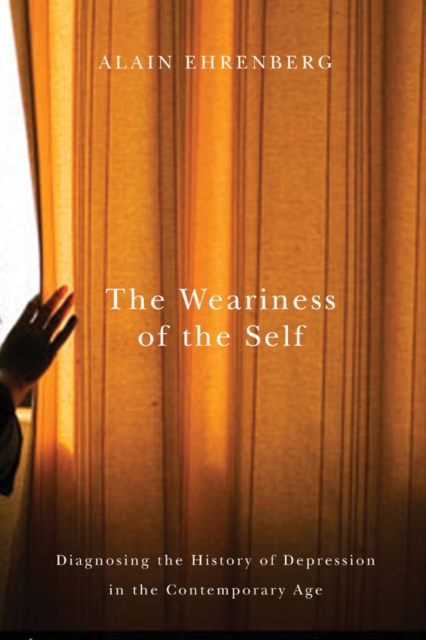
Weariness of the Self
Drawing on the accumulated knowledge of a lifetime devoted to the study of the individual in modern democratic society, Ehrenberg shows that the phenomenon of modern depression is not a construction of the pharmaceutical industry but a pathology arising from inadequacy in a social context where success is attributed to, and expected of, the autonomous individual. In so doing, he provides both a novel and convincing description of the illness that clarifies the intertwining relationship between its diagnostic history and changes in social norms and values.
eBook

An Interdisciplinary Theory of Activity
A critical review of Cultural-Historical Activity Theory, the psychology originating from Lev Vygotsky (1896-1934). Tracing its roots in Goethe, Hegel and Marx, the author builds a concept of activity transcending the division between individual and social domains in human sciences.
eBook

Venomous Tongues
Sandy Bardsley examines the complex relationship between speech and gender in the fourteenth and fifteenth centuries and engages debates on the static nature of women's status after the Black Death. Focusing on England, Venomous Tongues uses a combination of legal, literary, and artistic sources to show how deviant speech was increasingly feminized in the later Middle Ages. Women of all social classes and marital statuses ran the risk of being charged as scolds, and local jurisdictions interpreted the label \"scold\" in a way that best fit their particular circumstances. Indeed, Bardsley demonstrates, this flexibility of definition helped to ensure the longevity of the term: women were punished as scolds as late as the early nineteenth century.The tongue, according to late medieval moralists, was a dangerous weapon that tempted people to sin. During the fourteenth and fifteenth centuries, clerics railed against blasphemers, liars, and slanderers, while village and town elites prosecuted those who abused officials or committed the newly devised offense of scolding. In courts, women in particular were prosecuted and punished for insulting others or talking too much in a public setting. In literature, both men and women were warned about women's propensity to gossip and quarrel, while characters such as Noah's Wife and the Wife of Bath demonstrate the development of a stereotypically garrulous woman. Visual representations, such as depictions of women gossiping in church, also reinforced the message that women's speech was likely to be disruptive and deviant.
eBook

The Foundation of the Unconscious
The unconscious, cornerstone of psychoanalysis, was a key twentieth-century concept and retains an enormous influence on psychological and cultural theory. Yet there is a surprising lack of investigation into its roots in the critical philosophy and Romantic psychology of the early nineteenth century, long before Freud. Why did the unconscious emerge as such a powerful idea? And why at that point? This interdisciplinary study traces the emergence of the unconscious through the work of philosopher Friedrich Schelling, examining his association with Romantic psychologists, anthropologists and theorists of nature. It sets out the beginnings of a neglected tradition of the unconscious psyche and proposes a compelling new argument: that the unconscious develops from the modern need to theorise individual independence. The book assesses the impact of this tradition on psychoanalysis itself, re-reading Freud's The Interpretation of Dreams in the light of broader post-Enlightenment attempts to theorise individuality.
eBook

The Making of the Modern Self
Toward the end of the eighteenth century, a radical change occurred in notions of self and personal identity. This was a sudden transformation, says Dror Wahrman, and nothing short of a revolution in the understanding of selfhood and of identity categories including race, gender, and class. In this pathbreaking book, he offers a fundamentally new interpretation of this critical turning point in Western history.Wahrman demonstrates this transformation with a fascinating variety of cultural evidence from eighteenth-century England, from theater to beekeeping, fashion to philosophy, art to travel and translations of the classics. He discusses notions of self in the earlier 1700s-what he terms the ancien regime of identity-that seem bizarre, even incomprehensible, to present-day readers. He then examines how this peculiar world came to an abrupt end, and the far-reaching consequences of that change. This unrecognized cultural revolution, the author argues, set the scene for the array of new departures that signaled the onset of Western modernity.
eBook