
Catalogue Search | MBRL


Are you sure you want to remove the book from the shelf?

{{itemTitle}}
5,451
result(s) for
"PSYCHOLOGY / Movements / General."
Sort by:

Empire of Normality
'Groundbreaking … [provides] a deep history of the invention of the \"normal\" mind as one of the most damaging and oppressive tools of capitalism. To read it is to see the world more clearly' Steve Silberman, author of NeuroTribes
'Argues that a radical politics of neurodiversity is necessary, not only for neurodivergent folk, but for our collective liberation' Professor Hel Spandler, editor, Asylum magazine
'A vital book that kindles the flames of a neurodivergent revolution' Beatrice Adler-Bolton, co-author of Health Communism
Neurodiversity is on the rise. Awareness and diagnoses have exploded in recent years, but we are still missing a wider understanding of how we got here and why. Beyond simplistic narratives of normativity and difference, this groundbreaking book exposes the very myth of the 'normal' brain as a product of intensified capitalism.
Exploring the rich histories of the neurodiversity and disability movements, Robert Chapman shows how the rise of capitalism created an 'empire of normality' that transformed our understanding of the body into that of a productivity machine. Neurodivergent liberation is possible – but only by challenging the deepest logics of capitalism. Empire of Normality is an essential guide to understanding the systems that shape our bodies, minds and deepest selves – and how we can undo them.
Robert Chapman is a neurodivergent philosopher who has taught at King's College London and Bristol University. They are currently Assistant Professor in Critical Neurodiversity Studies at Durham University. They blog at Psychology Today and at Critical Neurodiversity.
eBook

From Guilt to Shame
Why has shame recently displaced guilt as a dominant emotional reference in the West? After the Holocaust, survivors often reported feeling guilty for living when so many others had died, and in the 1960s psychoanalysts and psychiatrists in the United States helped make survivor guilt a defining feature of the \"survivor syndrome.\" Yet the idea of survivor guilt has always caused trouble, largely because it appears to imply that, by unconsciously identifying with the perpetrator, victims psychically collude with power.
InFrom Guilt to Shame, Ruth Leys has written the first genealogical-critical study of the vicissitudes of the concept of survivor guilt and the momentous but largely unrecognized significance of guilt's replacement by shame. Ultimately, Leys challenges the theoretical and empirical validity of the shame theory proposed by figures such as Silvan Tomkins, Eve Kosofsky Sedgwick, and Giorgio Agamben, demonstrating that while the notion of survivor guilt has depended on an intentionalist framework, shame theorists share a problematic commitment to interpreting the emotions, including shame, in antiintentionalist and materialist terms.
eBook


Revolution in Psychology
\"A radical methodological approach to psychology that is open to social change - in an anti-capitalist, anti-racist and feminist politics.\" Antonio Negri
Psychology is meant to help people cope with the afflictions of modern society. But how useful is it? Ian Parker argues that current psychological practice has become part of the problem, rather than the solution.
Ideal for undergraduates, this book deconstructs the discipline to reveal the neoliberal sensitivities that underlie its theory and practice. Psychology focuses on the happiness of 'the individual'. Yet it neglects the fact that the happiness of the individual depends on their social and political surroundings.
Ian Parker argues that a new approach to psychology is needed. He offers an alternative vision, outlining how the discipline can be linked to political practice and how it can help people as part of a wider progressive agenda. This groundbreaking book is at the cutting edge of current thinking on the discipline and should be required reading on all psychology courses.
eBook
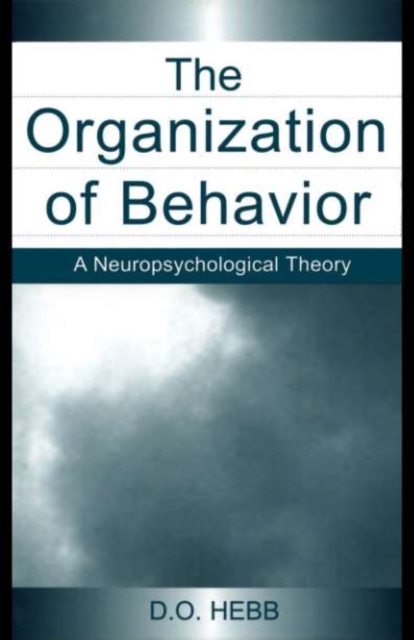
The Organization of Behavior
Since its publication in 1949, D.O. Hebb's, The Organization of Behavior has been one of the most influential books in the fields of psychology and neuroscience. However, the original edition has been unavailable since 1966, ensuring that Hebb's comment that a classic normally means \"cited but not read\" is true in his case. This new edition rectifies a long-standing problem for behavioral neuroscientists--the inability to obtain one of the most cited publications in the field.
The Organization of Behavior played a significant part in stimulating the investigation of the neural foundations of behavior and continues to be inspiring because it provides a general framework for relating behavior to synaptic organization through the dynamics of neural networks.
D.O. Hebb was also the first to examine the mechanisms by which environment and experience can influence brain structure and function, and his ideas formed the basis for work on enriched environments as stimulants for behavioral development.
References to Hebb, the Hebbian cell assembly, the Hebb synapse, and the Hebb rule increase each year. These forceful ideas of 1949 are now applied in engineering, robotics, and computer science, as well as neurophysiology, neuroscience, and psychology--a tribute to Hebb's foresight in developing a foundational neuropsychological theory of the organization of behavior.
Contents: Introduction. The Problem and the Line of Attack. Summation and Learning in Perception. Field Theory and Equipotentiality. The First Stage of Perception: Growth of the Assembly. Perception of a Complex: The Phase Sequence. Development of the Learning Capacity. Higher and Lower Processes Related to Learning. Problems of Motivation: Pain and Hunger. The Problem of Motivational Drift. Emotional Disturbances. The Growth and Decline of Intelligence.
eBook

The Encyclopedia of Positive Psychology
Positive psychology, the pursuit of understanding optimal human functioning, is reshaping the scholarly and public views of how we see the science of psychology.The Encyclopedia of Positive Psychology provides a comprehensive and accessible summary of this growing area of scholarship and practice.
eBook

A life worth living : contributions to positive psychology
A Life Worth Living brings together the latest thought on positive psychology from an international cast of scholars. It includes historical, philosophical, and empirical reviews of what psychologists have found to matter for personal happiness and well-being. The contributions to this volume agree on principles of optimal development that start from purely material and selfish concerns, but then lead to ever broader circles of responsibility embracing the goals of others and the well-being of the environment; on the importance of spirituality; on the development of strengths specific to the individual. Rather than material success, popularity, or power, the investigations reported in this volume suggest that personally constructed goals, intrinsic motivation, and a sense of autonomy are much more important. The chapters indicate that hardship and suffering do not necessarily make us unhappy, and they suggest therapeutical implications for improving the quality of life. Specific topics covered include the formation of optimal childhood values and habits as well as a new perspective on aging. This volume provides a powerful counterpoint to a mistakenly reductionist psychology. They show that subjective experience can be studied scientifically and measured accurately. They highlight the potentiality for autonomy and freedom that is among the most precious elements of the human condition. Moreover, they make a convincing case for the importance of subjective phenomena, which often affect happiness more than external, material conditions. After long decades during which psychologists seemed to have forgotten that misery is not the only option, the blossoming of Positive Psychology promises a better understanding of what a vigorous, meaningful life may consist of.
eBook

An Alternative History of Hyperactivity
In 1973, San Francisco allergist Ben Feingold created an uproar by claiming that synthetic food additives triggered hyperactivity, then the most commonly diagnosed childhood disorder in the United States. He contended that the epidemic should not be treated with drugs such as Ritalin but, instead, with a food additive-free diet. Parents and the media considered his treatment, the Feingold diet, a compelling alternative. Physicians, however, were skeptical and designed dozens of trials to challenge the idea. The resulting medical opinion was that the diet did not work and it was rejected.Matthew Smith asserts that those scientific conclusions were, in fact, flawed.An Alternative History of Hyperactivityexplores the origins of the Feingold diet, revealing why it became so popular, and the ways in which physicians, parents, and the public made decisions about whether it was a valid treatment for hyperactivity. Arguing that the fate of Feingold's therapy depended more on cultural, economic, and political factors than on the scientific protocols designed to test it, Smith suggests the lessons learned can help resolve medical controversies more effectively.
eBook

Irony Through Psychoanalysis
The title of this book, Irony Through Psychoanalysis, reveals its double register in which the psychoanalysis and irony are respectively the object and the means (or the viewpoint) or vice versa. Thus, the first chapter reviews the modern concepts of irony through the psychoanalytic lens, whilst the two central chapters examine clinical psychoanalysis and psychoanalytic theorization from the perspective of irony.Making extensive use of detailed personal material, Chapter Two looks at how the concept of irony might be broadened to include preconscious and unconscious aspects, and how we might speak of latent irony, even in those who are emitting the message. This contrasts with the position of Freud as a student of irony, who claimed that irony does not require involving the unconscious. It corresponds, however, much more closely to Freud's position as ironist, which is examined in Chapters Three and Four. Chapter Four in particular also traces back the reasons why Freud (with the exception of his article on humour) did not return to his work begun with Jokes and Their Relation to the Unconscious.Another of the book's aims is to make analysts more aware of the usefulness of the possibilities of perceiving the analsand's and the analyst's own ironic messages, especially the preconscious ones.
eBook

Tourist Behaviour
Tourism is an inherently social phenomenon. Tourists travel with others and experience places and cultures through interacting with both familiar and unfamiliar others. This volume presents a thorough tour of the social psychological processes which underpin contemporary travel. The fascinating phenomenon of tourist behaviour deals with topics such as motivation, destination choice, travellers' on site experiences, satisfaction and learning. This book uses an array of developing and recently constructed conceptual frameworks to both synthesise what is established, and to create new insights and directions for further analysis and, ultimately, management action.
eBook