
Catalogue Search | MBRL


Are you sure you want to remove the book from the shelf?

{{itemTitle}}
9,247
result(s) for
"Pacific Area"
Sort by:


The European Union in the Asia-Pacific
Since the mid-1990s, the European Union has defined the Asia-Pacific as one of its key strategic targets on its ambitious road towards global power. The EU has ever since made consistent efforts to implement strategies, policies and activities in the Asia-Pacific. Over the past decades, big changes have taken place on both sides and the wider world. It is high time to evaluate the EU’s performance in its Asian policy. In fact, the EU is at crossroads with its Asia Pacific policy. On several aspects, the EU is compelled to redefine its interests and roles, and rethink its strategies and policies towards the dynamic and ever-important Asia-Pacific region of the contemporary world. This volume addresses this theme, by elaborating the general context, major issues and countries in the EU’s Asia-Pacific policy. It covers issues and areas of traditional security, economy and trade, public diplomacy, and human security and focuses on the EU’s relations with China, Japan, the ASEAN countries and Australasia.
eBook

Social equity in the Asia-Pacific Region : conceptualizations and realities
This book examines the concept and public service value of social equity in public administration research and practice outside of the Western context, considering the influence that historical, cultural, and social trends of Asian and Pacific societies may have on how social equity is conceptualized and realized in the Asia-Pacific region. The book presents the results of an effort by a group of scholars from seven countries (Australia, China, Hong Kong, Japan, Korea, The Philippines, and Singapore), one American State (the Hawaiian Islands), and the Pacific Islands to discover what social equity means in their respective contexts. It concludes by synthesizing and analyzing the chapter authors' findings to advance a more global conceptualization of social equity.-- Provided by publisher.
Book

Into the Field
Tracy Dahlby is an award-winning journalist who has reported internationally as a contributor to National Geographic magazine and served as a staff correspondent for Newsweek and the Washington Post. In this memoir of covering a far-flung swath of Asia, he takes readers behind the scenes to reveal “the stories behind the stories\"—the legwork and (mis)adventures of a foreign correspondent on a mission to be the eyes and ears of people back home, helping them understand the forces and events that shape our world. Into the Field centers on the travel and reporting Dahlby did for a half-dozen pieces that ran in National Geographic. The book tours the South China Sea during China’s rise as a global power, visits Japan in a time of national midlife crisis, and explores Southeast Asia during periods of political transition and tumult. Dahlby’s vivid anecdotes of jousting with hardboiled sea captains, communing with rebellious tribal chieftains, enduring a spectacular shipboard insect attack, and talking his way into a far place or out of a tight spot offer aspiring foreign correspondents a realistic introduction to the challenges of the profession. Along the way, he provides practical advice about everything from successful travel planning to managing headstrong local fixers and dealing with circumstances that can range from friendly to formidable. A knowledgeable, entertaining how-to book for observing the world and making sense of events, Into the Field is a must-read for student journalists and armchair travelers alike.
eBook


Encyclopedia of Ocean Law and Policy in Asia-Pacific
The Encyclopedia of Ocean Law and Policy in Asia-Pacific provides a detailed snapshot of the contemporary and historic ocean law and policy of numerous states across the region, from the perspective of regional authors and utilizing a consistent subject outline to promote comparative research.
eBook

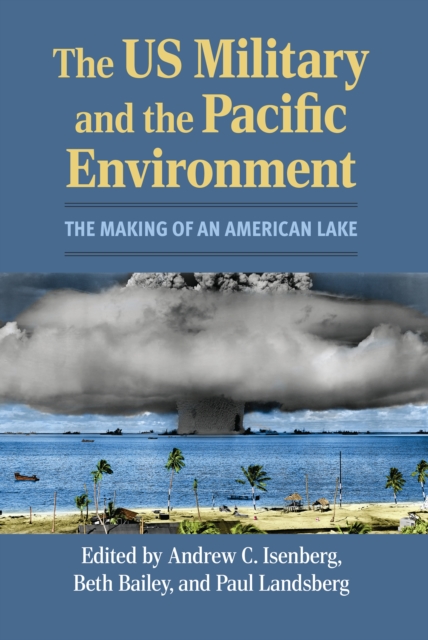
The US Military and the Pacific Environment
The environmental consequences of the US military presence
from World War II through the end of the US war in
Vietnam.
Oceans and deserts, jungles and plains, mountains and
rivers, monsoons and blizzards, fertile grounds and diseased
lands; all have shaped how strategy and technology has been
deployed and developed, and all have supported unexpected
victories and decimated even the best-laid plans. Conversely,
warfare and militarization have shaped the environment,
scarring landscapes, accelerating the global spread of disease,
unbalancing ecosystems, and contributing to climate change.
Reflecting on the inextricable, reciprocal, and often
surprising relationship between the natural world and human
warfare, these essays offer a new perspective on power,
knowledge, and the environment in US military history.
The history of US military engagement in the Pacific
powerfully demonstrates the profound and diverse impacts that
regions’ extraordinarily diverse environments have
wrought on warfare. US military action has also had profound
impacts in the Pacific, from the nuclear weapons testing
programs of the Cold War to the use of chemical defoliants in
Vietnam. The contributors to this volume consider how the
physical environments of the Pacific shaped the process and
outcome of battles and wars, and discuss the effect warfare and
other military actions had on these physical environments.
eBook

