
Catalogue Search | MBRL


Are you sure you want to remove the book from the shelf?

{{itemTitle}}
207
result(s) for
"Pacific Islanders Sports."
Sort by:

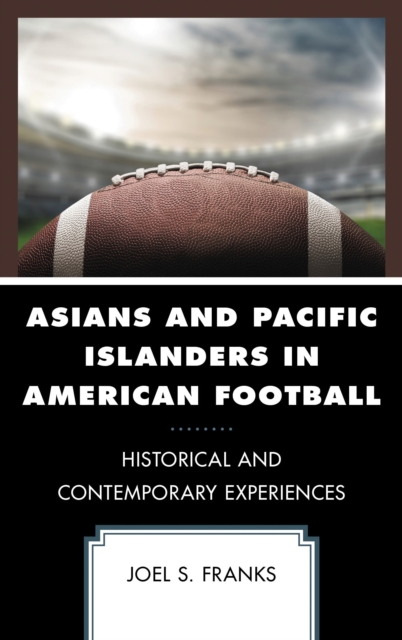
Asians and pacific islanders in American football
This book sheds light on experiences relatively underrepresented in academic and non-academic sport history. It examines how Asian and Pacific Islander peoples used American football to maintain a sense of community while encountering racial exclusion, labor exploitation, and colonialism. Through their participation and spectatorship in American football, Asian and Pacific Islander people crossed treacherous cultural frontiers to construct what sociologist Elijah Anderson has called a cosmopolitan canopy under which Asian Americans, Pacific Islanders, and people of diverse racial and ethnic identities interacted with at least a semblance of respect and equity. And perhaps a surprising number of Asian Americans and Pacific Islanders have excelled in college and even professional football before the 1960s. Finally, acknowledging the impressive influx of elite Pacific Islander gridders who surfaced in the late twentieth and early twenty-first century, it is vital to note as well the racialized nativism shadowing the lives of these athletes.
eBook

Crossing sidelines, crossing cultures : sport and Asian Pacific American cultural citizenship
Since Crossing Sidelines, Crossing Cultures was originally published in 2000, new findings in Asian Pacific American sports have come to light.Moreover, Americans of Asian Pacific ancestry have made the sports world incredibly more exciting than before.
eBook

Trends in Pediatric Anterior Cruciate Ligament Reconstruction: The Effect of COVID-19
The number of pediatric anterior cruciate ligament reconstructions (ACLRs) occurring yearly increased almost 6-fold from 2004-2014. We find it interesting that limited recent data exist on rates of ACL injury and reconstruction in children and adolescents, especially in the context of COVID-19.
Given the effect of the COVID-19 pandemic on youth sports seasons and the postponement of many elective surgeries, we sought to examine the changes in rates of ACLR during this period.
Retrospective cohort study.
This study used the Pediatric Health Information System (PHIS) database to identify eligible patients at PHIS-participating hospitals nationwide from January 2016-June 2021, with March 1, 2020, considered the start of the COVID-19 pandemic.
Using Current Procedural Terminology codes, patients 18 years old and younger who underwent ACLR surgery were identified.
Patient demographics and overall rates of surgery prepandemic and intrapandemic were compared. Data were analyzed using bivariate, mixed-model, and time series analyses.
A total of 24 843 ACLRs were identified during this time period. In total, 1853 fewer surgeries than expected were performed after March 2020 given prepandemic trends. Intrapandemic demographics revealed an increase in the proportion of patients who identified as White and with private insurance and a decrease in the proportion who identified as Black and with public insurance. Also, the proportion of ACLRs by region shifted, with more surgeries performed in the Midwest and fewer in the Northeast. In the model adjusted for hospital-level variability, only race and insurance status remained significant.
Based on prepandemic trends, fewer patients than projected underwent ACLR once the pandemic began, likely due to a combination of decreased rates of injury and delayed surgery.
Journal Article

Subjective Concerns Regarding the Effects of Sport-Related Concussion on Long-Term Brain Health among Former NFL Players: An NFL-LONG Study
Background
Potential links between a history of sport-related concussions and later-life neurobiological and psychological brain health have been studied in former collision-sport athletes. However, empirical studies of how former athletes perceive the future of their brain health as a result of these injuries are missing.
Objectives
We aimed to (1) identify the extent to which former National Football League players currently have concerns about their long-term psychological and cognitive functioning as a result of concussions sustained while playing football; (2) examine whether current concerns are different than concerns they had while playing football; (3) examine the relationship between current brain health concerns and self-reported concussion history (SR-CHx); and (4) explore other important factors associated with these concerns.
Methods
In this cross-sectional study, former National Football League players with a SR-CHx of one or more concussions (
n
= 1514; aged mean [standard deviation] = 52.3 [15.7] years) completed a general health questionnaire. Participants reported their lifetime concussion history, as well as both their current concerns and concerns while playing football (i.e., retrospective concerns) regarding the long-term effects of concussions on their memory, thinking skills, and risk of developing chronic traumatic encephalopathy. Current and retrospective concerns were self-reported on a five-point Likert scale. Four concussion history categories were created based on SR-CHx: 1–2 (
n
= 309); 3–5 (
n
= 413); 6–9 (
n
= 356); and 10 + (
n
= 436) lifetime concussions. Proportions of participants reporting each level of current and retrospective concerns were examined to identify whether concerns presently exist in these former players, and whether their current concerns are different than retrospective concerns. Next, we explored associations between current concerns and SR-CHx.
Results
More than one-third of participants reported being currently “extremely concerned” about memory problems (36.9%), thinking skills (37.8%), and developing chronic traumatic encephalopathy (39.5%). In contrast, when asked about concerns while playing, most reported being “not at all concerned” regarding memory = 61.2%, thinking skills = 56.1%, and developing chronic traumatic encephalopathy = 71.2%. Of those who retrospectively endorsed being “not at all” or “slightly” concerned regarding memory (
n
= 1159/1514), thinking skills (
n
= 1080/1514), and developing chronic traumatic encephalopathy (
n
= 1219/1514), approximately half reported being currently “moderately” or “extremely” concerned about those same issues (
n
= 586/1159;
n
= 534/1080;
n
= 619/1219, respectively). Current concerns regarding memory (
χ
2
16
= 316.61;
p
< 0.001;
V
= 0.264), thinking skills (
χ
2
16
= 333.17;
p
< 0.001;
V
= 0.271), and developing chronic traumatic encephalopathy (
χ
2
16
= 280.85;
p
< 0.001;
V
= 0.249) were significantly related to SR-CHx, with more concussions being associated with greater current concerns.
Conclusions
Former National Football League players reported significant concerns regarding the potential effects of their prior concussions on long-term brain health, and these concerns are more prevalent now than when they were playing football. Cognitive and mental health concerns are readily identifiable targets for clinical intervention. Clinicians working with former players may wish to explore the extent to which individual players experience these concerns, the nature and depth of these concerns, and the impact of these concerns on the player’s functioning and well-being.
Journal Article
Board of Certification Examination Achievement Gaps as a Barrier to Diversifying the Athletic Training Profession
Achievement gaps have been well documented in the medical and health professions. Previous researchers have indicated that individuals from underrepresented minority groups consistently fall short of White candidates in performance on standardized credentialing examinations.
To determine the relative risk of failure by ethnicity and first-time and retake pass rates on the Board of Certification (BOC) examination.
Descriptive study.
Professional master's degree athletic training programs.
A total of 3742 unique candidates with 4425 attempts between examination windows 1 of 2011-2012 (April) and 5 of the 2019-2020 (February) cycle of the BOC examination.
Ethnicity as self-selected by the candidates, attempt number, result of each attempt, year, and testing window.
Examination candidates self-identified as White (60.4%, n = 2261/3742), unknown (ie, withheld an ethnicity selection; 10.6%, n = 395/3742), Hispanic (8.6%, n = 320/3742), or African American (8.4%, n = 313/3742). On the first attempt, White candidates passed at a rate of 93.2% (2107/2261), African American candidates at 74.8% (234/313), and Hispanic candidates at 86.9% (278/320; overall first-time pass rate for this subsample = 90.5%, 2619/2894). The relative risk of first-attempt failure was higher for African Americans than for both White (relative risk = 3.706, 95% CI = 2.903, 4.730; P < .001) and Hispanic (relative risk = 1.923, 95% CI = 1.368, 2.703; P > .001) candidates. For Hispanic candidates, the relative risk of first-attempt failure was about 50% lower than for White candidates (relative risk = 0.519, 95% CI = 0.377, 0.715; P < .001).
Achievement gaps existed between White candidates and those from ethnic minority groups in athletic training. Diversification of the athletic training workforce will require ensuring equity in preparation for and success on the BOC examination.
Journal Article

Clinical outcomes of 10 years of cardiac screening in elite New Zealand athletes
To report findings from the High Performance Sport New Zealand cardiac screening programme, including comparisons between sexes and ethnicities.
Retrospective cohort study.
Elite Olympic-sport athletes were screened (2012–2022) with personal/family history, physical examination, resting 12-lead ECG and followed from the date of first screening until July 2022. An audit reviewed screening records, including demographic data, ECGs, follow-up and diagnoses. Flagged/equivocal ECGs were re-reviewed (International Criteria).
2075 ECGs from 1189 athletes (53 % female, mean age 21 years; 83 % European, 9 % Māori, 5 % Pacific Islander, 3 % other) were included. No athletes retired for cardiac reasons; there were no cardiac deaths or major cardiac incidents (mean follow-up from first screening: 6.1 years (range: 0.6–10.9 years)). Diagnoses included Wolff-Parkinson-White (WPW) syndrome (0.7 %) and cardiomyopathies (0.3 %). Overall, 3.5 % of ECGs were abnormal, with ECGs of females more commonly abnormal (4.4 % vs 2.5 %, p = 0.02) and with a higher proportion of ECGs with abnormal T-wave inversion (TWI) (3.1 % vs 0.9 %, p < 0.001) compared to males. Of the abnormal TWI in females (all aged ≥16 years), 47 % was limited to V1–V3 with no other abnormalities. Abnormality rates were similar between Māori, Pacific Islander and European athlete ECGs.
WPW was the most frequent diagnosis, with very little cardiomyopathy found. The proportion of abnormal ECGs was low overall, but higher in females. This was driven by anterior TWI in V1–V3 which was not associated with diagnoses of conditions associated with sudden cardiac death (SCD). There was no difference in the proportion of abnormal ECGs of Māori or Pacific Island athletes compared to European athletes.
[Display omitted]
Journal Article

The Barriers to and Facilitators of Physical Activity and Sport for Oceania with Non-European, Non-Asian (ONENA) Ancestry Children and Adolescents: A Mixed Studies Systematic Review
Background: Participation in sport and physical activity (PA) leads to better overall health, increased life expectancy, and decreased mortality rates across the lifespan; however, there may be a range of individual, family, and community factors that influence PA participation among ONENA children and adolescents residing in the 22 Pacific Island Countries and Territories (PICT) and Australia. This review aimed to synthesise existing quantitative and qualitative literature regarding barriers to and facilitators of PA and sport among ONENA youth. Methods: The literature was systematically searched to include studies reporting barriers to and facilitators of PA and sports participation among ONENA children and adolescents aged 0–18 years residing in the 22 PICT and Australia. Using a pre-established taxonomy based on the social-ecological model, a deductive analysis was performed. Quality appraisal was performed using the mixed methods appraisal tool. Results: Of 1388 articles, 14 studies were included, with 128 ONENA children and adolescent participants across the four qualitative studies; 156,581 ONENA children and adolescents across the seven quantitative studies; 801 parents, children, and adolescents in one quantitative study; and 642 parents in two quantitative studies. Of the 14 included studies, none were based in Australia and only 10 of the 22 PICT were reported as the participants’ residence: Palau, New Zealand, Tonga, Cook Islands, Kiribati, Samoa, Solomon Islands, Tuvalu, Vanuatu, and Fiji. Four studies reported barriers, and another four studies reported facilitators of PA and sport, with the remaining studies reporting both barriers and facilitators. Overall, there were more barriers reported (30 in total) than facilitators (27 in total). Conclusions: Research in this area is lacking, with ONENA youth living in Australia and 12 PICT not represented. Overall, there were a larger number of facilitators experienced at individual and interpersonal levels, while barriers were highest at the community level, with the policy level having facilitators and barriers equally represented. Programs that offer PA and sport participation options with embedded SDT-informed strategies for all family members; that are accessible through existing transport and related social, cultural, and physical infrastructure; and that are committed to communities through formal co-design partnerships are needed, to enhance the PA and sport participation of ONENA youth residing in PICT.
Journal Article

Spearfishing and public health promotion: A cross-sectional analysis of the Hawaiʻi Behavioral Risk Factor Surveillance System Survey
Spearfishing, a culturally relevant practice in many locations globally, may foster physical activity and enhance well-being by promoting social cohesion, food security, and nature connectedness, but is understudied in public health promotion and surveillance. This study measured the population-level prevalence of lifetime spearfishing engagement in Hawaiʻi and identified associated factors for public health promotion. The Hawaiian Islands present an ideal setting for such activities due to its central Pacific location and a diverse population with cultural ties to spearfishing. In 2019 and 2020, lifetime spearfishing engagement was added to the Hawai’i Behavioral Risk Factor Surveillance System (N = 12,737). Prevalence ratios (PR) and 95% confidence intervals (95%CI) were estimated for spearfishing “sometimes,” “often,” or “very often” during one’s lifetime, considering sociodemographic, health behavior, and health status variables. A quarter of respondents statewide reported engagement, with higher rates amongst men (41%), Native Hawaiians (43%), other Pacific Islanders (36%), American Indian or Alaskan Native (32%), and rural island residents of Lānaʻi (51%) and Molokaʻi (43%). All age groups reported similar lifetime engagement. After statistical adjustment, those with a high school diploma or less were significantly more likely to have engaged in spearfishing than those with higher education. Spearfishing engagement was also associated with a higher likelihood of meeting physical activity guidelines (PR 1.45 95%CI 1.29-1.63). There is widespread lifelong engagement in spearfishing in Hawaiʻi, especially among Indigenous and rural populations. Supporting culturally relevant activities, such as spearfishing, is a strength-based approach to health promotion with global relevance, including encouraging physical activity.
Journal Article

Disparities in unintentional drowning fatalities in Texas, USA, 1999–2020
BackgroundDrowning is the third-leading cause of unintentional injury death worldwide. Although the USA as a whole bears a heavy burden, with approximately 4000 drowning fatalities annually, Texas stands out as a high-risk state for drowning due to its large population, suitable climate for year-round aquatic activities and availability of water-related recreational opportunities.MethodsUsing mortality data from the Centers for Disease Control and Prevention Wide-ranging ONline Data for Epidemiologic Research online database, this retrospective, cross-sectional study overviews the magnitude and patterns of fatal unintentional drownings among Texans from 1999 to 2020.ResultsOver the 22-year period, 7737 Texans died from unintentional drowning. An average of 352 drowning deaths occurred annually, with a rate of 1.4 deaths per 100 000 population. The highest proportion of unintentional drownings occurred in natural water settings (eg, lakes, ponds or rivers), accounting for 40% of fatal drownings. Children aged 1–4 years had the highest drowning death rate compared with all other age groups. Male Texans had a drowning death rate three times higher than that of female Texans. Black Texans had a higher drowning death rate than White Texans and Asian or Pacific Islander Texans.ConclusionsDrowning remains a significant public health issue in Texas. Data on high-risk groups and settings should be used to strengthen drowning prevention efforts and policy initiatives and encourage more research to address the multifaceted factors contributing to drowning.
Journal Article