
Catalogue Search | MBRL


Are you sure you want to remove the book from the shelf?

{{itemTitle}}
3
result(s) for
"Pacte vert."
Sort by:

The new climate war : the fight to take back our planet
\"Recycle. Fly less. Eat less meat. These are some of the tactics that we've been told can slow climate change. But most of these recommendations are a result of a multi-pronged marketing campaign that has succeeded in placing the responsibility for fixing climate change squarely on the shoulders of individuals. Fossil fuel companies have followed the example of other industries deflecting blame (think \"guns don't kill people, people kill people\") or greenwashing (think of the beverage industry's \"Crying Indian\" commercials of the 1980s). Meanwhile, they've blocked efforts to regulate or price carbon emissions, run PR campaigns aimed at discrediting viable alternatives, and have abdicated their responsibility in fixing the problem they've created. The result has been disastrous for our planet. In The New Climate War, Mann argues that all is not lost. He draws the battle lines between the people and the polluters--fossil fuel companies, right-wing plutocrats, and petrostates. And he outlines a plan for forcing our governments and corporations to wake up and make real change, including: a common-sense, attainable approach to carbon tax-- an overhaul of the flawed Green New Deal; allowing renewable energy to compete fairly against fossil fuels debunking the false narratives and arguments that have worked their way into the climate debate and driven a wedge between even those who support climate change solutions how to combat climate doomism. With immensely powerful vested interests aligned in defense of the fossil fuel status quo, the societal tipping point won't happen without the active participation of citizens everywhere aiding in the collective push forward. This book will reach, inform, and enable citizens everywhere to join this battle for our planet.\"-- Provided by publisher.
Book
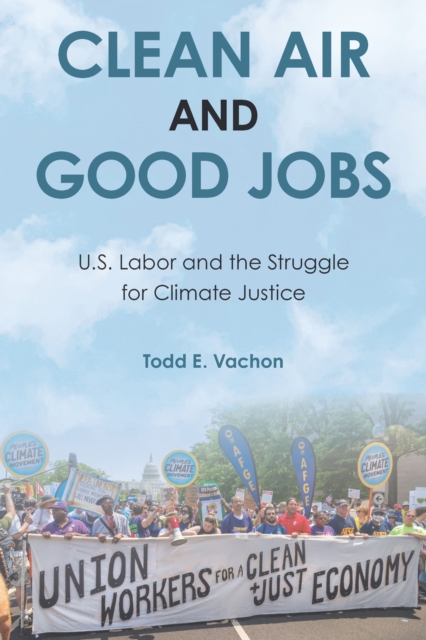
Clean air and good jobs
\"Addresses the role that the U.S. labor movement has or could have in forging a 'just transition' away from dependence on fossil fuels toward a Green New Deal to address the dual crises of climate change and inequality.\"
eBook
Necessity. Rails, rivers, & the thin green line
In the course of screening Necessity Part I: Oil, Water & Climate Resistance at schools, activist events, and festivals, the team began production on a second part, titled Necessity Part II: Rails, Rivers and the Thin Green Line. Also feature-length, the film is set along the rivers of Oregon and follows activists as they enlist the necessity defense in a jury trial after being arrested for a direct action at Zenith Energy in Portland. This story of climate resistance in the Pacific Northwest brings into view a historical landscape of tribal leaders, Indigenous activists and white allies as they resist oil trains and trucks carrying these highly inflammable products through treaty lands. In following the path of oil-by-rail and oil resistance along the Columbia, we revisit lessons of the New Deal era of building massive dams and what climate activists take from that era in thinking about a Green New Deal.
Streaming Video