
Catalogue Search | MBRL


Are you sure you want to remove the book from the shelf?

{{itemTitle}}
10,357
result(s) for
"Paganism"
Sort by:

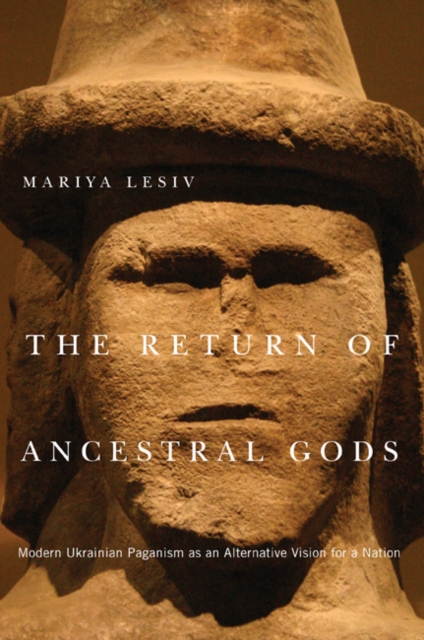
The Return of Ancestral Gods
As Ukraine struggles to find its national identity, modern Ukrainian Pagans offer an alternative vision of the Ukrainian nation. Drawing inspiration from the spiritual life of past millennia, they strive to return to the pre-Christian roots of their ancestors. Since Christianity dominates the spiritual discourse in Ukraine, Pagans are marginalized, and their ideas are perceived as radical. In The Return of Ancestral Gods, Mariya Lesiv explores Pagan beliefs and practices in Ukraine and amongst the North American Ukrainian diaspora. Drawing on intensive fieldwork, archival documents, and published sources not available in English, she allows the voices of Pagans to be heard. Paganism in Slavic countries is heavily charged with ethno-nationalist politics, and previous scholarship has mainly focused on this aspect. Lesiv finds it important to consider not only how Paganism is preached but also the way that it is understood on a private level. She shows that many Ukrainians embrace Paganism because of its aesthetic aspects rather than its associated politics and discusses the role that aesthetics may play in the further development of Ukrainian Paganism. Paganism in Eastern Europe remains underrepresented within Pagan studies, and this work helps to fill that gap. Extensive comparative references to various forms of Western Paganism allows English-speaking readers to better understand the world of Ukrainian Pagans.
eBook


Impossible causes
\"For seven months of the year, the remote island of Lark is fogbound, cut off completely from the mainland. Three strangers arrive before the mists fall: Ben Hailey, a charismatic teacher looking to make his mark, teenager Viola Kendrick, and her mother, both seeking a place to hide from unspeakable tragedy. As the winter fog sets in, the presence of the newcomers looms large in this tight-knit community. They watch as their women fall under the teacher's spell. And they watch as their daughters draw the mysterious Viola into their circle. The girls begin to meet furtively at night, dancing further and further away from the religious traditions that have held Lark together for generations. But when a body is found one morning at the girls' meeting place, high up among the sacred stones of Lark, faith turns instantly to suspicion and fear. For the island is weighted with its own dark secrets, and now it is time for them to come into the light\" -- provided by Publisher.
Book

JEAN EPSTEIN'S VISUAL THINKING: FACE, FLUID AND ANIMISM/ O PENSAMENTO VISUAL EPSTEINIANO: ROSTO, FLUIDO E ANIMISMO/ EL PENSAMIENTO VISUAL DE JEAN EPSTEIN: ROSTRO, FLUIDO Y ANIMISM
Jean Epstein's writings and films often exalt the camera eye and the intelligence of the film machine. In addition to this enthusiasm for the device, typical of the European vanguards of the early 20th century, we have tried to identify the basis for the author's visual thinking. The paper focuses on the figuration of the human face, the logic of the fluid and the animistic principle. The analysis of these elements, present in the writings and films, allows to understand the axis of Epstein's poetics and aesthetics: the relation between cinema and time.
Journal Article
JEAN EPSTEIN'S VISUAL THINKING: FACE, FLUID AND ANIMISM/ O PENSAMENTO VISUAL EPSTEINIANO: ROSTO, FLUIDO E ANIMISMO/ EL PENSAMIENTO VISUAL DE JEAN EPSTEIN: ROSTRO, FLUIDO Y ANIMISM
Jean Epstein's writings and films often exalt the camera eye and the intelligence of the film machine. In addition to this enthusiasm for the device, typical of the European vanguards of the early 20th century, we have tried to identify the basis for the author's visual thinking. The paper focuses on the figuration of the human face, the logic of the fluid and the animistic principle. The analysis of these elements, present in the writings and films, allows to understand the axis of Epstein's poetics and aesthetics: the relation between cinema and time. Keywords: Jean Epstein. Film aesthetics. Time. Animism. Os escritos teoricos e os filmes de Jean Epstein frequentemente exaltam o olho da camera e a inteligencia da maquina cinematografica. No emaranhado de caminhos que se desdobram a partir desse entusiasmo diante do dispositivo, tipico das vanguardas europeias do inicio do seculo XX, tentamos identificar as bases para o pensamento visual do autor. A analise se concentra sobre a figuracao do rosto humano, a logica do fluido e o principio animista. Trata-se de um tripe presente tanto na producao teorica como filmica de Epstein, e essencial para compreender a relacao tao cara a sua obra entre o cinema e o tempo. Palavras-chave: Jean Epstein. Estetica cinematografica. Tempo. Animismo. Los escritos teoricos y las peliculas de Jean Epstein a menudo ensalzan el ojo de la camara y la inteligencia de la maquina de pelicula. En la marana de caminos que se desarrollan a partir de este entusiasmo por el dispositivo, tipico de las vanguardias europeas de principios del siglo XX, hemos tratado de identificar la base del pensamiento visual del autor. El analisis se centra en la figuracion del rostro humano, la logica del fluido y el principio animista. Es un tripode presente tanto en la produccion teorica como filmica de Epstein, y esencial para comprender la relacion tan querida por su trabajo entre el cine y el tiempo. Palavras clave: Jean Epstein. Estetica del cine. Tiempo. Animism.
Journal Article
Contemporary Pagan and Native Faith Movements in Europe
Pagan and Native Faith movements have sprung up across Europe in recent decades, yet little has been published about them compared with their British and American counterparts. Though all such movements valorize human relationships with nature and embrace polytheistic cosmologies, practitioners' beliefs, practices, goals, and agendas are diverse. Often side by side are groups trying to reconstruct ancient religions motivated by ethnonationalism-especially in post-Soviet societies-and others attracted by imported traditions, such as Wicca, Druidry, Goddess Spirituality, and Core Shamanism. Drawing on ethnographic cases, contributors explore the interplay of neo-nationalistic and neo-colonialist impulses in contemporary Paganism, showing how these impulses play out, intersect, collide, and transform.
eBook

Divination and Prediction in Early China and Ancient Greece
Divination was an important and distinctive aspect of religion in both ancient China and ancient Greece, and this book will provide the first systematic account and analysis of the two side by side. Who practised divination in these cultures and who consulted it? What kind of questions did they ask, and what methods were used to answer those questions? As well as these practical aspects, Lisa Raphals also examines divination as a subject of rhetorical and political narratives, and its role in the development of systematic philosophical and scientific inquiry. She explores too the important similarities, differences and synergies between Greek and Chinese divinatory systems, providing important comparative evidence to reassess Greek oracular divination.
eBook

The final pagan generation
The Final Pagan Generationrecounts the fascinating story of the lives and fortunes of the last Romans born before the Emperor Constantine converted to Christianity. Edward J. Watts traces their experiences of living through the fourth century's dramatic religious and political changes, when heated confrontations saw the Christian establishment legislate against pagan practices as mobs attacked pagan holy sites and temples. The emperors who issued these laws, the imperial officials charged with implementing them, and the Christian perpetrators of religious violence were almost exclusively young men whose attitudes and actions contrasted markedly with those of the earlier generation, who shared neither their juniors' interest in creating sharply defined religious identities nor their propensity for violent conflict. Watts examines why the \"final pagan generation\"-born to the old ways and the old world in which it seemed to everyone that religious practices would continue as they had for the past two thousand years-proved both unable to anticipate the changes that imperially sponsored Christianity produced and unwilling to resist them. A compelling and provocative read, suitable for the general reader as well as students and scholars of the ancient world.
eBook