
Catalogue Search | MBRL


Are you sure you want to remove the book from the shelf?

{{itemTitle}}
144
result(s) for
"Painters Catalogs."
Sort by:

Postcards Remixed: Ekphrasis, Ecology, and the Everyday in Caribbean Postcard Poetry
In the Caribbean agricultural context of the plantation, Lizabeth Paravisini-Gebert has brilliantly studied visual art that represents bagasse-the leftover fibrous pulp after the juice has been extracted from the sugar cane-as the literal or figurative debris of plantation history. [...]I think of the postcard as in some ways akin to that similarly sized card, the index card in library catalogues of earlier days-for the postcard is a place holder that marks a lost catalogue, an absent author, a silenced subject, a missing book. Given the constitutive erasures and silences of the Caribbean archive, it is worth remembering that ekphrastic poetry has often served an archival function-for example, in art history, when the work of art \"described\" by the poem has itself been lost. [...]Senior's entire book Gardening in the
Journal Article

Esaias Boursse's 'Tijkenboeck': A Pictorial Catalogue of People Working and Living in and around Colombo, 1662
We do not know who trained Esaias Boursse (1631-1672) to be a painter, but we do know that he became a member of the Amsterdam Guild of St Luke around 1651. He certainly did not have a successful career because he joined the Dutch East India Company (voc) in 1661. He travelled to Colombo, the capital of the island of Ceylon (Sri Lanka since 1972), captured six years earlier by the Portuguese, by way of Batavia (now Jakarta). In 1663 he was back in Amsterdam – remarkable, as the standard contract with the voc was for five years. In financial straits again, he re-joined the voc in 1671 and left for Asia. Shortly after leaving he died at sea. In 1996 an album containing 116 drawings came to light, most of them made by Boursse during his time in Ceylon; he made only a small number during his out- ward or return journeys to the Cape of Good Hope. The drawings are completely different from his earlier known oeuvre of genre paintings and prints with religious themes. The pages in his 'Tijkenboeck' provide a unique picture of what Boursse saw in and around Colombo. They are important evidence of the early days of the voc in its conquered colony of Ceylon.
Journal Article

The works of Arthur Devis (1712–1787) with a supplement to his catalogue
Griffiths focuses on the works of Arthur Devis. At some time between 1722 and 1728 Arthur Devis began his training under the Flemish topographical and sporting painter Peter Tillemans who was working for the Earl of Derby at Knowsley Hall near Liverpool England. Devis's first recorded work of his own conception was Hoghton Tower from Duxon Hill, Lancashire England. It was completed and sold for 6gns in 1735 and the influence of Tillemans is very evident. Devis's last known topological work is dated 1736. D'Oench remarks 'his topological training under Tillemans undoubtedly lay at the foundation of his career-long attachment to portraiture in the landscape'. Devis exhibited at the Free Society of Artists exhibitions 1761-63, 1767-70, 1775 and 1780. He was elected President of the Society in 1768 but, significantly he was never elected to membership of the more prestigious Royal Academy.
Journal Article
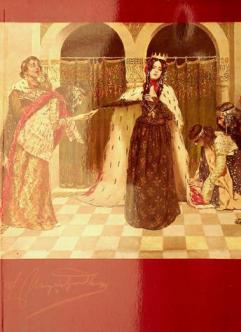

PICASSO
There seem to be endless prisms through which to view the work of Pablo Picasso (1881-1973), a testament both to its breadth and the continuing fascination for this extraordinary artist. Picasso: Encounters by Jay A. Clarke and Marilyn McCully focuses on Picasso's printmaking from the perspective of his collaborations with printers and publishers, as well as by considering the impact of the various women who served as his muse Taking 35 of his best known prints, from the austere Frugal Repast and the linear simplicity of Two Clothed Models from the Vollard suite, through to the pathos of the Weeping Woman, here represented by four states, the range and versatility of Picasso as a printmaker is self-evident. The selection also includes a number of states of his 1968 color linocut Luncheon on the Grass, after Manet, showing just how boldly he worked with colour The two essays, 'Picasso's Creative Collaborations' by Clarke and 'Picasso and Printmaking: The Smell of the Ink' by McCully, contextualize the selection. Altogether this is a very accessible introduction to Picasso's prints, well-illustrated and informative.
Journal Article