
Catalogue Search | MBRL


Are you sure you want to remove the book from the shelf?

{{itemTitle}}
149
result(s) for
"Painting, Gothic"
Sort by:

Late Gothic Painting in the Crown of Aragon and the Hispanic Kingdoms
This book analyzes the genesis and evolution of the late Gothic painting in the Crown of Aragon and the Hispanic kingdoms, examining this phenomenon in relation to the whole context of Europe in the second half of the fifteenth century.
eBook

Masterworks. Master Theodoricus : St. George, oil on wood
1000 Masterpieces from the Great Museums of the World is one of the most successful TV series about art. The original, with improved image quality, takes us on a fascinating journey through the history of art. Comprehensively illustrated and compellingly presented - the well-known authors of fi ve short art surveys provide a deeper insight into the masterpieces of painting.With a history of more than 200 years the National Gallery in Prague is considered as one of the most important art museums of Bohemia, which contains a large number of artworks from national and foreign artists. This DVD gives an insight into the Bohemian art and presents artworks of famous painters like the master of Bohemian baroque painting Brandl, the portrait painter Kupecký, the Gotic court painter Teodoricus, the pioneer of abstract painting Kupka as well as Mucha, the representative of the Art Nouveau.
Streaming Video

The architecture in Giotto's paintings
\"This book offers an analysis of Giotto's painted architecture, focusing on issues of structural logic, clarity of composition, and its role within the narrative of the painting. Giotto was the first artist since antiquity to feature highly detailed architecture in a primary role in his paintings. Francesco Benelli demonstrates how architecture was used to create pictorial space, one of Giotto's key inventions. He argues that Giotto's innovation was driven by a new attention to classical sources, including low reliefs, mosaics, mural paintings, coins and Roman ruins. The book shows how Giotto's images of fictive buildings, as well as portraits of well-known monuments, both ancient and contemporary, play an important role in the overall narrative, iconography and meaning of his works. The conventions established by Giotto remained at the heart of early modern Italian painting until the sixteenth century\"-- Provided by publisher.
Book
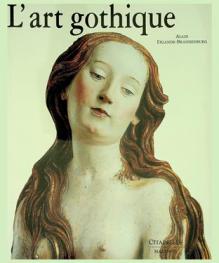
L'Art gothique
Développé à travers l'Europe pendant plus de 200 ans, l'art gothique est un mouvement qui trouve ses racines dans la puissante architecture des cathédrales du nord de la France. Délaissant la rondeur romane, les architectes commencèrent à utiliser les arcs-boutants et les voûtes en berceau brisé pour ouvrir les cathédrales à la lumière. Période de bouleversements économiques et sociaux, la période gothique vit aussi le développement d'une nouvelle iconographie célébrant la Vierge, à l'opposé de la thématique terrifiante de l'époque romane. Riche de changements dans tous les domaines (architecture, sculpture, peinture, enluminure, etc.), l'art gothique s'effaça peu à peu face à la Renaissance italienne.
eBook

Giotto's O : narrative, figuration, and pictorial ingenuity in the Arena Chapel
\"A discussion of the murals by Giotto in the Arena Chapel of Padua, Italy. The artist's work is considered in terms of its relationship to the structure of the poetry of Dante, biblical exegesis, geometry, and symmetry\"--Provided by publisher.
Book

Visual aggression : images of martyrdom in late medieval Germany
Why does a society seek out images of violence? What can the consumption of violent imagery teach us about the history of violence and the ways in which it has been represented and understood? Assaf Pinkus considers these questions within the context of what he calls galleries of violence, the torment imagery that flourished in German-speaking regions during the fourteenth and fifteenth centuries. Exploring these images and the visceral bodily responses that they produced in their viewers, Pinkus argues that the new visual discourse on violence was a watershed in premodern conceptualizations of selfhood.
Images of martyrdom in late medieval Germany reveal a strikingly brutal parade of passion: severed heads, split skulls, mutilated organs, extracted fingernails and teeth, and myriad other torments. Stripped from their devotional context and presented simply as brutal acts, these portrayals assailed viewers' bodies and minds so violently that they amounted to what Pinkus describes as \"visual aggressions.\" Addressing contemporary discourses on violence and cruelty, the aesthetics of violence, and the eroticism of the tortured body, Pinkus ties these galleries of violence to larger cultural concerns about the ethics of violence and bodily integrity in the conceptualization of early modern personhood.
Innovative and convincing, this study heralds a fundamental shift in the scholarly conversation about premodern violence, moving from a focus on the imitatio Christi and the liturgy of punishment to the notion of violence as a moral problem in an ethical system. Scholars of medieval and early modern art, history, and literature will welcome and engage with Pinkus's research for years to come.
eBook

Una danza enigmática en Lo Bar de Lop (Provenza), ¿un sermón pintado?
La pintura de So Barn (Provenza) (fines del siglo XV) yuxtapone un texto occitano de treinta y tres versos monorrimos con una figuración coréutica de impulsión circular o espiraliforme. A pesar de las descripciones al uso, el argumento figurativo, íntimamente unido al contenido poético, tiene poco de danza macabra y mucho de admonición escatológica, con lo que se acerca más a un sermón ilustrado. En él se recuerda el juicio individual del alma al enfrentarse a las cuatro Postrimerías que se muestran Muerte, Juicio, Paraíso e Infierno, sobre las que el cristiano en la época medieval debía reflexionar si no quería condenarse. El motivo iconográfico de la danza sería el emblema de una vida poco acorde con los valores espirituales imperantes. Una muerte arquera asaeta los primeros personajes (todos laicos) que encabezan el baile. El ángel psicopompo pone en la balanza el alma del primer difunto. En lo alto del Paraíso, Cristo señala las balanzas. Y debajo, la boca del infierno traga la primera alma condenada.La tabla presenta paralelos iconográficos con el fresco del convento franciscano de Morella (País Valenciano, finales del XV). Por un lado, la tipología coreográfica del círculo un corro de vivos alrededor de un muerto que se muestran identificados jerárquicamente (Morella), un impulso espiral de vivos pudientes que culminan con uno de ellos yacente (Bar). Fuera del círculo, la Parca tira sus flechas contra los danzantes (Bar) y la imagen recuerda la muerte flechando el árbol de la vida que acompaña la danza de los estamentos en Morella.
Journal Article

Challenges of Conservation and Restoration of a Medieval Wall Painting in the Church of Saint Leonard in Mala Ligojna and the Question of Its Authorship
The Church of Saint Leonard is positioned on a hill above a small village called Mala Ligojna in central Slovenia. The Baroque architecture shows elements of medieval origins. Under many secondary whitewashes, fragments of an approximately 500-year-old secco wall painting were discovered. The conservation and restoration project started in the year 2020 by removing the secondary coatings of limewash on the northern wall. During the work process, some challenges regarding the original painting were addressed and possibilities for uncovering and consolidating preserved intonaco and the paint layer were explored. Research on the binder, pigments, and the substrate was executed, which led to the use of a specific consolidation system. During the work process we researched the authorship of the painting. The research included the review of different Gothic stencils, brocade and border patterns, and the system of transferring the drawings and identifying the incisions. The patterns show similarities to some known Gothic wall painters in Slovenia, who inherited their knowledge from the masters of the international Gothic style. By carrying out projects like this, the church’s history is being revealed and the knowledge of the medieval wall paintings in Slovenia is expanding.
Journal Article