
Catalogue Search | MBRL


Are you sure you want to remove the book from the shelf?

{{itemTitle}}
743
result(s) for
"Painting, Italian."
Sort by:

Painting in fifteenth-century Italy : \this splendid and noble art\
An expansive new study that explores the wide breadth of Italian painting in the fifteenth century.
BOOK

Petrarch and Sixteenth-Century Italian Portraiture
The volume presents a wide-ranging investigation of the ways in which Petrarch's legacy informed the relationship between visual and literary portraits in sixteenth-century Italy. Petrarch's vast literary production influenced the intellectual framework in which new models of representation and self-representation developed during the Renaissance. His two sonnets on Laura's portrait by Simone Martini and his ambivalent fascination with the illusionary power of portraiture in his Latin texts - such as the Secretum, the Familiares and De remediis utriusque fortune - constituted the theoretical reference for artists and writers alike. In a century dominated by the rhetorical comparison between art and literature (ut pictura poësis) and by the paragone debate, the interplay between Petrarch's oeuvre, Petrarchism and portraiture shaped the discourse on the relationship between the sitters' physical image and their inner life. The volume brings together diverse interdisciplinary contributions that explore the subject through a rich body of literary and visual sources.
eBook
Piero di Cosimo
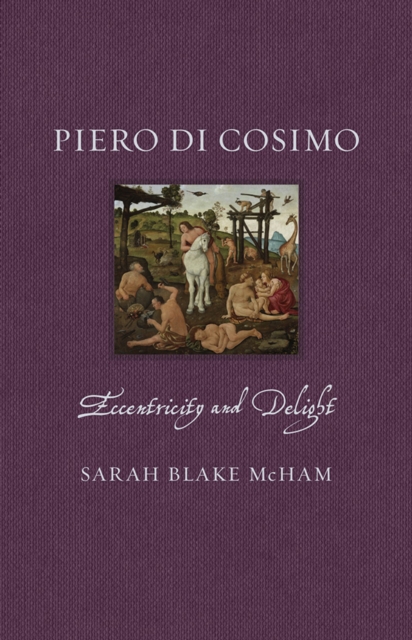
The singular Florentine painter Piero di Cosimo (1462–1522) led a deliberately idiosyncratic life: he chose to live in squalor and ate nothing but boiled eggs, which, according to Vasari's famous biography, he cooked fifty at a time in water used to prepare his painting glue. Sarah Blake McHam delves into the social, cultural and literary backdrops of this artist's life. She shows how Piero became the favourite of sophisticated patrons, who were eager to decorate their residences with pagan Greco-Roman mythological subjects. Piero's vividly imagined portrayals led to his cornering the market on these commissions. At the same time his more orthodox, but never ordinary, religious altarpieces and private devotional paintings won the admiration of leading Florentine families. This original, richly illustrated account explores the fascinating life of one of Renaissance Italy's most intriguing figures.
eBook

Buying Baroque
Although Americans have shown interest in Italian Baroque art since the eighteenth century—Thomas Jefferson bought copies of works by Salvator Rosa and Guido Reni for his art gallery at Monticello, and the seventeenth-century Bolognese school was admired by painters Benjamin West and John Singleton Copley—a widespread appetite for it only took hold in the early to mid-twentieth century. Buying Baroque tells this history through the personalities involved and the culture of collecting in the United States. The distinguished contributors to this volume examine the dealers, auction houses, and commercial galleries that provided access to Baroque paintings, as well as the collectors, curators, and museum directors who acquired and shaped American perceptions about these works, including Charles Eliot Norton, John W. Ringling, A. Everett Austin Jr., and Samuel H. Kress. These essays explore aesthetic trends and influences to show why Americans developed an increasingly sophisticated taste for Baroque art between the late eighteenth century and the 1920s, and they trace the fervent peak of interest during the 1950s and 1960s. A wide-ranging, in-depth look at the collecting of seventeenth- and eighteenth-century Italian paintings in America, this volume sheds new light on the cultural conditions that led collectors to value Baroque art and the significant effects of their efforts on America's greatest museums and galleries. In addition to the editor, contributors include Andrea Bayer, Virginia Brilliant, Andria Derstine, Marco Grassi, Ian Kennedy, J. Patrice Marandel, Pablo Pérez d'Ors, Richard E. Spear, and Eric M. Zafran.
eBook

Literature and artistic practice in the sixteenth-century Italy
A study on the technique of painting through cross-analysis of literary texts by Leonardo, Vasari, Armenini, Borghini, Lomazzo and works of art, examining some significant paintings in the Capodimonte Museum, Naples.
eBook

Italian paintings before 1400
The National Gallery houses one of the most important collections of early Italian paintings outside Italy, including works by Cimabue, Duccio, Giotto and the di Cione brothers. Since these were last catalogued there have been four new acquisitions, while reexamination of the collection has revealed, through infrared reflectography, the significance of underdrawings in early Italian paintings, together with other new information about technique. In reviewing and in some cases reattributing the works catalogued here, the author takes account of the substantial body of new research published over the last twenty years.
Book

Filippino Lippi : an abundance of invention
The first monograph in a generation, and the first study in English in over eighty years, this book presents a new understanding of the Renaissance master-artist Filippino Lippi. Celebrated as 'ingenious' by Vasariin 1550, Filippino was highly praised and influential, then fell out of favour and was forgotten for centuries. He was rediscovered by the poet Swinburne, who in 1868 celebrated the painter's 'inventive enjoyment and indefatigable fancy'. In a similar spirit, this volume explores Filippino's creativity in solving artistic problems. If a Roman cardinal requested a classically inspired work, or a Florentine humanist wanted to dazzle observers with his antiquarian interests, Filippino had the sensitivity to understand these diverse needs and express them with highly original solutions.
eBook