
Catalogue Search | MBRL


Are you sure you want to remove the book from the shelf?

{{itemTitle}}
2,243
result(s) for
"Painting Appreciation."
Sort by:

A child's introduction to art : the world's greatest paintings and sculptures
Highlights 40 painters and sculptors, including Leonardo da Vinci, Claude Monet, Diego Velasquez, Vincent van Gogh, Salvador Dali, Mary Cassatt, and Andy Warhol, providing information on their life, inspirations, influences, technique, and a full-color photo of one of their signature works of art. Also includes an overview of various styles and periods (Renaissance, Impressionism, Cubism, etc.), instruction on how to view and appreciate art, and information on the color wheel and other tools artists employ.
Book

Take a closer look
What happens when we look at a painting? What do we think about? What do we imagine? How can we explain, even to ourselves, what we see or think we see? And how can art historians interpret with any seriousness what they observe? In six engaging, short narrative \"fictions,\" each richly illustrated in color, Daniel Arasse, one of the most brilliant art historians of our time, cleverly and gracefully guides readers through a variety of adventures in seeing, from Velázquez to Titian, Bruegel to Tintoretto.
By demonstrating that we don't really see what these paintings are trying to show us, Arasse makes it clear that we need to take a closer look. In chapters that each have a different form, including a letter, an interview, and an animated conversation with a colleague, the book explores how these pictures teach us about ways of seeing across the centuries. In the process, Arasse freshly lays bare the dazzling power of painting. Fast-paced and full of humor as well as insight, this is a book for anyone who cares about really looking at, seeing, and understanding paintings.
eBook

The story of the world's greatest paintings
Presents twenty famous paintings from the history of art, describing how they were created, their original audience, and the influence they have had on later artists.
Book

Les merveilles de la peinture
Extrait: \"Des trois arts du dessin, que la voix unanime des nations a salués par excellence du nom de beaux-arts, la peinture est le dernier, historiquement et par les dates. Peut-être a-t-elle repris le premier rang par l'estime et l'admiration qu'elle inspire...\"À PROPOS DES ÉDITIONS LIGARANLes éditions LIGARAN proposent des versions numériques de qualité de grands livres de la littérature classique mais également des livres rares en partenariat avec la BNF. Beaucoup de soins sont apportés à ces versions ebook pour éviter les fautes que l'on trouve trop souvent dans des versions numériques de ces textes. LIGARAN propose des grands classiques dans les domaines suivants: • Livres rares • Livres libertins • Livres d'Histoire • Poésies • Première guerre mondiale • Jeunesse • Policier
eBook

Art in detail : 100 masterpieces
\"Great paintings cannot be fully understood in a single encounter... [This book] spotlights the finer points a quick glance will almost certainly fail to reveal. These include subtle internal details, such as hidden symbols. Expert commentary reveals the technical tricks employed by the artist to achieve particular effects... and also looks at the themes and external and personal factors influencing the creation of an artwork...\"--Book jacket.
Book

Pictures & Tears
Art Does art leave you cold? And is that what it's supposed to do? Or is a painting meant to move you to tears? Hemingway was reduced to tears in the midst of a drinking bout when a painting by James Thurber caught his eye. And what's bad about that? In Pictures and Tears, art historian James Elkins tells the story of paintings that have made people cry. Drawing upon anecdotes related to individual works of art, he provides a chronicle of how people have shown emotion before works of art in the past, and a meditation on the curious tearlessness with which most people approach art in the present. Deeply personal, Pictures and Tears is a history of emotion and vulnerability, and an inquiry into the nature of art. This book is a rare and invaluable treasure for people who love art. Also includes an 8-page color insert.
eBook

Looking at pictures
Exploring the origins, designs and themes of over one hundred pictures from different periods and places, Susan Woodford artfully expands our appreciation of pictures. Woodford's riveting prose compares different artistic approaches, questions assumptions and introduces us to a wide range of stimulating ideas.
Book

Efficacy of Virtual Reality in Painting Art Exhibitions Appreciation
Virtual reality (VR) technology has been employed in a wide range of fields, from entertainment to medicine and engineering. Advances in VR also provide new opportunities in art exhibitions. This study discusses the experience of art appreciation through desktop virtual reality (Desktop VR) or head-mounted display virtual reality (HMD VR) and compares it with appreciating a physical painting. Seventy-eight university students participated in the study. According to the findings of this study, painting evaluation and the emotions expressed during the appreciation show no significant difference under these three conditions, indicating that the participants believe that paintings, regardless of whether they are viewed through VR, are similar. Owing to the limitation of the operation, the participants considered HMD VR to be a tool that hinders free appreciation of paintings. In addition, attention should be paid to the proper projected size of words and paintings for better reading and viewing. The above indicates that through digital technology, we can shorten the gap between a virtual painting and a physical one; however, we must still improve the design of object size and the interaction in the VR context so that a virtual exhibition can be as impressive as a physical one.
Journal Article
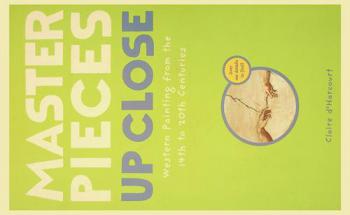
Masterpieces up close
Discover the beauty and mysteries in Western masterpieces cleverly disguised as a game.
BOOK

Art therapy based on appreciation of famous paintings and its effect on distress among cancer patients
Purpose We aimed to evaluate the effectiveness of art therapy based on appreciation of famous paintings on the distress of cancer patients receiving radiotherapy. In particular, we focused on anxiety, depression, and cancer-related symptoms. Methods Between October 2015 and February 2016, cancer patients receiving radiotherapy were recruited prospectively to participate in the art therapy based on famous painting appreciation. The art therapy took place in two parts comprising 4 sessions of famous painting appreciation and 4 sessions of creative artwork generation; these sessions were performed twice weekly over four weeks. Cancer-related distress was measured using the Hospital Anxiety and Depression Scale (HADS), Hamilton Depression Rating Scale (HDRS), and Edmonton Symptom Assessment Scale (ESAS) at three points: before the art therapy began, after the fourth session of art therapy, and after the eighth session. Results Of the 24 enrolled patients, 20 (83%) completed all eight sessions. We observed significant improvements in HADS anxiety and total scores over time according to linear mixed models with Bonferroni corrections (all p < 0.05). Furthermore, HDRS scores demonstrated significant decreases according to linear mixed models (p = 0.001). Fewer patients met the HADS or HDRS criteria for severe anxiety or depression after the intervention. We observed no changes in ESAS mean scores. Conclusions Art therapy based on famous painting appreciation significantly improved cancer-related anxiety and depression and reduced the prevalence of severe anxiety and depression during cancer treatment.
Journal Article