
Catalogue Search | MBRL


Are you sure you want to remove the book from the shelf?

{{itemTitle}}
8
result(s) for
"Pakistan - Colonial influence"
Sort by:

India, Pakistan, and Democracy
The question of why some countries have democratic regimes and others do not is a significant issue in comparative politics. This book looks at India and Pakistan, two countries with clearly contrasting political regime histories, and presents an argument on why India is a democracy and Pakistan is not. Focusing on the specificities and the nuances of each state system, the author examines in detail the balance of authority and power between popular or elected politicians and the state apparatus through substantial historical analysis.
India and Pakistan are both large, multi-religious and multi-lingual countries sharing a geographic and historical space that in 1947, when they became independent from British rule, gave them a virtually indistinguishable level of both extreme poverty and inequality. All of those factors militate against democracy, according to most theories, and in Pakistan democracy did indeed fail very quickly after Independence. It has only been restored as a façade for military-bureaucratic rule for brief periods since then. In comparison, after almost thirty years of democracy, India had a brush with authoritarian rule, in the 1975-76 Emergency, and some analysts were perversely reassured that the India exception had been erased. But instead, after a momentous election in 1977, democracy has become stronger over the last thirty years.
Providing a comparative analysis of the political systems of India and Pakistan as well as a historical overview of the two countries, this textbook constitutes essential reading for students of South Asian History and Politics. It is a useful and balanced introduction to the politics of India and Pakistan.
1. Introduction: Why India is a Democracy and Pakistan is not (yet?) a Democracy Part 1 : The First Thirty Years of Independence 2. Inheritances of Colonial rule 3. Constitutional & Political Choices, in the initial years 4. Institutionalizing Democracy 5. Who (Really) Governs? Part 2: From 1977 to the present 6. 1977 as a Turning Point? 7. Religion as an Explanation 8. External Influences 9. Clearly Diverging Paths 10. Prospects for Path Convergence in the Next Decades 11. Conclusion
Philip Oldenburg is a Research Scholar at the South Asia Institute of Columbia University, where he has taught political science since 1977. He has done field research in India on local self-government, and on national elections and has been editor or co-editor of ten books in the India Briefing series.
'This book deals with a most interesting and rather unexplored problem: why has India become a robust democracy and Pakistan ended up by being a military-ruled country while both of them share similar cultural features and emerged from the same history (including the colonial experience)?
Philip Oldenburg has not only chosen an excellent topic, he is also very well informed and gets his facts right. To present such an ambitious comparison in this format is a tour de force.' -- Christophe Jaffrelot, Senior Research Fellow CNRS, France
'This fine book, full of insight and wisdom, reflects Philip Oldenburg’s long scholarly engagement with the study of South Asian politics, and offers a magisterial synthesis of a wide literature in developing what will surely stand as the definitive comparative analysis of the political systems of India and Pakistan.' -- John Harriss, School for International Studies, Simon Fraser University, Canada
'This is the first major attempt to solve the puzzle of democratic divergence by looking at two countries with near-identical cultural, political, and social origins. Dr. Oldenburg's book is uniquely informed by deep familiarity with both India and Pakistan, and by a solid grasp of the relevant scholarly literature. It is a landmark in both regional studies and comparative political analysis, and will inform all future work on the democratization process.' -- Stephen P. Cohen, Brookings Institution, USA
\"It's impossible for this review to do full justice to this richly-detailed, cool-headed, well-grounded must read for anyone interested in South Asia--or in the study of democracy.\" -- Patricia Lee Sharpe, Whirled View
\"The book is carefully researched, well documented, and clearly argued...Policy analysts, journalists, and students interested in the contemporary politics of India and Pakistan will benefit considerably from a careful perusal of this book.\" -- Sumit Ganguly, H-Asia
\"This book offers a nuanced assessment which shows that while India and Pakistan have not converged on an authoritarian model, they have much in common... Thoughtful questions are asked, difficult issues considered and a large amount of material is synthesised. Scholars, students and teachers alike will find this book very useful.\" - Andrew Wyatt, University of Bristol, UK; Pacific Affairs: Volume 85, No. 2 - June 2012
eBook

Production of Postcolonial India and Pakistan
This work seeks to examine the event and concurrent transition that the inauguration of India and Pakistan as 'postcolonial' states in August 1947 constituted and effectuated.
Analysing India and Pakistan together in a parallel and mutually dependant reading, and utilizing primary data and archival materials, Svensson offers new insights into the current literature, seeking to conceptualise independence through partition and decolonisation in terms of novelty and as a 'restarting of time'.
Through his analysis, Svensson demonstrates the constitutive and inexorable entwinement of contingency and restoration, of openness and closure, in the establishment of the postcolonial state. It is maintained that those involved in instituting the new state in a moment devoid of fixity and foundation 'anchor' it in preceding beginnings. The work concludes with the proposition that the novelty should not only be regarded as contained in the moment of transition. It should also be seen as contained in the pledge, in the promise and the gesturing towards a future community.
Distinct from most other studies on the partition and independence the book assumes the constitutive moment as the focal point, offering a new approach to the study of partition in British India, decolonisation and the institutional of the postcolonial state. This work will be of great interest to students and scholars of international relations, South Asian studies and political and postcolonial theory.
eBook

Youth negotiation of citizenship identities in Pakistan: Implications for global citizenship education in conflict-contexts
This study explores young students' negotiation of their citizenship identities at the intersection of their class, gender, religious and ethnic identifications in the conflict-affected setting of Pakistan. While much of the global literature on global citizenship education (GCE) primarily takes into account the perspectives of middle-class or elite students located in richer economies, the current study is centred on a socio-demographically diverse group of young people in a low-income setting. With a specific focus on their negotiation of issues around diversity and justice, students' narratives generated important recommendations for a transformative and historically nuanced postcolonial/decolonial approach to global citizenship engagement that should be considered more broadly. The study illuminates the ways the global/local historical, cultural, political and economic factors influence individual relationship with GCE and offers useful pedagogical and policy implications for GCE 'from below'.
Journal Article

Bengal Industries and the British Industrial Revolution (1757-1857)
This book seeks to enlighten two grey areas of industrial historiography. Although Bengal industries were globally dominant on the eve of the industrial revolution, no detailed literature is available about their later course of development. A series of questions are involved in it. Did those industries decline during the spells of British industrial revolution? If yes, what were their reasons? If not, the general curiosity is: On which merits could those industries survive against the odds of the technological revolution? A thorough discussion on these issues also clears up another area of dispute relating to the occurrence of deindustrialization in Bengal, and the validity of two competing hypotheses on it, viz. i) the mainstream hypothesis of market failures, and ii) the neo-marxian hypothesis of imperialistic state interventions
eBook
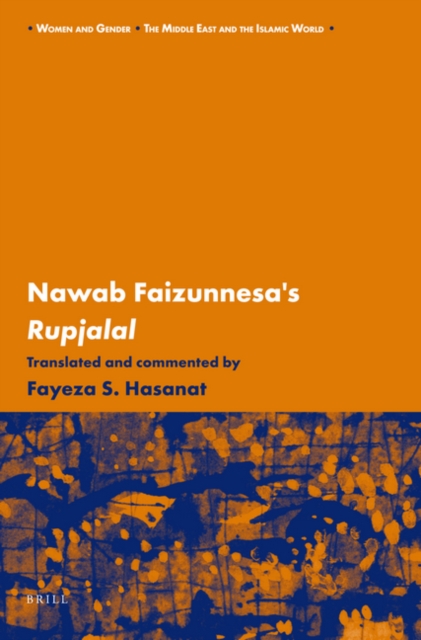
Nawab Faizunnesa's Rupjalal
In the framework of a romantic tale, Faizunnesa recorded how women were always treated as agents of chaos and desire, and how their resisting voices were always silenced in a religiously motivated society. This book examines her text as a critique of male dominance in the Muslim society of colonial Bengal.
eBook


In Search of Begum Akhtar: Patriarchy, Poetry, and Twentieth-Century Indian Music
Begum Akhtar is best known for her sophisticated mastery of Urdu poetry and light classical music in the ghazal of North India and Pakistan. Her musical legacy emerges from a set of relationships defined by the elasticity and rigidity of gendered identities in patriarchal, post-colonial Indian society. Situating her artistry in relation to the backdrop of historical forces that framed the course of her career, this paper foregrounds the dynamic changes that confronted a hereditary musical tradition in a fading system of feudal patronage. It also reflexively engages the myriad voices and encounters that have contributed to the evolving discourse that continues to mold Begum Akhtafs remarkable life history.
Journal Article

1998 Census: The Results and Implications with Comments
The 1998 Census was delayed by seven years as it should have been held in 1991, following century-old tradition of holding decennial census in the year beginning with digit 1. This paper analyses the main results of 1998 Census and its demographic as well as socio-economic implications. The 1998 Census shows a growth rate of 2.6 percent for the 17-years period. This clearly indicates that population growth rate in Pakistan has fallen due to a number of factors but still Pakistan's growth rate of 2.6 percent is high as compared to 1.6 percent in India and Bangladesh. Similarly, TFR is about 5 whereas in Bangladesh and India it is 3. The 1998 Census shows significant improvement in both the male and female literacy during 1981-98. Male literacy has increased from 35.5 to 56.5 and female literacy from 16.4 to 32.6. It indicates a slowing down of the rate of urbanisation which was about 4.4 percent in 1972-81 to 3.4 percent in 1981-98. The figures probably understate due to inaccurate definition of urban areas. The dependency ratio which was 97.2 in the 1981 Census has decreased to 87.3 in 1998. The marital status has also decreased by 5 percent for both males and females from 68.75 in 1981 to 63.33 in 1998. The above data show that demographic transition has started in Pakistan although at a very slow rate as compared with other South Asian countries because the main determinants of birth rate, i.e., contraceptive prevalence, female literacy, and female labour force participation rate are much lower as compared with other South Asian countries. The 1998 Census, therefore, depicts an improved social scene in Pakistan. The improvement is gradual and slow and not significant. We need to work hard to reach the level of our neighbours.
Journal Article