
Catalogue Search | MBRL


Are you sure you want to remove the book from the shelf?

{{itemTitle}}
1,108
result(s) for
"Pakistan -- Military policy"
Sort by:


South Asian cultures of the bomb : atomic publics and the state in India and Pakistan
Since their founding as independent nations, nuclear issues have been key
elements of nationalism and the public sphere in both India and Pakistan. Yet the
relationship between nuclear arms and civil society in the region is seldom taken
into account in conventional security studies. These original and provocative essays
examine the political and ideological components of national drives to possess and
test nuclear weapons. Equal coverage for comparable issues in each country frames
the volume as a genuine dialogue across this contested boundary.
eBook

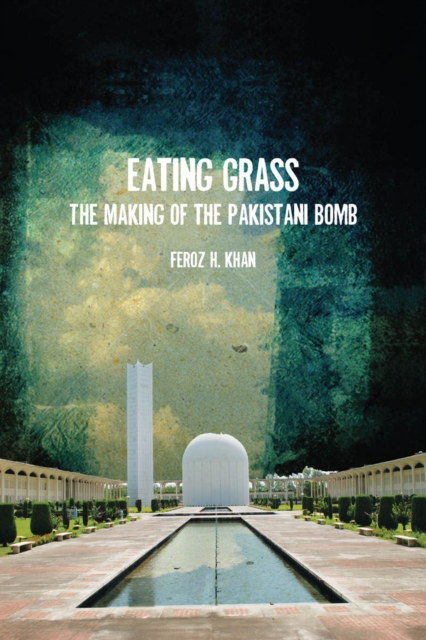
Eating grass : the making of the Pakistani bomb
The history of Pakistan's nuclear program is the history of Pakistan. Fascinated with the new nuclear science, the young nation's leaders launched a nuclear energy program in 1956 and consciously interwove nuclear developments into the broader narrative of Pakistani nationalism. Then, impelled first by the 1965 and 1971 India-Pakistan Wars, and more urgently by India's first nuclear weapon test in 1974, Pakistani senior officials tapped into the country's pool of young nuclear scientists and engineers and molded them into a motivated cadre committed to building the 'ultimate weapon.' The tenacity of this group and the central place of its mission in Pakistan's national identity allowed the program to outlast the perennial political crises of the next 20 years, culminating in the test of a nuclear device in 1998. Written by a 30-year professional in the Pakistani Army who played a senior role formulating and advocating Pakistan's security policy on nuclear and conventional arms control, this book tells the compelling story of how and why Pakistan's government, scientists, and military, persevered in the face of a wide array of obstacles to acquire nuclear weapons. It lays out the conditions that sparked the shift from a peaceful quest to acquire nuclear energy into a full-fledged weapons program, details how the nuclear program was organized, reveals the role played by outside powers in nuclear decisions, and explains how Pakistani scientists overcome the many technical hurdles they encountered. Thanks to General Khan's unique insider perspective, it unveils and unravels the fascinating and turbulent interplay of personalities and organizations that took place and reveals how international opposition to the program only made it an even more significant issue of national resolve. Listen to a podcast of a related presentation by Feroz Khan at the Stanford Center for International Security and Cooperation at cisac.stanford.edu/events/recording/7458/2/765 [http://cisac.stanford.edu/events/recording/7458/2/765].
eBook


Engaging India
On May 11, 1998, three nuclear devices detonated under the Thar Desert in India shook the surrounding villages -and the rest of the world. The immediate effect was to plunge U.S.-India relations, already vexed by decades of tension and estrangement, into a new crisis. The situation deteriorated further when Pakistan responded in kind two weeks later, testing a nuclear weapon for the first time. Engaging India is the firsthand story of the diplomacy conducted between the United States and the two South Asian neighbors after the nuclear tests. In this book, the American point man for the dialogue takes us behind the scenes of one of the most suspenseful and consequential diplomatic dramas of our time, reconstructing what happened -and why -with narrative verve, rich human detail, and penetrating analysis. From June 1998 to September 2000, in what was the most extensive dialogue ever between the United States and India, Deputy Secretary of State Strobe Talbott and Indian Minister of External Affairs Jaswant Singh met fourteen times in seven countries on three continents. They discussed both the immediate items on the security and nonproliferation agenda, as well as their wider visions for the U.S.-India relationship and the potential for economic and strategic cooperation between the two countries. As the relationship improved over the course of the talks, the United States was to able play a role in averting the possibility of nuclear war over the contested territory of Kashmir in the summer of 1999 -the specifics of which are included for the first time in this book, told in way only a protagonist can. The Talbott-Singh diplomacy laid the groundwork for the transformational visit of President Bill Clinton to India in March 2000 and helped end fifty years of estrangement between the world's two largest democracies. As pursuit of Islamic militants continues across South Asia, the increased cooperation established by Talbott and Singh will be an invaluable asset for current and future leaders of both countries. This book provides, for the first time, an insider's perspective on the ground-breaking efforts to build a cordial relationship between the United States and India. The general reader will find it accessible, and more important, an indispensable tool for understanding America's current role in South Asia, and the prospects for improved relations.
eBook


South Asia's Nuclear Security Dilemma
The nuclear test explosions in India and Pakistan in 1998, followed by the outbreak of hostilities over Kashmir in 1999, marked a frightening new turn in the ancient, bitter enmity between the two nations. Although the tension was eclipsed by the events of 9/11 and the subsequent American attacks on Afghanistan and Iraq, it has not disappeared, as evidenced by the 2001 attack in the Indian Parliament by Islamic fundamentalists out of Kashmir. By 2002, these two nuclear-armed neighbors seemed to be once again on the brink of war. This book outlines the strategic structure of the rivalry and the dynamic forces driving it, and investigates various possible solutions. The expert contributors focus on the India-Pakistan rivalry, but also consider the China factor in South Asia's nuclear security dilemma. Although essentially political-strategic in its approach, the book includes coverage of opposing military arsenals and the impact of local terrorism on the delicate balance of power.
eBook

India and nuclear Asia : forces, doctrine, and dangers
India's nuclear profile, doctrine, and practices have evolved rapidly since the country's nuclear breakout in 1998. However, the outside world's understanding of India's doctrinal debates, forward-looking strategy, and technical developments are still two decades behind the present. This book will fill that gap in our knowledge by focusing on the post-1998 evolution of Indian nuclear thought, its arsenal, the triangular rivalry with Pakistan and China, and New Delhi's nonproliferation policy approaches. Joshi and O'Donnell show how India's nuclear trajectory has evolved in response to domestic, regional, and global drivers. The book argues that doctrinal and posturing developments in India, China, and Pakistan are elevating inadvertent and accidental escalation risks. As nuclear South Asia continues to attract global concern, this book provides an indispensable and timely guide to its challenges and offers potential solutions to them. Based on primary-source research and interviews, this book will be important reading for scholars and students of India's international relations and security as well as for military, defense contractor, and policy audiences outside of India.
Book
