
Catalogue Search | MBRL


Are you sure you want to remove the book from the shelf?

{{itemTitle}}
89
result(s) for
"Paleo-Indians North America."
Sort by:

Mammoth bones and broken stones : the mystery of North America's first people
Explores various theories of North America's first people using archaeological methods and artifacts.
Book

First peoples in a new world
More than 12,000 years ago, in one of the greatest triumphs of prehistory, humans colonized North America, a continent that was then truly a new world. Just when and how they did so has been one of the most perplexing and controversial questions in archaeology. This dazzling, cutting-edge synthesis, written for a wide audience by an archaeologist who has long been at the center of these debates, tells the scientific story of the first Americans: where they came from, when they arrived, and how they met the challenges of moving across the vast, unknown landscapes of Ice Age North America. David J. Meltzer pulls together the latest ideas from archaeology, geology, linguistics, skeletal biology, genetics, and other fields to trace the breakthroughs that have revolutionized our understanding in recent years. Among many other topics, he explores disputes over the hemisphere's oldest and most controversial sites and considers how the first Americans coped with changing global climates. He also confronts some radical claims: that the Americas were colonized from Europe or that a crashing comet obliterated the Pleistocene megafauna. Full of entertaining descriptions of on-site encounters, personalities, and controversies, this is a compelling behind-the-scenes account of how science is illuminating our past.
eBook


From the Pleistocene to the Holocene : human organization and cultural transformations in prehistoric North America
The end of the Pleistocene era brought dramatic environmental changes to small bands of humans living in North America: changes that affected subsistence, mobility, demography, technology, and social relations. The transition they made from Paleoindian (Pleistocene) to Archaic (Early Holocene) societies represents the first major cultural shift that took place solely in the Americas. From the Pleistocene to the Holocene: Human Organization and Cultural Transformations in Prehistoric North America provides an overview of the present state of knowledge regarding this crucial transformative period in Native North America.
eBook

North America's first people
Who were the earliest Americans? When, how, and from where did they enter and spread across the continent? And what is their relationship to modern Native Americans? Anthropologists develop theories to answer these questions based on the evidence they discover. Their theoriesand the discoveries that prove and disprove them are highlighted in this book.
Book

Human impacts on seals, sea lions, and sea otters
For more than ten thousand years, Native Americans from Alaska to southern California relied on aquatic animals such as seals, sea lions, and sea otters for food and raw materials. Archaeological research on the interactions between people and these marine mammals has made great advances recently and provides a unique lens for understanding the human and ecological past. Archaeological research is also emerging as a crucial source of information on contemporary environmental issues as we improve our understanding of the ancient abundance, ecology, and natural history of these species. This groundbreaking interdisciplinary volume brings together archaeologists, biologists, and other scientists to consider how archaeology can inform the conservation and management of pinnipeds and other marine mammals along the Pacific Coast.
eBook

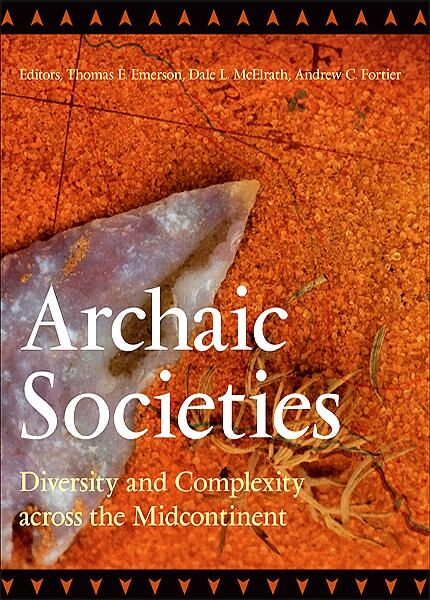
Archaic Societies
Sweeping and detailed, this long-awaited volume is an indispensable guide to the Archaic period across the midcontinent. Archaeologists throughout the region share the latest excavation results and analytical perspectives to reveal and reinterpret the worlds of those Native peoples who lived there for some 9,000 years (up to about 3,000 years ago). Of particular concern is the establishment of relative and absolute chronologies for the Archaic period, the relationships between the artifacts left behind and the peoples who made and used them, and the changing interactions between cultures, climate, and landscape. Archaeologists offer useful, up-to-date overviews of Archaic societies, assessment of stratigraphic sequences, and detailed discussions of finds and interpretations from the Mississippi and Ohio river regions and the Great Lakes. Comprehensive and accessible, this landmark book is a must for anyone wanting to understand a crucial but little-understood period in North America's prehistory.
eBook

Life among the Paleoindians
Who were the Paleoindians? They were the first people to come from Asia to the Americas. Readers discover what it would have been like to live among these people as they explore their culture, homelands, and daily activities, such as hunting and gathering. They also discover the archaeological finds that have allowed scientists and historians to determine how the Paleoindians lived. The detailed main text is aligned to social studies curriculum standards. It's also accompanied by eye-catching fact boxes, colorful maps, and historical images as well as contemporary photographs.
Book
Early native Americans : prehistoric demography, economy, and technology
No detailed description available for \"Early Native Americans\".
eBook