
Catalogue Search | MBRL


Are you sure you want to remove the book from the shelf?

{{itemTitle}}
1,177
result(s) for
"Paleoclimatology Quaternary."
Sort by:


Quaternary Glaciations - Extent and Chronology
The book presents an up-to-date, detailed overview of the Quaternary glaciations all over the world, not only with regard to stratigraphy but also with regard to major glacial landforms and the extent of the respective ice sheets.The locations of key sites are included.
eBook

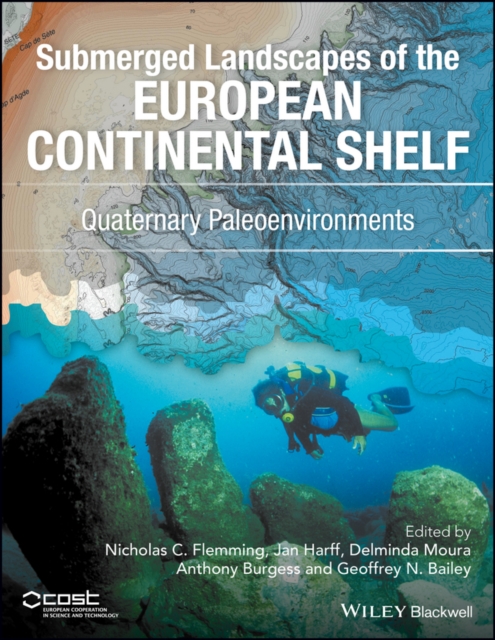
Submerged Landscapes of the European Continental Shelf
Quaternary Paleoenvironments examines the drowned landscapes exposed as extensive and attractive territory for prehistoric human settlement during the Ice Ages of the Pleistocene, when sea levels dropped to 120m-135m below their current levels.
eBook
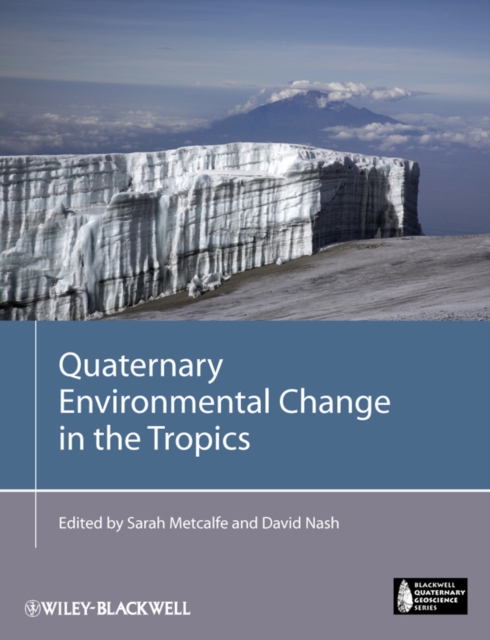
Quaternary environmental change in the tropics
The global climate changes that led to the expansion and contraction of high latitude ice sheets during the Quaternary period were associated with equally dramatic changes in tropical environments. These included shifts in vegetation zones, changes in the hydrology and ecology of lakes and rivers, and fluctuations in the size of mountain glaciers and sandy deserts. Until recently it was thought that such changes were triggered by fluctuations in the distribution of polar ice cover. Now there is increasing recognition that the tropics themselves have acted as drivers of global climate change over a range of timescales. The aim of Quaternary Environmental Change in the Tropics is to provide a synthesis of the changes that occurred in tropical terrestrial and marine systems during the Pleistocene and Holocene, complementing data-derived reconstructions with output from state-of-the-art climate models. It is targeted at final-year undergraduate students and research specialists, but will provide an introduction to tropical Quaternary research for a variety of other readers.
eBook

Quaternary research in Britain and Ireland
During the later part of the last century there was rapid development of the study and understanding of the changing environments of the last 2 million years. This came to provide a firm background for todays knowledge of the significance and importance of climatic change. Interdisciplinary research has been a prominent, if not essential, contributor to the successes achieved. In illustration of this connection, this volume describes here such developments in the University of Cambridge. In 1948 the University established a Subdepartment of Quaternary Research, with teaching and research activities covering geological, biological and archaeological topics. An interdisciplinary approach was an essential ingredient, and the research covered both terrestrial and marine spheres. The book traces the history of Quaternary research in Britain and Ireland, particularly the continental influences which stimulated research and indeed led to the establishment of the Subdepartment.The early years of the Subdepartment were an exceptionally exciting time for Quaternary researchers. This period saw the development of radiocarbon dating and of marine geochemical studies, together with the improvement of interpretation of palaeobotanical data, and the consequent incorporation of a vast accession of new information relating to these subjects. Stratigraphy, the binding topic of Quaternary research, became much better understood: first, in the terrestrial sphere with the formulation of divisions of the Quaternary based on accepted geological principles and providing a measure of the passage of time to students of the several disciplines involved, including landscape history, ecosystem history and archaeology, and secondly in the marine sphere a formulation of units defined by isotope studies.The organisation of the Subdepartment and the problems of developing
interdisciplinary science are considered. An important aspect is the variety of staff and students involved in interdisciplinary research and teaching. In order to give a complete an account as possible of the activities of the Subdepartment, a listing of staff and students and their interests is compiled, which I think is necessary to give a rounded view of the Subdepartment as a whole.Research topics and their development are considered one-by-one, and the numbers of publications in each sphere are summarised over the life of the Subdepartment, giving a clear view of how research developed over the period of 45 years. These activities were brought to an end in 1994, with the dissolution of the Subdepartment, which is described, together with a discussion of achievements and the voicing of some reflections.In a final part, I take a wider view of the history of Quaternary research, with aspects of geology and biology considered, together with notes on the Quaternary community, research support and journals.
eBook

Paleoclimatology : reconstructing climates of the quaternary
Paleoclimatology: Reconstructing Climates of the Quaternary, Third Edition-winner of a 2015 Textbook Excellence Award (Texty) from The Text and Academic Authors Association-provides a thorough overview of the methods of paleoclimatic reconstruction and of the historical changes in climate during the past three million years. This thoroughly updated and revised edition systematically examines each type of proxy and elucidates the major attributes and the limitations of each. Paleoclimatology, Third Edition provides necessary context for those interested in understanding climate changes at present and how current trends in climate compare with changes that have occurred in the past. The text is richly illustrated and includes an extensive bibliography for further research. Winner of a 2015 Texty Award from the Text and Academic Authors AssociationA comprehensive overview of the methods of paleoclimate reconstruction, and the record of past changes in climate during the last ~3 million yearsAddresses all the techniques used in paleoclimatic reconstruction from climate proxiesWith full-color throughout, and thoroughly revised chapters on dating methods, climate forcing, ice cores, marine sediments, pollen analysis, dendroclimatology, and historical recordsIncludes new chapters on speleothems, loess, and lake sedimentsMore than 1,000 new references and 190 new figures Essential reading for those interested in how present trends in climate compare with changes that have occurred in the past
eBook


Hunter-Gatherer Behavior
A major global climate event called the Younger Dryas dramatically affected local environments and human populations at the end of the Pleistocene. This volume is the first book in fifteen years to comprehensively address key questions regarding the extent of this event and how hunter-gatherer populations adapted behaviorally and technologically in the face of major climatic change. An integrated set of theoretical articles and important case studies, written by well-known archaeologists, provide an excellent reference for researchers studying the end of the Pleistocene, as well as those studying hunter-gatherers and their response to climate change.
eBook
Quaternary Climates, Environments and Magnetism
The Quaternary has been a period of major climatic and environmental oscillations, and our knowledge of these past variations is important for our understanding of the possible impact of human activity on the present-day environment. First published in 1999, Quaternary Climates, Environments and Magnetism presents an account of the rich variety of uses of magnetic measurements in the environmental geosciences. Ten chapters by leading world authorities describe the highlights of environmental magnetic work during the last decade and identify directions for future research. Emphasis is placed on a multidisciplinary approach to achieve a more thorough understanding of the environmental processes involved. This volume will be of interest to research scientists from a wide range of disciplines working on Quaternary environments, including earth and environmental sciences, physical geology, geography and palaeoclimatology. It will also be valuable as a supplementary text for graduates and advanced undergraduates.
eBook