
Catalogue Search | MBRL


Are you sure you want to remove the book from the shelf?

{{itemTitle}}
52
result(s) for
"Palestine Politics and government 21st century."
Sort by:

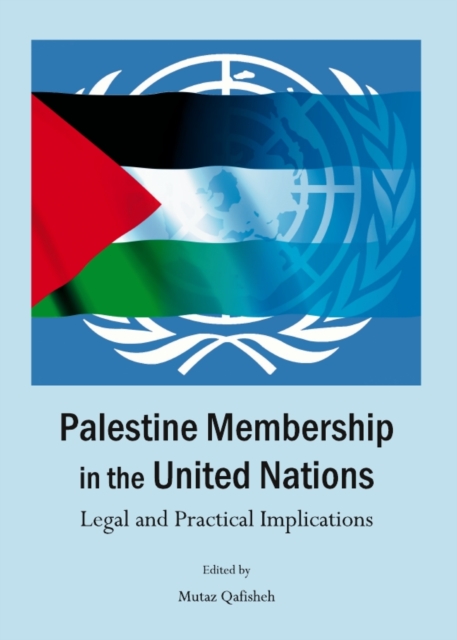
Palestine Membership in the United Nations
This book aims to bridge the scientific gap that exists with regard to Palestines membership of the UN as a State. As international law cannot operate outside the context of the global political atmosphere, the book focuses on the international legal dimension as well as the political/practical aspects of UN statehood recognition. With chapters written by leading international scholars, this collection is directed to those concerned with the strengthening of international law and the UN. C.
eBook

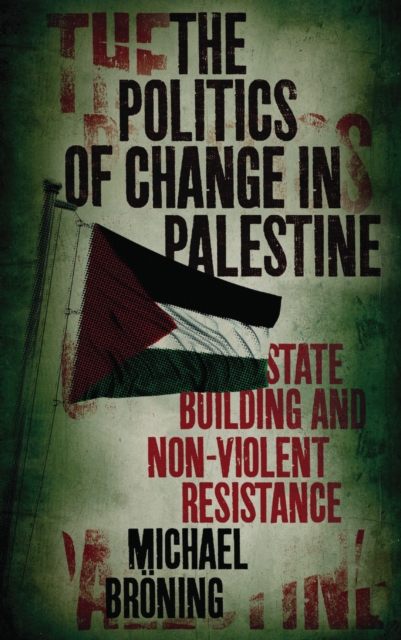
The Politics of Change in Palestine
This book contradicts the dominant myth that incompetent, corrupt, and uncompromising Palestinian decision-makers are responsible for the lasting stalemate in the Middle-East Peace Process. It highlights recent political developments in Palestine that fundamentally redefine important parameters of the Israeli-Palestinian conflict. Contrary to public perception, new political trends in the Palestinian Territories bolster prospects for the realisation of Palestinian national aspirations. Michael Bröning identifies key indicators which fundamentally question dominant Israeli narratives and pose an unprecedented strategic challenge to the Israeli leadership. These include the re-invention of Hamas, the reform of the Fatah movement, Palestinian Prime Minister Salam Fayyad’s state-building efforts and the surge of non-violent resistance against Israel. This persuasive book forces us to reconsider the perceived wisdom that the Palestinians are powerless to influence events as they struggle for peace.
eBook

Mo(ve)ments of resistance : politics, economy and society in Israel/Palestine 1931-2013
In Mo(ve)ments of Resistance, Grinberg summarizes both his own work and that of other political economists, providing a coherent historical narrative covering the time from the beginning of Socialist Zionism (1904) to the Oslo Accords and the neoliberalization of the economy (1994-1996).
eBook

To See In the Dark
'Timely and clearly written, To See In the Dark is a manifesto to solidarity' - Stephen Sheehi, co-author of
Psychoanalysis Under Occupation
To see Palestine is to see the world. Since October 7th 2023, the forces of racial capitalism and settler colonialism have become all too visible in Israel's genocidal war on Gaza.
In T
o See In the Dark , Nicholas Mirzoeff explores how images, and especially video, viewed outside Palestine enabled a dramatic switch in public opinion, leading to a global uprising against the genocide.
In this groundbreaking analysis, he connects the personal and the political through his own anti-Zionist Jewishness and its histories of violence. The result is a new collective and anti-colonial way of seeing, intersecting online and embodied experience.
eBook

Hostile Homelands
'Extraordinary ... exposes a powerful alliance, hidden from the global attention and media' - Ilan Pappe Under Narendra Modi, India has changed dramatically. As the world attempts to grapple with its trajectory towards authoritarianism and a 'Hindu Rashtra' (Hindu State), little attention has been paid to the linkages between Modi's India and the governments from which it has drawn inspiration, as well as military and technical support. India once called Zionism racism, but, as Azad Essa argues, the state of Israel has increasingly become a cornerstone of Indias foreign policy. Looking to replicate the 'ethnic state' in the image of Israel in policy and practice, the annexation of Kashmir increasingly resembles Israel's settler-colonial project of the occupied West Bank. The ideological and political linkages between the two states are alarming; their brands of ethnonationalism deeply intertwined. Hostile Homelands puts India's relationship with Israel in its historical context, looking at the origins of Zionism and Hindutva; Indias changing position on Palestine; and the countries' growing military-industrial relationship from the 1990s. Lucid and persuasive, Essa demonstrates that the India-Israel alliance spells significant consequences for democracy, the rule of law and justice worldwide.
eBook
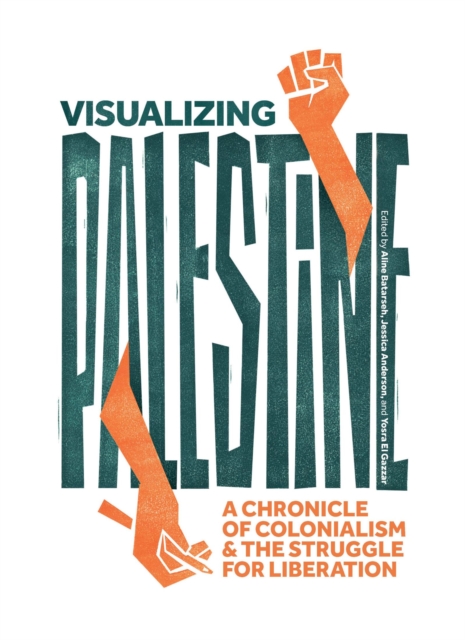
Visualizing Palestine
This striking collection of more than 200 full-color infographics is a vivid portrait of Israeli settler colonialism and the Palestinian struggle for freedom.As a new generation of movement-builders seek to understand Israel's brutal, illegal occupation of Palestine, Visualizing Impact's vivid and informative graphics reveal deep truths.
eBook
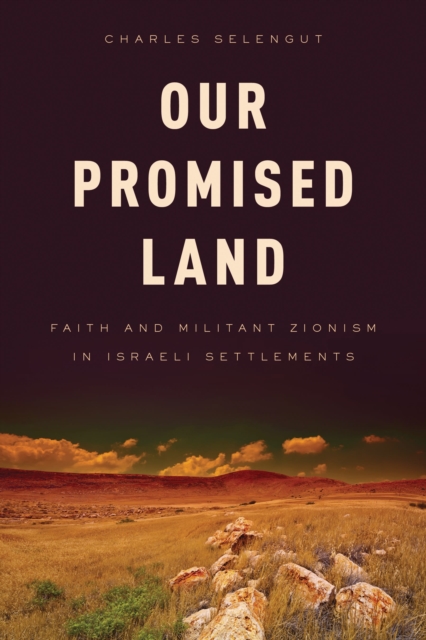
Our promised land
This book takes readers inside radical Israeli settlements to explore how these settlements were formed, what the people in them believe, and their role in the Middle East today. Drawing on three years of research in these settlements, Selengut offers an in-depth exploration of a topic that is often mentioned in headlines but little understood.
eBook

Arab Minority Nationalism in Israel
National minorities and their behaviour have become a central topic in comparative politics in the last few decades. Using the relationship between the state of Israel and the Arab national minority as a case study, this book provides a thorough examination of minority nationalism and state-minority relations in Israel.
Placing the case of the Arab national minority in Israel within a comparative framework, the author analyses major debates taking place in the field of collective action, social movements, civil society and indigenous rights. He demonstrates the impact of the state regime on the political behaviours of the minorities, and sheds light on the similarities and differences between various types of minority nationalisms and the nature of the relationship such minorities could have with their states.
Drawing empirical and theoretical conclusions that contribute to studies of Israeli politics, political minorities, indigenous populations and conflict issues, this book will be a valuable reference for students and those in policy working on issues around Israeli politics, Palestinian politics and the broader Palestinian-Israeli conflict.
eBook