
Catalogue Search | MBRL


Are you sure you want to remove the book from the shelf?

{{itemTitle}}
14,393
result(s) for
"Panama"
Sort by:

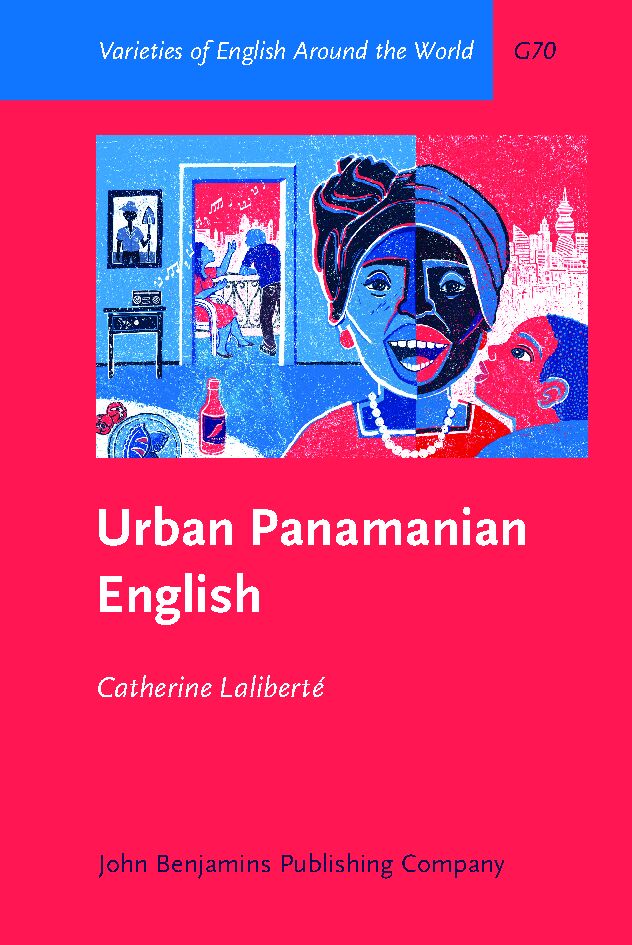
Urban Panamanian English
Urban Panamanian English presents the first detailed account of the English used by the descendants of the Afro-Caribbean builders of the Panama Canal. It offers an up-to-date sociolinguistic account of the Panamanian West Indian community of Panama City and Colón.
eBook

Panama
\"Fodor's correspondents highlight the best of Panama, including Panama City's neighborhoods and nightlife, the Panama Canal, and the beautiful coasts. Our local experts vet every recommendation to ensure you make the most of your time, whether it's your first trip or your ninth,\"--page [4] of cover.
Book

Political Careers, Corruption, and Impunity
In Political Careers, Corruption, and Impunity: Panama's
Assembly, 1984-2009, Carlos Guevara Mann systematically
examines the behavior of the members of Panama's Legislative
Assembly between 1984 and 2009, an arena previously unexplored in
studies of Panamanian politics. He challenges fundamental aspects
of scholarly literature on democratic legislatures, with important
consequences for understanding democratic politics in Latin America
and other parts of the world. The current literature on
legislatures assumes that legislators single-mindedly seek
reelection or the advancement of their political careers, and that
they pursue these goals through acceptable democratic means.
Guevara Mann shows, however, that in Panama many legislators also
pursue less laudable goals such as personal enrichment and freedom
from prosecution, often reaching their goals through
means-widespread clientelism, party switching, and electoral
manipulation-that undermine the quality of democracy.
On one level, Political Careers, Corruption, and
Impunity contrasts the political behavior of individual
legislators; on another, it compares the actions of legislators
under various regimes-military and constitutional. Lastly, it
engages in cross-national comparisons that contrast the behavior of
Panamanian legislators with actions of representatives elsewhere.
Guevara Mann's sophisticated analysis of the military period and
the transition to democracy, with an emphasis on the history and
functioning of legislative bodies, contains a wealth of new
information about a neglected but intrinsically fascinating
case.
eBook

Panama fever : the epic story of the building of the Panama Canal
The building of the Panama Canal was one of the greatest engineering feats in human history. In a tale of exploration, conquest, money, politics, and medicine, Parker charts the challenges that marked the long, labyrinthine road to the building of the canal.
Book
Panama at the Crossroads
In December 1989, the United States invaded Panama, deposed its
government, and established another in its place. While this act of
violent intervention brought Panama to public attention, the
justifications for it obscured the underlying instabilities that
have plagued the country throughout its history. Although a stated
purpose of the invasion was to remove one man, Manuel Noriega, from
power, Panama at the Crossroads demonstrates that the
crisis sweeping Panama in the late 1980s was not caused by one man,
but in fact derived from the history of U.S. domination and the
nature of Panamanian society itself. Panama is located at a crucial
geographic crossroads, a fact that has greatly influenced the
country's history since the sixteenth century. Labor scarcity and
inhospitable terrain, joined with its location, contributed to the
mercantile orientation of Panama's economy. Accordingly, the
country's politics and economics have been consistently dominated
by foreign trading interests, first from Spain, then Colombia and
the United States. Now in the 1990s, Panama stands at a historical
and economic crossroads, and according to Zimbalist and Weeks its
traditional entrepôt institutions are no longer able to promote and
sustain growth. Before building the basis for long-term economic
expansion, Panama must first undo the devastating economic and
political damage engendered by nearly three years of U.S. economic
sanctions and the U.S. invasion. In this timely book, Zimbalist and
Weeks document the origins and characteristics of this crossroads.
Their analysis points the way to a more encompassing and equitable
strategy for Panama's economic development. This title is part of
UC Press's Voices Revived program, which commemorates University of
California Press's mission to seek out and cultivate the brightest
minds and give them voice, reach, and impact. Drawing on a backlist
dating to 1893, Voices Revived makes high-quality, peer-reviewed
scholarship accessible once again using print-on-demand technology.
This title was originally published in 1991.
eBook


Efficacy of a tetravalent dengue vaccine in healthy children aged 4–16 years: a randomised, placebo-controlled, phase 3 trial
A substantial unmet need remains for safe and effective vaccines against dengue virus disease, particularly for individuals who are dengue-naive and those younger than 9 years. We aimed to assess the efficacy, safety, and immunogenicity of a live attenuated tetravalent dengue vaccine (TAK-003) in healthy children aged 4–16 years.
We present data up to 18 months post-vaccination from an ongoing phase 3, randomised, double-blind trial of TAK-003 in endemic regions of Asia and Latin America (26 medical and research centres across Brazil, Colombia, Dominican Republic, Nicaragua, Panama, Philippines, Sri Lanka, and Thailand). Healthy children aged 4–16 years were randomly assigned 2:1 (stratified by age and region) to receive two doses of TAK-003 or two doses of placebo, 3 months apart. Investigators, participants and their parents or guardians, and sponsor representatives advising on trial conduct were masked to trial group assignments. Participants presenting with febrile illness were tested for virologically confirmed dengue (VCD) by serotype-specific RT-PCR. In timeframes beginning 30 days post-second dose, the primary endpoint (overall vaccine efficacy) was assessed in the first 11 months, and the secondary endpoints (efficacy by baseline serostatus, serotype, hospitalised dengue, and severe dengue) in the first 17 months. This study is registered with ClinicalTrials.gov, NCT02747927.
20 099 participants were randomly assigned and vaccinated between Sept 7, 2016, and Aug 18, 2017; 19 021 (94·6%) were included in the per protocol analysis, and 20 071 (99·9%) in the safety set. The primary endpoint was achieved with an overall vaccine efficacy of 80·2% (95% CI 73·3 to 85·3; 61 cases of VCD in the TAK-003 group vs 149 cases of VCD in the placebo group). In the secondary endpoint assessment timeframe, an overall vaccine efficacy of 73·3% (95% CI 66·5 to 78·8) was observed. Analysis of secondary endpoints showed efficacies of 76·1% (95% CI 68·5 to 81·9) in individuals who were seropositive at baseline, 66·2% (49·1 to 77·5) in individuals who were seronegative at baseline, 90·4% (82·6 to 94·7) against hospitalised dengue, and 85·9% (31·9 to 97·1) against dengue haemorrhagic fever. Efficacy varied by individual serotypes (DENV 1, 69·8% [95% CI 54·8 to 79·9]; DENV 2, 95·1% [89·9 to 97·6]; DENV 3, 48·9% [27·2 to 64·1]; DENV 4, 51·0% [–69·4 to 85·8]). Cumulative rates of serious adverse events were similar in TAK-003 (4·0%) and placebo (4·8%) recipients, and were consistent with expected medical disorders in the study population. Infection was the most frequent reason leading to serious adverse events. 20 participants (<0·1% of the safety set) were withdrawn from the trial due to 21 adverse events by the end of part two; 14 of these participants received TAK-003 and six received placebo.
TAK-003 was well tolerated and efficacious against symptomatic dengue in children regardless of serostatus before immunisation. Vaccine efficacy varied by serotype, warranting continued follow-up to assess longer-term vaccine performance.
Takeda Vaccines.
Journal Article

Modern Panama : from occupation to crossroads of the Americas
\"Few have a complete understanding of the recent history of Panama, markedly since the signing of the Carter- Torrijos Treaty in 1977. Although the treaty set the stage for the country to finally control all of its territory, little is known about how Panama has fared, both as a manager of a major waterway and as a sovereign nation in a unique region. Authors Michael Conniff and Gene Bigler seek to fill this major gap in Latin American history with Modern Panama, a thorough account of the recent political and economic developments in Panama. Despite the country's continued struggle with political corruption, Conniff and Bigler argue that changes since the turnover of the Canal have been largely positive, and Panama has emerged into the twenty-first century as a stable, functioning democracy with a growing economy, improved Canal management, and a higher standard of living.\" --Provided by publisher.
Book

Global Media Perspectives on the Crisis in Panama
Operation Just Cause, the United States' incursion into Panama, was the culmination of a gradually escalating confrontation between the United States and the Noriega dominated government of Panama that extended from June, 1987 until early January, 1990. Applying diverse methodological approaches, this volume examines the various ways representative examples of the global media covered the developing crisis and the eventual US incursion into Panama. The volume: - sets the stage for this analysis by delineating the chronological development of the escalating confrontation, as well as by examining the confrontation from the perspective of the US government - analyzes the crisis from the perspective of the US, Soviet, Canadian, French, Portuguese, Arab, and the People's Republic of China media - exposes the challenges for public affairs officers operating within the context of the global media response to international crises, and provides an assessment of the implications of the crisis for inter-American and international relations. This analysis and evaluation of a variety of global media perspectives on the escalating US-Panamanian confrontation will serve to better illuminate and further enrich our understanding of a major international event - indeed, one of the final events of the Cold War era.
Howard M. Hensel, Air War College, USA and Nelson Michaud, École nationale d'administration publique, Canada
eBook