
Catalogue Search | MBRL


Are you sure you want to remove the book from the shelf?

{{itemTitle}}
1,923
result(s) for
"Pantomime"
Sort by:


Synchrony of the Reach and the Grasp in pantomime reach-to-grasp
The Dual Visuomotor Channel theory of reaching proposes that a reach-to-grasp act integrates a Reach, directed toward the extrinsic properties of the target (location), and a Grasp, directed toward the intrinsic properties of the target (size and shape). Previous studies of reach-to-grasp report that the Grasp is altered in pantomime tasks made from a starting position with digit 1 and digit 2 closed and proximal to the target. The present study extends the analysis of real versus pantomime reaching to a task that featured both a Reach and a Grasp, having a starting position with the hand open and proximal to the body. For a real reach, seated participants reached for a doughnut ball (food item) located on a pedestal at arms distance, with the intent of bringing the doughnut ball to the mouth for eating. Participants also made four pantomime reaches with: (1) the doughnut ball removed from the pedestal, (2) the doughnut ball and pedestal moved to the side of the reach location, (3) the doughnut ball and pedestal absent, and (4) the participants wearing vision-occluding glasses. There were two main findings. First, the presence of task-related cues, platform, doughnut ball, and room influenced the kinematics of the Reach and Grasp. Second, the compound structure of a real reach, in which flexion/extension of the arm featured in the Reach and flexion/extension of the digits featured in the Grasp are out of phase, changed in pantomime such that these features of Reach and Grasp became in phase. The results show that pantomime reaching is influenced not only by task-related percepts but also by central mechanisms ordinarily related to integrating the Reach and the Grasp.
Journal Article


Pantomimic fossils in modern human communication
Bodily mimesis, the capacity to use the body representationally, was one of the key innovations that allowed early humans to go beyond the 'baseline' of generalized ape communication and cognition. We argue that the original human-specific communication afforded by bodily mimesis was based on signs that involve three entities: an expression that represents an object (i.e. communicated content) for an interpreter. We further propose that the core component of this communication, pantomime, was able to transmit referential information that was not limited to select semantic domains or the 'here-and-now', by means of motivated—most importantly iconic—signs. Pressures for expressivity and economy then led to conventionalization of signs and a growth of linguistic characteristics: semiotic systematicity and combinatorial expression. Despite these developments, both naturalistic and experimental data suggest that the system of pantomime did not disappear and is actively used by modern humans. Its contemporary manifestations, or pantomimic fossils, emerge when language cannot be used, for instance when people do not share a common language, or in situations where the use of (spoken) language is difficult, impossible or forbidden. Under such circumstances, people bootstrap communication by means of pantomime and, when these circumstances persist, newly emergent pantomimic communication becomes increasingly language-like.
This article is part of the theme issue 'Reconstructing prehistoric languages'.
Journal Article

Be a friend
\"Dennis is an ordinary boy who expresses himself in extraordinary ways. Some children do show-and-tell. Dennis mimes his. Some children climb trees. Dennis is happy to BE a tree... But being a mime can be lonely. It isn't until Dennis meets a girl named Joy that he discovers the power of friendship--and how special he truly is!\"-- Provided by publisher.
Book

Failure in Pantomime Action Execution Correlates with the Severity of Social Behavior Deficits in Children with Autism: A Praxis Study
Here we describe the performance of children with autism, their siblings, and typically developing children using the Florida Apraxia Battery. Children with autism showed the lowest performance in all sections of the test. They were mostly impaired in pantomime actions execution on imitation and on verbal command, and in imitation of meaningless gestures. Interestingly, a correlation was found between performance in pantomime actions and the severity of social behavior deficits. We conclude that the presence of a rigid internal model prevents the execution of an exact copy of the observed pantomime actions and that the deficit in imitation of meaningless gestures is most likely due to a deficit in the mechanisms responsible for visuomotor transformations.
Journal Article
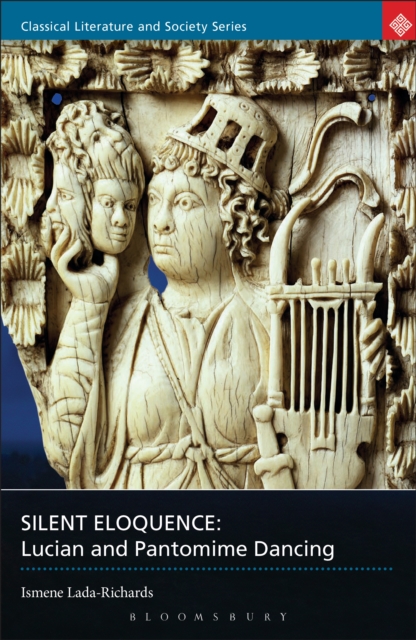
Silent Eloquence
One of the greatest aesthetic attractions in the ancient world was pantomime dancing, a ballet-style entertainment in which a silent, solo dancer incarnated a series of mythological characters to the accompaniment of music and sung narrative.
eBook

Symbolic gestures and spoken language are processed by a common neural system
Symbolic gestures, such as pantomimes that signify actions (e.g., threading a needle) or emblems that facilitate social transactions (e.g., finger to lips indicating \"be quiet\"), play an important role in human communication. They are autonomous, can fully take the place of words, and function as complete utterances in their own right. The relationship between these gestures and spoken language remains unclear. We used functional MRI to investigate whether these two forms of communication are processed by the same system in the human brain. Responses to symbolic gestures, to their spoken glosses (expressing the gestures' meaning in English), and to visually and acoustically matched control stimuli were compared in a randomized block design. General Linear Models (GLM) contrasts identified shared and unique activations and functional connectivity analyses delineated regional interactions associated with each condition. Results support a model in which bilateral modality-specific areas in superior and inferior temporal cortices extract salient features from vocal-auditory and gestural-visual stimuli respectively. However, both classes of stimuli activate a common, left-lateralized network of inferior frontal and posterior temporal regions in which symbolic gestures and spoken words may be mapped onto common, corresponding conceptual representations. We suggest that these anterior and posterior perisylvian areas, identified since the mid-19th century as the core of the brain's language system, are not in fact committed to language processing, but may function as a modality-independent semiotic system that plays a broader role in human communication, linking meaning with symbols whether these are words, gestures, images, sounds, or objects.
Journal Article
Persuasive conversation as a new form of communication in Homo sapiens
The aim of this paper is twofold: to propose that conversation is the distinctive feature of Homo sapiens' communication; and to show that the emergence of modern language is tied to the transition from pantomime to verbal and grammatically complex forms of narrative. It is suggested that (animal and human) communication is a form of persuasion and that storytelling was the best tool developed by humans to convince others. In the early stage of communication, archaic hominins used forms of pantomimic storytelling to persuade others. Although pantomime is a powerful tool for persuasive communication, it is proposed that it is not an effective tool for persuasive conversation: conversation is characterized by a form of reciprocal persuasion among peers; instead, pantomime has a mainly asymmetrical character. The selective pressure towards persuasive reciprocity of the conversational level is the evolutionary reason that allowed the transition from pantomime to grammatically complex codes in H. sapiens, which favoured the evolution of speech.
This article is part of the theme issue 'Reconstructing prehistoric languages'.
Journal Article

The Neurocognitive Bases of Meaningful Intransitive Gestures: A Systematic Review and Meta-analysis of Neuropsychological Studies
Researchers and clinicians have long used meaningful intransitive (i.e., not tool-related; MFI) gestures to assess apraxia—a complex and frequent motor-cognitive disorder. Nevertheless, the neurocognitive bases of these gestures remain incompletely understood. Models of apraxia have assumed that meaningful intransitive gestures depend on either long-term memory (i.e., semantic memory and action lexicons) stored in the left hemisphere, or social cognition and the right hemisphere. This meta-analysis of 42 studies reports the performance of 2659 patients with either left or right hemisphere damage in tests of meaningful intransitive gestures, as compared to other gestures (i.e., MFT or meaningful transitive and MLI or meaningless intransitive) and cognitive tests. The key findings are as follows: (1) deficits of meaningful intransitive gestures are more frequent and severe after left than right hemisphere lesions, but they have been reported in both groups; (2) we found a transitivity effect in patients with lesions of the left hemisphere (i.e., meaningful transitive gestures more difficult than meaningful intransitive gestures) but a “reverse” transitivity effect in patients with lesions of the right hemisphere (i.e., meaningful transitive gestures easier than meaningful intransitive gestures); (3) there is a strong association between meaningful intransitive and transitive (but not meaningless) gestures; (4) isolated deficits of meaningful intransitive gestures are more frequent in cases with right than left hemisphere lesions; (5) these deficits may occur in the absence of language and semantic memory impairments; (6) meaningful intransitive gesture performance seems to vary according to the emotional content of gestures (i.e., body-centered gestures and emotional valence-intensity). These findings are partially consistent with the social cognition hypothesis. Methodological recommendations are given for future studies.
Journal Article