
Catalogue Search | MBRL


Are you sure you want to remove the book from the shelf?

{{itemTitle}}
4,175
result(s) for
"Papal documents"
Sort by:

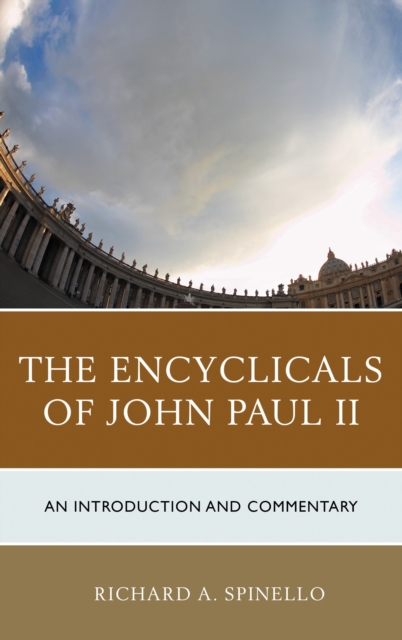
The Encyclicals of John Paul II
Pope John Paul II was the second longest serving pope in history and the longest serving pope of the last century. His presence was influential not only to Catholics, but also throughout the world. The Encyclicals of John Paul II is the first book to focus in depth on the pope's fourteen encyclicals, through which he communicated many of the key themes of his papacy. The first part of the book includes helpful background information-a brief biographical sketch of John Paul II's life, his intellectual formation, and central theological themes of his papacy, including some of the major controversies of the 20 th century. The first section of the book also provides invaluable background on the nature of an encyclical, including the history of this papal document. The second part of the book provides a thorough commentary on these encyclicals. The encyclicals are grouped by theme, introduced individually, and analyzed to trace broad themes through John Paul II's work and theology. The Encyclicals of John Paul II provides an important discussion of these key documents from John Paul II's papacy.
eBook

LA INFLUENCIA DE LAS CANCILLERÍAS PAPAL Y REAL SOBRE LA DOCUMENTACIÓN DE LOS ARZOBISPOS COMPOSTELANOS EN EL SIGLO XV
La cancillería arzobispal compostelana expidió una gran variedad de tipologías documentales, cuya relación entre contenido jurídico y materialidad se vio influenciada por los diplomas pontificios y reales castellanos. En esta investigación mostramos cómo los documentos más solemnes de los arzobispos de Santiago en el siglo XV imitaron las caracteristicas de los diplomas papales (emitidos en latín, con escrituras de origen extranjero o repitiendo ciertas fórmulas de la cancillería romana); mientras que los menos solemnes se mimetizaron con los productos de la oficina regia (confeccionados en romance, con góticas castellanas y tomando el formulario de los documentos reales). Además, la cancillería arzobispal impulsó ciertas tendencias hacia otras escribanías eclesiásticas de la diócesis, como las del provisor o las de los arcedianos.
Journal Article

THE CHALLENGES OF REVOKING THE PAPAL BULLS
Newcomb discusses the contrast between the free existence of Native nations and the system of domination imposed by Western colonizers. He explores the perspectives of both the Native Ancestors looking out at the invading ships and the colonizers moving towards them with the intention of establishing Christian domination. The recent Vatican Statement on the Doctrine of Discovery is also analyzed from both a Native perspective and a church perspective.
Journal Article
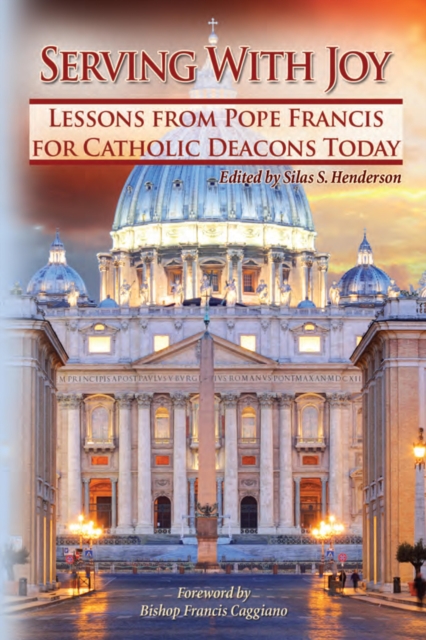
Serving With Joy
Since the early days of his pontificate, Pope Francis has challenged us to reclaim the \"good news\" of the Gospel and to allow that good news to heal shattered lives. He is an evangelist of hope who models true servant leadership and whose witness to joy has changed the Church and the world. This small volume brings together the reflections of five leaders in the deacon community in the United States on the joy-filled witness of Pope Francis and what his message means for deacons today.
eBook
The Crusade Against the Staufer in Germany, 1246-51
In the conflict between Holy Emperor Frederick II and Pope Innocent IV, the papal argument that this change of power was a crusade and thus a holy war with an important spiritual dimension largely failed to take hold in Germany. Instead, the way the crusade unfolded in practice was determined by the logic of attaining royal power in Germany, while the political and legal necessities for Frederick II's deposition determined how Pope Innocent IV chose to phrase the justification for war. Politics drove religious ideology in a way that made it distinct from other crusades. Thus, the crusade against the Staufer merits description as a 'political crusade.' The analysis is based on thirteenth century chronicles and annals, mainly produced in Germany but also beyond, as well as charters issued by protagonists of the conflict. Most chronicles and annals did not report the military campaigns by using language typical of crusading. Hence chronicles create a dissimilar picture of the same events to papal letters, which are often prescriptive. The difference in language between the sources has shaped the historiography on the crusade until this day. The crusade was shaped by the prerequisites of becoming the new King of the Romans, and of putting rulership into practice. Henry Raspe conceptualised his military strategy as a direct fight to overthrow Conrad IV, while William of Holland strengthened his rule after his coronation by conquering imperial lands and property, especially royal palaces. Juxtaposing their strategies highlights their different approaches to affecting a change of power in Germany. By addressing this hitherto neglected subject, the thesis contributes to two disciplines: to crusader studies by analysing the crusade against the Staufer in its German context, and to German history by explaining the role the crusade played in the conflict between Emperor Frederick II and the papacy.
Dissertation

More than scientists: How message and messenger attributes influence viewers’ climate change intentions
Effectively motivating public action on climate change remains a central challenge for science communicators. This study investigated how message and messenger attributes shape viewers’ motivation to act on climate change, and whether these effects vary as a function of political orientation. Using a policy-capturing design, 581 U.S. adults each viewed six randomly selected short videos from the More than Scientists website, in which climate scientists described the personal relevance of climate change. Linguistic features of the messages were analyzed using the Linguistic Inquiry and Word Count (LIWC) software, and messenger attributes (e.g., age, sex, attractiveness) were independently coded. Multilevel modeling revealed that messenger characteristics—particularly being older, male, attractive, and filmed in natural settings—were the strongest predictors of viewer motivation, explaining over 21% of within-person variance. By contrast, linguistic message attributes had weak predictive power overall, though messages with future-focused language and greater length were modestly more motivating. Political orientation moderated some message effects: affiliation-oriented language increased motivation for left-leaning viewers, while achievement-oriented language was more effective for right-leaning viewers. These findings underscore the importance of peripheral cues in climate communication and support targeted messaging strategies that align with audience values and identities.
Journal Article

Papal Encyclicals and Episcopal Circular Letters—Episcopal Attitudes and Perceived Roles in 18th-Century Hungary
This study investigates the prescribed and perceived roles of Catholic bishops in 18th-century Hungary through a comparative analysis of Bishop Ferenc Zichy and Bishop János Szily. Drawing on papal encyclical—Ubi primum of Pope Benedict XIV—, as well as episcopal documents—Epistola pastoralis of Ferenc Zichy, Istructio… of János Szily—, the paper explores the episcopal ideals of governance, teaching, and moral example, and how these ideals were implemented in the dioceses of Győr and Szombathely. The research highlights how both bishops internalized and operationalized the model of the bonus pastor—the Good Shepherd—through personal residence, canonical visitations, seminary reform, and moral regulation of the clergy. Bishop Zichy and Bishop Szily emphasized the importance of episcopal oversight, spiritual exercises, and educational standards to reinforce clerical discipline and doctrinal conformity, responding to the challenges of the Catholic Enlightenment and the broader ecclesiastical reform movement. By analysing pastoral letters, visitation protocols, and clerical instructions, the study reveals a coherent vision of episcopal leadership that balanced doctrinal authority with practical pastoral care. This work contributes to the broader historiography on early modern Catholicism by showing how local episcopal strategies aligned with and adapted papal mandates in a dynamic and context-sensitive manner.
Journal Article

The Bullary as a New Type of Cartulary: The Example of Becerro III of San Millán de la Cogolla
Following the famous miscellaneous volume of 1993 dedicated to the study of cartularies, part of the historiographical attention on these manuscripts has focused on their typological diversity. This study aims to advance research in this specific area by investigating the emergence of cartularies devoted to the preservation of papal documents. Such manuscripts have been known as bullaria (or bullaries in English and bularios in Spanish) since the early Modern Age, the period of their maximum diffusion. In the Iberian Peninsula, there survive several exemplars from the thirteenth and fourteenth centuries that can be interpreted as precursors of this new typology. Due to its early chronology, the Becerro III of the monastery of San Millán de la Cogolla is an excellent starting point for this investigation. The study of this manuscript reveals that, despite its factitious nature, the monks’ creation of a dossier of papal privileges which opens the manuscript can be recognised as a «proto-bullary», which anticipated by several centuries the definition and diffusion of a new type of cartulary.
Journal Article

Becoming a Fraternal Organization: Insights from the Encyclical Fratelli Tutti
We uncover fundamental dimensions of the process through which organizations embed the practice of fraternity through embarking on an organizational journey in the direction of the common good. Building on the latest encyclical of Pope Francis, Fratelli Tutti, about fraternal and social friendship, we offer insight into the understanding of what it means to become a fraternal organization and reflect on the key ethical and paradoxical challenges for organizations aiming at collectively contributing to the common good. We add to previous work by characterizing this journey as a process involving unique ethical challenges that emerge from the paradoxes associated with this process and how this might change the nature of the relationships between organizations and others within the organizational landscape.
Journal Article