
Catalogue Search | MBRL


Are you sure you want to remove the book from the shelf?

{{itemTitle}}
18,287
result(s) for
"Paper History."
Sort by:

On paper : the everything of its two-thousand-year history
A consideration of all things paper--the invention that revolutionized human civilization; its thousand-fold uses (and misuses); its sweeping influence on society; its makers, shapers, collectors, and pulpers--by the admired cultural historian.
Book
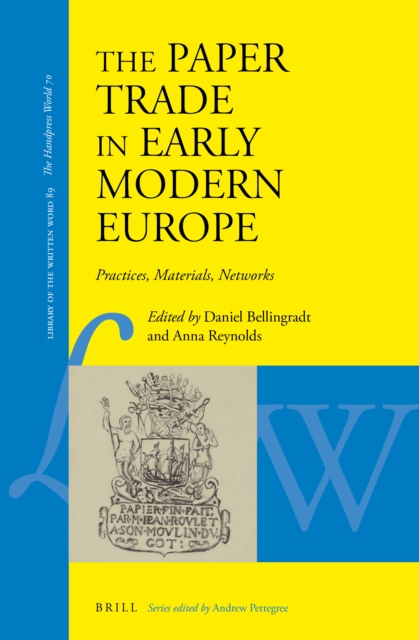
The Paper Trade in Early Modern Europe
This book attends to the most essential, lucrative, and overlooked business activity of early modern Europe: the trade of paper, uncovering its hotspots and trade routes, usual dealings, and recycling economies.
eBook

The art of paper : from the Holy Land to the Americas
\"The untold story of how paper revolutionized art making during the Renaissance, exploring how it shaped broader concepts of authorship, memory, and the transmission of ideas over the course of three centuries. In the late medieval and Renaissance period, paper transformed society-not only through its role in the invention of print but also in the way it influenced artistic production. The Art of Paper tells the history of this medium in the context of the artist's workshop from the thirteenth century, when it was imported to Europe from Africa, to the sixteenth century, when European paper was exported to the colonies of New Spain. In this pathbreaking work, Caroline Fowler approaches the topic culturally rather than technically, deftly exploring the way paper shaped concepts of authorship, preservation, and the transmission of ideas during this period. This book both tells a transcultural history of paper from the Cairo Genizah to the Mesoamerican manuscript and examines how paper became \"Europeanized\" through the various mechanisms of the watermark, colonization, and the philosophy of John Locke. Ultimately, Fowler demonstrates how paper-as refuse and rags transformed into white surface-informed the works for which it was used, as well as artists' thinking more broadly, across the early modern world\"--Publisher.
Book
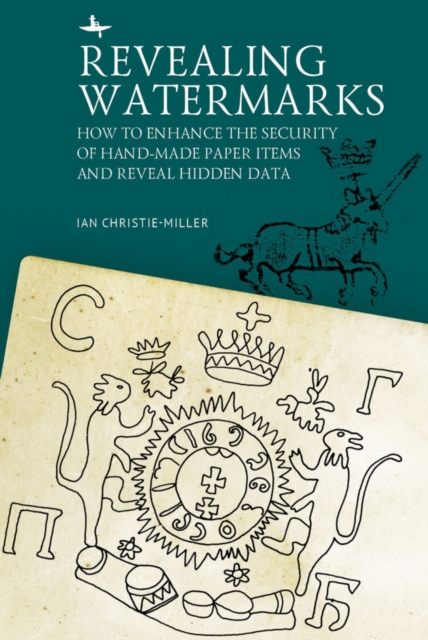
Revealing Watermarks
Digital imaging andprocessing are shown to open new methods of paper research. Early Balticprinted books are the examples in Revealing Watermarks, which alsodescribes how to enhance security, by creating and archiving a digital'fingerprint'. Thus thefts are deterred and stolen items can be uniquelyidentified for return.
eBook


The Archaeology of Tibetan Books
Agnieszka Helman-Ważny's Archaeology of Tibetan Books provides a comprehensive guide to the making of Tibetan books. Concerned with the relation of papers, inks, and layout to questions of provenance and dating, this work is a must-have companion to any textual analysis.
eBook

The pharaoh's treasure : the origin of paper and the rise of Western civilization
For our entire history, humans have always searched for new ways to share information. This innate compulsion led to the origin of writing on the rock walls of caves and coffin lids or carving on tablets. But it was with the advent of papyrus paper when the ability to record and transmit information exploded, allowing for an exchanging of ideas from the banks of the Nile throughout the Mediterranean--and the civilized world--for the first time in human history. In The Pharaoh's Treasure, John Gaudet looks at this pivotal transition to papyrus paper, which would become the most commonly used information medium in the world for more than 4,000 years. Far from fragile, papyrus paper is an especially durable writing surface; papyrus books and documents in ancient and medieval times had a usable life of hundreds of years, and this durability has allowed items like the famous Nag Hammadi codices from the third and fourth century to survive. The story of this material that was prized by both scholars and kings reveals how papyrus paper is more than a relic of our ancient past, but a key to understanding how ideas and information shaped humanity in the ancient and early modern world.
Book

In the Power of the Government
Mark Kuhlberg challenges the orthodox interpretation of the relationship between the corporations which ran the Ontario's pulp and paper mills and the politicians at Queen's Park in the early twentieth century.
eBook

