
Catalogue Search | MBRL


Are you sure you want to remove the book from the shelf?

{{itemTitle}}
26
result(s) for
"Parenting-Study and teaching"
Sort by:

Evidence-based parenting education : a global perspective
This is the first book to provide a multidisciplinary, critical, and global overview of evidence-based parenting education (PEd) programs. Readers are introduced to the best practices for Designing, implementing and evaluating effective PEd programs in order to teach clients how to be effective parents. Noted contributors from various disciplines examine evidence-based programs from the USA, Canada, Europe, Asia, Australia as well as web-based alternatives. The best practices used in a number of venues are explored, often by the developers themselves. Examples and discussion questions in Courage application of the material. Critical guidance for those who wish to design, implement, and evaluate PEd programs in various settings is provided. All chapters feature learning goals, an introduction, conclusion, key points, discussion questions, and additional resources. In addition to these elements, chapters in Part III follow it consistent structure so readers can easily compare programs-- theoretical foundations and history, needs assessment in target audience, program goals and objectives, curriculum issues, cultural implications, evidence based research and evaluation, and professional preparation and training issues. The editor has taught parenting and family life education courses for years. This book reviews key information that his students needed to become competent professionals. Highlights of the books coverage include: comprehensive summary of evidence-based PEd training programs in one volume; preparing readers for professional practices Certified Family Life Educator (CFLE) by highlighting the fundamentals of developing and evaluating PEd programs; exposing readers to models of parenting education from around the world. Ideal for advanced undergraduate or graduate courses in parent education, parent-child relations, parenting, early childhood or family life education, family therapy, and home, school, and community services taught in human development and family studies, psychology, social work, sociology, education, nursing, and more, the book also serves as a resource for practitioners, counselors, clergy members, and policy makers interested in evidence-based PEd programs or those seeking to become CFLEs or parent educators.
Book
Parenting education in Indonesia
There is a dynamic and growing energy in Indonesia focusing on parenting education, particularly for low-SES families. However, little is known about parenting styles and related outcomes, much less the coverage and effectiveness of various parenting education approaches. In 2013, the Government of Indonesia commissioned the World Bank to review existing programs and make recommendations to strengthen its parenting education system. This report synthesizes international research while providing detailed information on the seven agencies currently providing parenting education programs in Indonesia, collected from interviews, reports, and data presentations in 2013 and early 2014. Four government ministries and three non-governmental organizations currently offer programming: Ministry of Health, Ministry of Education and Culture, Ministry of Social Affairs, Family Planning Board, Plan, Save the Children, and World Vision. The report notes the commonalities in current program structures and approaches, then articulates recommendations to create a more cohesive and effective system with adequate coverage. In terms of content, authors recommend that providers choose a narrow and meaningful set of messages for respective programs, and enhance content for particularly vulnerable families, such as those with children with disabilities or dealing with chronic illness, natural disaster, conflict, and so forth. To strengthen program design and delivery, eight recommendations emerge, such as articulating measurable goals, ensuring active learning, encourage in-session practice, improving training and compensation for facilitators, and increasing the use of technology. The report includes a matrix of short-term (1-2 years) and medium-term (3-5 years) steps to build a coordinated system of parenting education that involves four areas of action: (1) create the framework; (2) develop an enabling environment; (3) conduct the research; and (4) implement and refine programming. Steps are both simultaneous and sequential and should lead to increased coverage and quality of programs within 5 years.
eBook

Count girls in : empowering girls to combine any interests with STEM to open up a world of opportunity
\"There is a place for all girls and young women--not just the science fair winners and robotics club members--in STEM classes and careers. To succeed in science and tech fields today, girls don't have to change who they are. A girl who combines her natural talents, interests, and dreams with STEM skills has a greater shot at a career she loves and a salary she deserves. The authors present compelling research in a conversational, accessible style and provide specific advice and takeaways for each stage of schooling from elementary school through college, followed by comprehensive STEM resources. This isn't a book about raising competitive, test-acing girls in lab coats; this is about raising happy, confident girls who realize the world of opportunities before them\"-- Provided by publisher.
Book
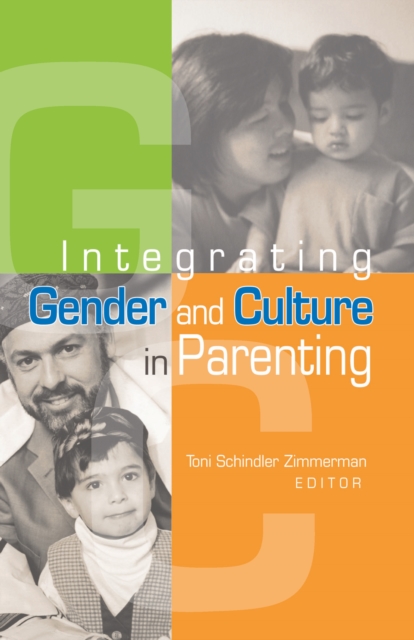
Integrating Gender and Culture in Parenting
Show parents how to help their children break free of the artificial limitations placed upon them by society's gender and cultural expectations!
This book presents both theoretical and practical ideas for integrating gender and culture into parenting. Unlike other books on the subject, this one examines interventions and activities, and suggests discussion topics that provide children with the skills to become critical consumers and thinkers. You'll learn to help children discover and celebrate who they are, while infusing the message that they should notice and challenge exaggerated stereotypes of gender and ethnicity.
From the editor: 'If therapists can coach parents in helping to inoculate their children, beginning at early ages, against the negative effects of gender socialization, perhaps the work of developing equal relationships in their friendships and intimate relationships will be less taxing as they grow and mature. Additionally, as children are taught to challenge rigid gender and ethnicity messages, perhaps they will feel a greater sense of flexibility as they dream about who they want to become and how they want to live their lives.'
This essential book will teach you to help children defeat the harmful media messages they're bombarded by. Integrating Gender and Culture in Parenting:
presents 20 simple ideas and 5 group activities to teach children about social justice in our everyday lives
explores parental socialization practices and the values transmitted to school-aged and young adult offspring, focusing on the way parents' teaching styles integrate race and gender
investigates the parenting practices of middle-class, dual-earner couples who feel that they are successfully balancing family and work-with a look at the specific strategies these couples use to achieve an appropriate balance
shows what family therapists should know about sexuality educat
eBook

The science of making friends : helping socially challenged teens and young adults
\"The groundbreaking book that puts the focus on teens and young adults with autism. While a number of programs help young children with autism to develop social skills, until now there have been no such approaches for older kids and adults on the spectrum. This book is based on UCLA's acclaimed PEERS program, the only research-based approach in the world to helping adolescents and young adults with autism make and keep friends. This step-by-step guide helps parents, educators, and others to provide \"social coaching\" to teens and young adults on the spectrum. The book includes concrete rules and steps of social etiquette identified through research. Parents can use the book to assist in improving conversational skills, expanding social opportunities (including dating), identifying strategies for handling peer rejection, and developing and enhancing friendships. Lessons are taught using didactic teaching narratives, followed by key rules and steps. Laugeson and this groundbreaking approach have been profiled in People magazine. DVD videos included demonstrate the book's lessons clearly and show how to present the material to teens and young adults Offers a treasure trove of behavior exercises for practicing each skill, ranging from joining conversations to handling bullying The book features a bonus DVD with video demonstrations of the skills taught and a mobile application that helps teens and young adults use the strategies in real-world situations\"-- Provided by publisher.
Book
Parent Management Training
Among evidence-based therapies for children and adolescents with oppositional, aggressive, and antisocial behavior, parent management training (PMT) is without peer; no other treatment for children has been as thoroughly investigated and as widely applied. Here, Alan E. Kazdin brings together the conceptual and empirical bases underlying PMT with discussions of background, principles, and concepts, supplemented with concrete examples of the ways therapists should interact with parents and children.
eBook

Wright, LaQuette: Teen Mother
one photo of teen mother LaQuette Wright by Randy Eli Grothe
Web Resource
Kingcannon, Tia: Teen Mother
one photo of teen mother Tia Kingcannon by Randy Eli Grothe
Web Resource