
Catalogue Search | MBRL


Are you sure you want to remove the book from the shelf?

{{itemTitle}}
838
result(s) for
"Participation, British"
Sort by:


Losing Small Wars
Partly on the strength of their apparent success in insurgencies such as Malaya and Northern Ireland, the British armed forces have long been perceived as world class, if not world beating. However, their recent performance in Iraq and Afghanistan is widely seen as-at best-disappointing; under British control Basra degenerated into a lawless city riven with internecine violence, while tactical mistakes and strategic incompetence in Helmand Province resulted in heavy civilian and military casualties and a climate of violence and insecurity. In both cases the British were eventually and humiliatingly bailed out by the US army.
In this thoughtful and compellingly readable book, Frank Ledwidge examines the British involvement in Iraq and Afghanistan, asking how and why it went so wrong. With the aid of copious research, interviews with senior officers, and his own personal experiences, he looks in detail at the failures of strategic thinking and culture that led to defeat in Britain's latest \"small wars.\" This is an eye-opening analysis of the causes of military failure, and its enormous costs.
eBook

Blunder : Britain's War in Iraq
Why did Britain go to war in Iraq in 2003? Existing accounts stress dodgy dossiers, intelligence failures, and the flaws of individual leaders. Deploying the large number of primary documents now available, this book puts ideas at the centre of the story. As the book argues, Britain's war in Iraq was caused by bad ideas that were dogmatically held and widely accepted. Three ideas in particular formed the war's intellectual foundations: the notion of the undeterrable, fanatical rogue state; the vision that the West's path to security is to break and remake states; and the conceit that by paying the 'blood price', Britain could secure influence in Washington DC. These issues matter, because although the Iraq War happened fifteen years ago, it is still with us. As well as its severe consequences for regional and international security, the ideas that powered the war persist in Western security debate. If all wars are fought twice, first on the battlefield and the second time in memory, this book enters the battle over what Iraq means now, and what we should learn.-- Publisher.
Book

Counterinsurgency in Crisis
Long considered the masters of counterinsurgency, the British military encountered significant problems in Iraq and Afghanistan when confronted with insurgent violence. In their effort to apply the principles and doctrines of past campaigns, they failed to prevent Basra and Helmand from descending into lawlessness, criminality, and violence.
By juxtaposing the deterioration of these situations against Britain's celebrated legacy of counterinsurgency, this investigation identifies both the contributions and limitations of traditional tactics in such settings, exposing a disconcerting gap between ambitions and resources, intent and commitment. Building upon this detailed account of the Basra and Helmand campaigns, this volume conducts an unprecedented assessment of British military institutional adaptation in response to operations gone awry. In calling attention to the enduring effectiveness of insurgent methods and the threat posed by undergoverned spaces, David H. Ucko and Robert Egnell underscore the need for military organizations to meet the irregular challenges of future wars in new ways.
eBook

High command : British military leadership in the Iraq and Afghanistan Wars
Explores the circumstances that led to Britain's support of the United States in wars in Iraq and Afghanistan and how the Ministry of Defence coped with challenges including rivalry and diffuse responsibility among the Service Chiefs, lack of clear strategy, and weak domestic political support.
Book
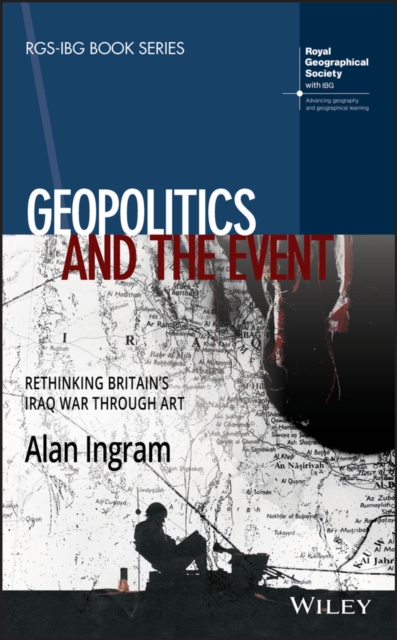
Geopolitics and the event : rethinking Britain's Iraq war through art
An original exploration of the 2003 Iraq war and geopolitics more broadly through the prism of art.
* Offers a reappraisal of one of the most contentious and consequential events of the early twenty-first century
* Advances an original perspective on Britain's role in the 2003 invasion and subsequent occupation of Iraq
* Maps out new ways of thinking about geopolitical events through art
* Examines the work of artists, curators and activists in light of Britain's role as a colonial power in Iraq and the importance of oil
* Reflects on the significance, limits and dilemmas of art as a form of critical intervention
* Questions the implications of art in colonialism and modernity
eBook


