
Catalogue Search | MBRL


Are you sure you want to remove the book from the shelf?

{{itemTitle}}
1,627
result(s) for
"Pasolini, Pier Paolo 1922-1975"
Sort by:

Pier Paolo Pasolini : performing authorship
\"Before his mysterious murder in 1975, Pier Paolo Pasolini had become famous--and infamous--not only for his groundbreaking films and literary works but also for his homosexuality and criticism of capitalism, colonialism, and Western materialism. In Pier Paolo Pasolini: Performing Authorship, Gian Maria Annovi revisits Pasolini's oeuvre to examine the author's performance as a way of assuming an antagonistic stance toward forms of artistic, social, and cultural oppression. Annovi connects Pasolini's notion of authorship to contemporary radical artistic practices and today's multimedia authorship. Annovi considers the entire range of Pasolini's work, including his poetry, narrative and documentary film, dramatic writings, and painting, as well as his often scandalous essays on politics, art, literature, and theory. He interprets Pasolini's multimedia authorial performance as a masochistic act to elicit rejection, generate hostility, and highlight the contradictions that structure a repressive society. Annovi shows how questions of authorial self-representation and self-projection relate to the artist's effort to undermine the assumptions of his audience and criticize the conformist practices that the culture industry and mass society impose on the author. Pasolini reveals the critical potential of his spectacular celebrity by using the author's corporeal or vocal presence to address issues of sexuality and identity, and through his strategic self-fashioning in films, paintings, and photographic portraits he destabilizes the audience's assumptions about the author\"--The publisher.
BOOK

Allegories of Contamination
The Trilogia della vita (Trilogy of Life) is a series of three films that Pier Paolo Pasolini completed before his horrifying assassination in 1975, and it remains among the most controversial of his cinematic works. In Allegories of Contamination Patrick Rumble provides an incisive critical and theoretical study of these films and the Marxist filmmaker's complex, original concept of the cinematic medium.
With the three films that make up the Trilogy of Life – The Decameron , Canterbury Tales , and The Arabian Nights – Pasolini attempts to recapture the aura surrounding popular, predominantly oral forms of storytelling through a pro-modern vision of innocent, unalienated bodies and pleasures. In these works Pasolini appears to abandon the explicitly political engagement that marked his earlier works - films that led him to be identified with other radical filmmakers such as Bellocchio, Bertolucci, and Godard. However, Pasolini insisted that these were his 'most ideological films,' and his political engagement translates into a mannerist, anti-classical style or what he called a 'cinema of poetry.' Rumble offers a comparative study based on the concept of 'aesthetic contamination,' which is fundamental to the understanding of Pasolini's poetics. Aesthetic contamination concerns the mediation between different cultures and different historical moments. Through stylistic experimentation, the Trilogy of Life presents a genealogy of visual codes, an interrogation of the subjectivity of narrative cinema. In these films Pasolini celebrates life, and perhaps therein lies their simple heresy.
eBook


Pier Paolo Pasolini
Before his mysterious murder in 1975, Pier Paolo Pasolini had become famous-and infamous-not only for his groundbreaking films and literary works but also for his homosexuality and criticism of capitalism, colonialism, and Western materialism. InPier Paolo Pasolini: Performing Authorship, Gian Maria Annovi revisits Pasolini's oeuvre to examine the author's performance as a way of assuming an antagonistic stance toward forms of artistic, social, and cultural oppression. Annovi connects Pasolini's notion of authorship to contemporary radical artistic practices and today's multimedia authorship.
Annovi considers the entire range of Pasolini's work, including his poetry, narrative and documentary film, dramatic writings, and painting, as well as his often scandalous essays on politics, art, literature, and theory. He interprets Pasolini's multimedia authorial performance as a masochistic act to elicit rejection, generate hostility, and highlight the contradictions that structure a repressive society. Annovi shows how questions of authorial self-representation and self-projection relate to the artist's effort to undermine the assumptions of his audience and criticize the conformist practices that the culture industry and mass society impose on the author. Pasolini reveals the critical potential of his spectacular celebrity by using the author's corporeal or vocal presence to address issues of sexuality and identity, and through his strategic self-fashioning in films, paintings, and photographic portraits he destabilizes the audience's assumptions about the author.
eBook


The resurrection of the body
Italian novelist, poet, and filmmaker Pier Paolo Pasolini was brutally killed in Rome in 1975, a macabre end to a career that often explored humanity’s capacity for violence and cruelty. Along with the mystery of his murderer’s identity, Pasolini left behind a controversial but acclaimed oeuvre as well as a final quartet of beguiling projects that signaled a radical change in his aesthetics and view of reality. The Resurrection of the Body is an original and compelling interpretation of these final works: the screenplay Saint Paul, the scenario for Porn-Theo-Colossal, the immense and unfinished novel Petrolio, and his notorious final film, Salò or the 120 Days of Sodom, a disturbing adaptation of the writings of the Marquis de Sade. Together these works, Armando Maggi contends, reveal Pasolini’s obsession with sodomy and its role within his apocalyptic view of Western society. One of the first studies to explore the ramifications of Pasolini’s homosexuality, The Resurrection of the Body also breaks new ground by putting his work into fruitful conversation with an array of other thinkers such as Freud, Strindberg, Swift, Henri Michaux, and Norman O. Brown.
eBook
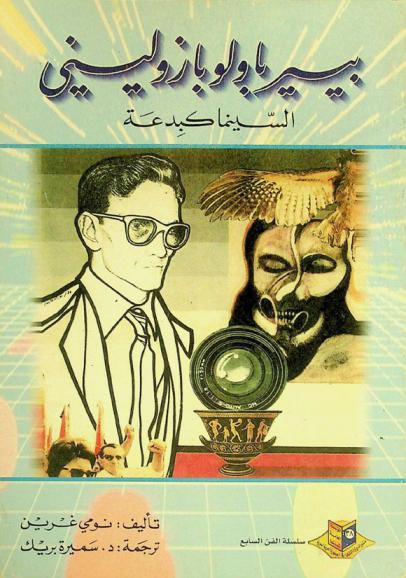

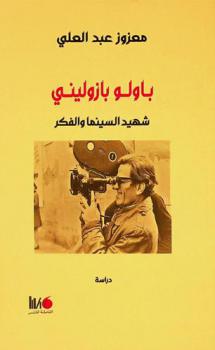
Pier Paolo Pasolini
Before his mysterious murder in 1975, Pier Paolo Pasolini had become famous—and infamous—not only for his groundbreaking films and literary works but also for his homosexuality and criticism of capitalism, colonialism, and Western materialism. In Pier Paolo Pasolini: Performing Authorship, Gian Maria Annovi revisits Pasolini's oeuvre to examine the author's performance as a way of assuming an antagonistic stance toward forms of artistic, social, and cultural oppression. Annovi connects Pasolini's notion of authorship to contemporary radical artistic practices and today's multimedia authorship.Annovi considers the entire range of Pasolini's work, including his poetry, narrative and documentary film, dramatic writings, and painting, as well as his often scandalous essays on politics, art, literature, and theory. He interprets Pasolini's multimedia authorial performance as a masochistic act to elicit rejection, generate hostility, and highlight the contradictions that structure a repressive society. Annovi shows how questions of authorial self-representation and self-projection relate to the artist's effort to undermine the assumptions of his audience and criticize the conformist practices that the culture industry and mass society impose on the author. Pasolini reveals the critical potential of his spectacular celebrity by using the author's corporeal or vocal presence to address issues of sexuality and identity, and through his strategic self-fashioning in films, paintings, and photographic portraits he destabilizes the audience's assumptions about the author.
eBook