
Catalogue Search | MBRL


Are you sure you want to remove the book from the shelf?

{{itemTitle}}
17,093
result(s) for
"Pasta products"
Sort by:


The great pasta escape
Various types of pasta have followed the rules since they were made but when the learn they're meant to be eaten, they plot how to escape the factory.
Book
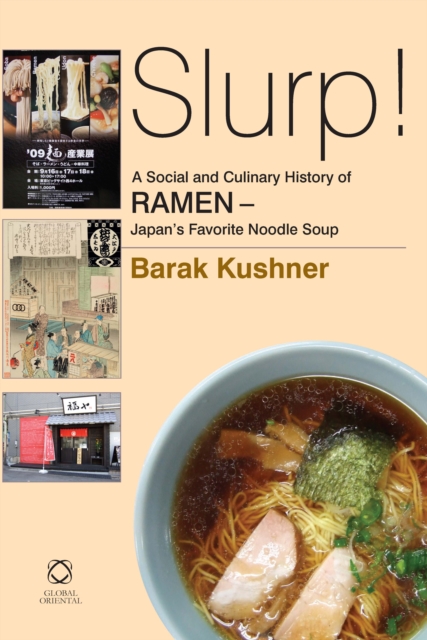
Slurp! A Social and Culinary History of Ramen – Japan’s Favorite Noodle Soup
Based on research in Chinese and Japanese, as well as interviews with comedians, food service professionals, entertainment managers, store-owners, customers, and scholars of food history, Kushner explores the history of ramen and Japan's noodle culture over the last 1,000 years.
eBook


Olfactory Preferences of ISitophilus zeamais/I to Cereal- and Legume-Based Pasta
Several insects can infest alimentary pasta. Since the olfactory sense in insects plays an important role in locating food sources, the aim of this work was to investigate the responses of adult maize weevils, Sitophilus zeamais, to five commercially available categories of macaroni pasta made from cereals and/or legumes in an olfactometric arena. Maize weevil adults were more attracted to the pasta made of 100% of Triticum durum; the attractiveness strongly decreased when combining T. durum with Cicer arietimun or Lens esculenta. A preferential orientation of adult insects to pasta made of chickpeas or lentils was not observed. These results confirm the importance of volatile compounds in insect orientation towards suitable foods and oviposition substrates and provide useful practical information for the safer prevention of maize weevil pasta infestations. We compared the attractiveness of five commercially available Italian macaroni pastas of different shapes (penne, casarecce, and fusilli) made from cereals and/or legumes [100% Triticum durum; 100% Cicer arietinum; 100% Lens esculenta; 50% Triticum durum + 50% Cicer arietinum; 60% Triticum durum + 40% Lens esculenta] to adults of Sitophilus zeamais (L.). A multiple-choice walking bioassay showed that S. zeamais adults were more attracted to cereal than legume pastas. The modified Flit-Track M[sup.2] trap devices baited with pasta made with 100% T. durum captured an average of 61.4% of the adults released into the olfactometric arena after 7 days. Of the insects tested, pasta made with 100% C. arietinum trapped 3.8%, pasta made with 100% L. esculenta trapped 2.7%, pasta made with 50% T. durum + 50% C. arietinum trapped 4.3%, and pasta made with 60% T. durum + 40% L. esculenta trapped 4.2%. When individually compared, 79.6% of S. zeamais adults chose the Triticum durum pasta. Orientation to 100% Cicer pasta or 100% Lens pasta was not observed. In the choice test, only 37% and 25% were attracted to Triticum and Cicer pastas or Triticum and Lens pasta, respectively. Our results confirm that the low attractiveness of legume pasta is mainly due to the lack of attractant stimuli rather than the emission of repellent compounds. From a practical perspective, it is also interesting to note how mixed pasta decreases the risk of S. zeamais infestation.
Journal Article

Alice in Pastaland : a math adventure
An imaginary trip through Pastaland provides Alice with opportunities to explore number concepts and basic arithmetic as she tries to help a white rabbit solve a math problem.
Book


Hemp seed
Hemp seed (Cannabis sativa L.) contain large amounts of nutrients, e.g. protein, dietary fiber, minerals, and unsaturated fatty acids, which make them a good fortifying component in food production. The aim of the present study was to determine the effect of hemp addition on the physicochemical properties, cooking quality, texture parameters and sensory properties of durum wheat pasta. The samples were fortified with 5-40% of commercially available hemp flour or 2.5-10% of hemp cake obtained from hemp seed oil pressing. Our study showed that the addition of hemp seed raw materials led to an increase in the protein, total dietary fiber (TDF), ash and fat content in the pasta samples. Due to its lower granulation and higher nutritional value, hemp flour was found to be a better raw material for the fortification of pasta than hemp cake. Pasta enriched with hemp flour at the level of 30-40% contains 19.53-28.87% d.m. of protein and 17.02-21.49% d.m. of TDF and according to the EU, a definition can be described as a high-protein and high-fiber products. All enriched pasta samples were also characterized by safe [DELTA]-9-tetrahydrocannabinol (THC) and cannabidiol (CBD) content, and their sensory properties were accepted by consumers.
Journal Article