
Catalogue Search | MBRL


Are you sure you want to remove the book from the shelf?

{{itemTitle}}
5
result(s) for
"Patchwork Aspect social."
Sort by:

Fabric : the hidden history of the material world
From our earliest ancestors to babies born today, fabric is a necessary part of our everyday lives, but it's also an opportunity for creativity, symbolism, culture and connection. Traveling across the world and bringing history to life, bestselling author Victoria Finlay investigates how and why people have made and used cloth. A century ago in Wales, women would sew their own funeral clothes over tea with friends. In Papua New Guinea, bark is stripped from trees and beaten into cloth. Harris Tweed has a particular smell, while Guatemalan weavers use dazzling colors. Uncovering the stories of the fabrics people wear and use from sacking to silk, Fabric combines science, history, tradition and art in a captivating exploration of how we live, work, craft and care.
Book
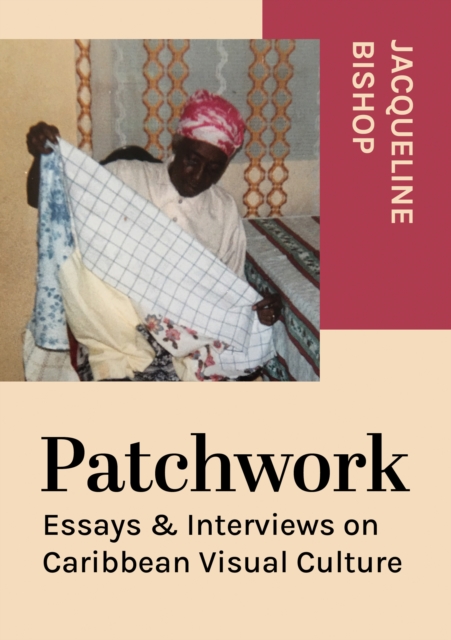
Patchwork
Essays about and interviews with contemporary caribbean writers, scholars and curators. Includes work by trained visual artists and vernacular artists with emphasis on the works of vernacular decorative and ornamental needle workers. Speaks to both indigenous traditions of the region and more globalised contemporary expressions. 27 col, 2b/w illus.
eBook
My mother was a computer
We live in a world, according to N. Katherine Hayles, where new languages are constantly emerging, proliferating, and fading into obsolescence. These are languages of our own making: the programming languages written in code for the intelligent machines we call computers. Hayles's latest exploration provides an exciting new way of understanding the relations between code and language and considers how their interactions have affected creative, technological, and artistic practices. My Mother Was a Computer explores how the impact of code on everyday life has become comparable to that of speech and writing: language and code have grown more entangled, the lines that once separated humans from machines, analog from digital, and old technologies from new ones have become blurred. My Mother Was a Computer gives us the tools necessary to make sense of these complex relationships. Hayles argues that we live in an age of intermediation that challenges our ideas about language, subjectivity, literary objects, and textuality. This process of intermediation takes place where digital media interact with cultural practices associated with older media, and here Hayles sharply portrays such interactions: how code differs from speech; how electronic text differs from print; the effects of digital media on the idea of the self; the effects of digitality on printed books; our conceptions of computers as living beings; the possibility that human consciousness itself might be computational; and the subjective cosmology wherein humans see the universe through the lens of their own digital age. We are the children of computers in more than one sense, and no critic has done more than N. Katherine Hayles to explain how these technologies define us and our culture. Heady and provocative, My Mother Was a Computer will be judged as her best work yet.
eBook


A crest for Canadians in Kandahar
Some were clearly amateur efforts, while others were aggressive knockoffs of cartoon characters with huge guns, and some were simply sexist The class was instructed to focus on the role of the Deployed Imagery Support Team and agreed that the color scheme should clearly reflect a confluence of Canadian and Afghan cultures.
Magazine Article