
Catalogue Search | MBRL


Are you sure you want to remove the book from the shelf?

{{itemTitle}}
9,327
result(s) for
"Pathogenic fungi."
Sort by:
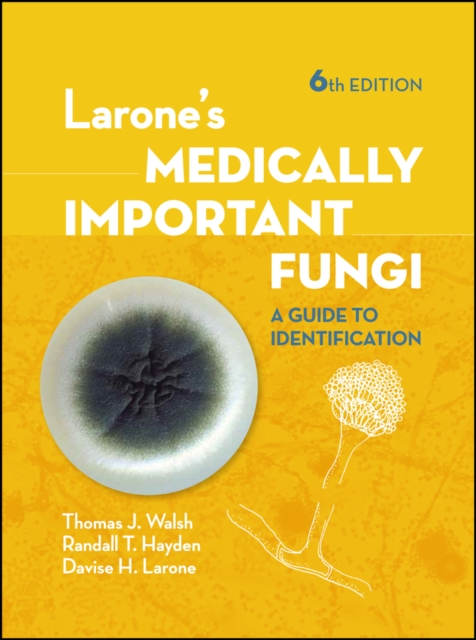
Larone's Medically Important Fungi
The definitive guide for identifying fungi from clinical specimens
Medically Important Fungi will expand your knowledge and support your work by:
* Providing detailed descriptions of the major mycoses as viewed in patients' specimens by direct microscopic examination of stained slides
* Offering a logical step-by-step process for identification of cultured organisms, utilizing detailed descriptions, images, pointers on organisms' similarities and distinctions, and selected references for further information
* Covering nearly 150 of the fungi most commonly encountered in the clinical mycology laboratory
* Presenting details on each organism's pathogenicity, growth characteristics, relevant biochemical reactions, and microscopic morphology, illustrated with photomicrographs, Dr. Larone's unique and elegant drawings, and color photos of colony morphology and various test results
* Explaining the current changes in fungal taxonomy and nomenclature that are due to information acquired through molecular taxonomic studies of evolutionary fungal relationships
* Providing basic information on molecular diagnostic methods, e.g., PCR amplification, nucleic acid sequencing, MALDI-TOF mass spectrometry, and other commercial platforms
* Including an extensive section of easy-to-follow lab protocols, a comprehensive list of media and stain procedures, guidance on collection and preparation of patient specimens, and an illustrated glossary
With Larone's Medically Important Fungi: A Guide to Identification, both novices and experienced professionals in clinical microbiology laboratories can continue to confidently identify commonly encountered fungi. If you are looking for online access to the latest clinical microbiology content, please visit www.wiley.com/learn/clinmicronow.
eBook

Blight : fungi and the coming pandemic
\"A prescient warning about the mysterious and deadly world of fungi-and how to avert further loss across species, including our own. Fungi are everywhere. Most are harmless; some are helpful. A few are killers. Collectively, infectious fungi are the most devastating agents of disease on earth, and a fungus that can persist in the environment without its host is here to stay. In Blight, Emily Monosson documents how trade, travel, and a changing climate are making us all more vulnerable to invasion. Populations of bats, frogs, and salamanders face extinction. In the Northwest, America's beloved national parks are covered with the spindly corpses of whitebark pines. Food crops are under siege, threatening our coffee, bananas, and wheat-and, more broadly, our global food security. Candida auris, drug-resistant and resilient, infects hospital patients and those with weakened immune systems. Coccidioides, which lives in drier dusty regions, may cause infection in apparently healthy people. The horrors go on. Yet prevention is not impossible. Tracing the history of fungal spread and the most recent discoveries in the field, Monosson meets scientists who are working tirelessly to protect species under threat, and whose innovative approaches to fungal invasion have the potential to save human lives. Delving into case studies at once fascinating, sobering, and hopeful, Blight serves as a wake-up call, a reminder of the delicate interconnectedness of the natural world, and a lesson in seeing life on our planet with renewed humility and awe\"-- Provided by publisher.
Book

Molecular and physiological effects of environmental UV radiation on fungal conidia
Conidia are specialized structures produced at the end of the asexual life cycle of most filamentous fungi. They are responsible for fungal dispersal and environmental persistence. In pathogenic species, they are also involved in host recognition and infection. Conidial production, survival, dispersal, germination, pathogenicity and virulence can be strongly influenced by exposure to solar radiation, although its effects are diverse and often species dependent. UV radiation is the most harmful and mutagenic waveband of the solar spectrum. Direct exposure to solar radiation for a few hours can kill conidia of most fungal species. Conidia are killed both by solar UV-A and UV-B radiation. In addition to killing conidia, which limits the size of the fungal population and its dispersion, exposures to sublethal doses of UV radiation can reduce conidial germination speed and virulence. The focus of this review is to provide an overview of the effects of solar radiation on conidia and on the major systems involved in protection from and repair of damage induced by solar UV radiation. The efforts that have been made to obtain strains of fungi of interest such as entomopathogens more tolerant to solar radiation will also be reviewed.
Journal Article


Plant-Symbiotic Fungi as Chemical Engineers: Multi-Genome Analysis of the Clavicipitaceae Reveals Dynamics of Alkaloid Loci
The fungal family Clavicipitaceae includes plant symbionts and parasites that produce several psychoactive and bioprotective alkaloids. The family includes grass symbionts in the epichloae clade (Epichloë and Neotyphodium species), which are extraordinarily diverse both in their host interactions and in their alkaloid profiles. Epichloae produce alkaloids of four distinct classes, all of which deter insects, and some-including the infamous ergot alkaloids-have potent effects on mammals. The exceptional chemotypic diversity of the epichloae may relate to their broad range of host interactions, whereby some are pathogenic and contagious, others are mutualistic and vertically transmitted (seed-borne), and still others vary in pathogenic or mutualistic behavior. We profiled the alkaloids and sequenced the genomes of 10 epichloae, three ergot fungi (Claviceps species), a morning-glory symbiont (Periglandula ipomoeae), and a bamboo pathogen (Aciculosporium take), and compared the gene clusters for four classes of alkaloids. Results indicated a strong tendency for alkaloid loci to have conserved cores that specify the skeleton structures and peripheral genes that determine chemical variations that are known to affect their pharmacological specificities. Generally, gene locations in cluster peripheries positioned them near to transposon-derived, AT-rich repeat blocks, which were probably involved in gene losses, duplications, and neofunctionalizations. The alkaloid loci in the epichloae had unusual structures riddled with large, complex, and dynamic repeat blocks. This feature was not reflective of overall differences in repeat contents in the genomes, nor was it characteristic of most other specialized metabolism loci. The organization and dynamics of alkaloid loci and abundant repeat blocks in the epichloae suggested that these fungi are under selection for alkaloid diversification. We suggest that such selection is related to the variable life histories of the epichloae, their protective roles as symbionts, and their associations with the highly speciose and ecologically diverse cool-season grasses.
Journal Article

Swainsonine Biosynthesis Genes in Diverse Symbiotic and Pathogenic Fungi
Swainsonine—a cytotoxic fungal alkaloid and a potential cancer therapy drug—is produced by the insect pathogen and plant symbiont Metarhizium robertsii, the clover pathogen Slafractonia leguminicola, locoweed symbionts belonging to Alternaria sect. Undifilum, and a recently discovered morning glory symbiont belonging to order Chaetothyriales. Genome sequence analyses revealed that these fungi share orthologous gene clusters, designated “SWN,” which included a multifunctional swnK gene comprising predicted adenylylation and acyltransferase domains with their associated thiolation domains, a β-ketoacyl synthase domain, and two reductase domains. The role of swnK was demonstrated by inactivating it in M. robertsii through homologous gene replacement to give a ∆swnK mutant that produced no detectable swainsonine, then complementing the mutant with the wild-type gene to restore swainsonine biosynthesis. Other SWN cluster genes were predicted to encode two putative hydroxylases and two reductases, as expected to complete biosynthesis of swainsonine from the predicted SwnK product. SWN gene clusters were identified in six out of seven sequenced genomes of Metarhzium species, and in all 15 sequenced genomes of Arthrodermataceae, a family of fungi that cause athlete’s foot and ringworm diseases in humans and other mammals. Representative isolates of all of these species were cultured, and all Metarhizium spp. with SWN clusters, as well as all but one of the Arthrodermataceae, produced swainsonine. These results suggest a new biosynthetic hypothesis for this alkaloid, extending the known taxonomic breadth of swainsonine producers to at least four orders of Ascomycota, and suggest that swainsonine has roles in mutualistic symbioses and diseases of plants and animals.
Journal Article

Natural products from marine fungi as a source against agricultural pathogenic fungi
There are many kinds of agricultural pathogenic fungi, which may belong to pathogenic fungi in different species, such as Fusarium, Alternaria, Colletotrichum, Phytophthora, and other agricultural pathogens. Pathogenic fungi from different sources are widely distributed in agriculture, which threaten the lives of crops around the world and caused great damage to agricultural production and economic benefits. Due to the particularity of the marine environment, marine-derived fungi could produce natural compounds with unique structures, rich diversities, and significant bioactivities. Since marine natural products with different structural characteristics could inhibit different kinds of agricultural pathogenic fungi, secondary metabolites with antifungal activity could be used as lead compounds against agricultural pathogenic fungi. In order to summarize the structural characteristics of marine natural products against agricultural pathogenic fungi, this review systematically overview the activities against agricultural pathogenic fungi of 198 secondary metabolites from different marine fungal sources. A total of 92 references published from 1998 to 2022 were cited.Key points• Pathogenic fungi, which could cause damage to agriculture, were classified.• Structurally diverse antifungal compounds from marine-derived fungi were summarized.• The sources and distributions of these bioactive metabolites were analyzed.
Journal Article

Warming shifts soil microbial communities and tropical tree seedling mortality
Plant–soil feedback (PSF), regulated by both mycorrhizae and soil-borne pathogens, is a primary mechanism maintaining high tree species diversity in the tropics. But how warming actually affects PSF is not well understood. We conducted a field warming experiment to test PSF on seedling mortality of two tree species: a rhizobia-associated tree (Ormosia semicastrata, Fabaceae) suffering from host-specific soil-borne pathogens and an ectomycorrhizal fungi-associated tree (Cyclobalanopsis patelliormis, Fagaceae) with low susceptibility to soil-borne pathogens. Soil fungi from the warming versus control seedling plots were identified by molecular sequencing. Results showed that the elevated temperature lowered seedling mortality of O. semicastrata, but had no effect on C. patelliormis seedlings. This indicates that warming weakened the negative PSF on O. semicastrata, presumably due to the observed decrease of the relative abundance of plant-pathogenic fungi and increase of ectomycorrhizal fungi but did not affect the PSF on C. patelliormis. The differential warming effects on seedling mortality of species with different microbial associations affords an example showcasing how the change in soil-borne microbes in response to global warming would, in turn, through PSF, alter tropical tree species composition and diversity. This study helps shed mechanistic light on the debate of biodiversity change as driven by climate change.
Journal Article