
Catalogue Search | MBRL


Are you sure you want to remove the book from the shelf?

{{itemTitle}}
4,414
result(s) for
"Patrick, Pat."
Sort by:

The death of Santini : the story of a father and his son
A memoir by the bestselling author of The Prince of Tides about his father--the inspiration for The Great Santini--and a reaffirmation that love can conquer even the meanest of men.
Book
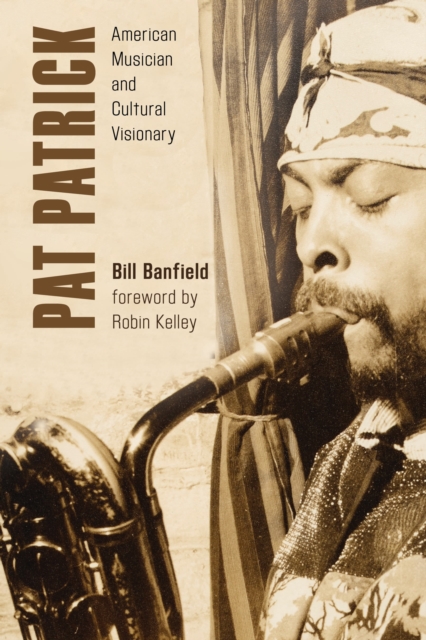
Pat Patrick
Saxophonist, multi-wind player, arranger, composer, music director, theater works producer, educator, and visionary, Pat Patrick performed with Duke Ellington’s and Quincy Jones’ orchestras, Thelonious Monk, Mongo Santamaria, Nat King Cole, James Moody, Eric Dolphy, Marvin Gaye, Patti Labelle, and Billy Taylor. Most of his career, however, was spent laying down the baseline grooves on the baritone saxophone with the indefinable Sun Ra Archestra for over 35 years. Based on research in the recently opened archive of personal papers, artifacts, scrapbooks, music, news clippings and photographs, Pat Patrick: American Musician and Cultural Visionary, explores the life and influence of this important musical man-behind-the-scenes. Musicologist Bill Banfield weaves a treasure trove of primary source material—including interviews with Patrick's family, friends, and associates—into a tapestry of Patrick’s remarkable life as the musical right hand of some of America’s greatest Black musical artists.
eBook


The Black Family and Mass Incarceration
Released in 1965, the Moynihan Report traced the severe social and economic distress of poor urban African Americans to high rates of single-parenthood. Against Moynihan s calls for social investment in poor inner-city communities, politics moved in a punitive direction, driving massive growth in the prison population. The authors document the emergence of mass incarceration and describe its significance for African American family life. The era of mass incarceration can be understood as a new stage in the history of American racial inequality. Because of its recent arrival, the social impact of mass incarceration remains poorly understood. The authors conclude by posing several key research questions that can illuminate the effects of dramatic growth in the American penal system.
Journal Article

An international look at the single-parent family; family structure matters more for U.S. students
When Daniel Patrick Moynihan raised the issue of family structure half a century ago, his concern was the increase in black families headed by women. Since then, the share of children raised in single-parent families in the United States has grown across racial and ethnic groups and with it evidence regarding the impact of family structure on outcomes for children. Recent studies have documented a sizable achievement gap between children who live with a single parent and their peers growing up with two parents. These patterns are cause for concern, as educational achievement is a key driver of economic prosperity for both individuals and society as a whole. Adapted from the source document.
Journal Article
Black Men and the Struggle for Work: Social and Economic Barriers Persist
This article looks at some of the issues presented in a 1965 study that remain to date regarding economic disadvantage and family instability. Research undertaken since that time has reinforced the need for more coordinated, government-directed efforts to dismantle structures that reinforce racial and class-based biases and inequalities. The author's direct attention to such ongoing issues as: the rise of poor black single women with children, the decline in marriage among the poor, the outmigration of higher-income black and white families, and the associated decline in services available to poor black families left behind. The data in this article points out that: (1) the percentage of children growing up in single-parent homes has continued to increase, (2) black youth are most likely to be unemployed and not in school or training, and that (3) black men are most likely to be locked up. Confronting poverty and inequality in the inner city requires the recognition of the complex, interrelated problems facing poor black families. Increased efforts must be devoted to rectifying the large-scale fragmentation and lack of uniformity in the mission and practice of schools, social service agencies, and workforce development centers that are intended to support neighborhoods and disenfranchised children and youth that reside in them.
Journal Article

Making sense of the Moynihan gambit: a perspective on the Social Security debate
Senator Daniel Moynihan's proposal to cut Social Security payroll taxes and bring actual receipts and outlays into balance.
eBook

Untangling Pathology: The Moynihan Report and Homosexual Damage, 1965-1975
The article discusses sociologist Daniel Patrick Moynihan's 'The Negro Family: The Case For National Action' (The Moynihan Report). Particular focus is given to the Moynihan Report's analysis of homosexuality among African American males. An overview of the Moynihan Report's study of the African American family unit, including black masculinity, matriarchy and the role reversal of husband and wife, is presented. The controversy surrounding the The Moynihan Report, including discussion of gender dynamics in black households and the Report's relation to black culture and race relations, is presented. Adapted from the source document.
Journal Article
'Don't burst my bubble': Winds sink sailor's latest attempt to reach Bermuda in inflatable craft
\"I was making a joke and asked them which way to Bermuda - and they're thinking I don't know,\" [Baluchi] said. \"They say if they come and rescue me, I'll have to pay $120,000,\" Baluchi said. \"But I don't pay money, I raise money.\" [Pat Patrick] of Pompano Beach, friend of adventurer Reza Baluchi, helps tie ropes on the Hydro Pod on Wednesday at North Ocean Park in Pompano Beach. Baluchi plans to take on a 3,500-mile Atlantic and Caribbean trip. ; A report of a disoriented man in an inflatable bubble who was asking for directions to Bermuda brought out the Coast Guard off the coast of Miami in October 2014. \"I was making a joke and asked them which way to Bermuda - and they're thinking I don't know,\" Reza Baluchi says.; photos by JOE CAVARETTA/Staff photographer ; Coast Guard/Courtesy file photo
Newspaper Article

CART co-founder Patrick defects to IRL
Patrick Racing will leave the troubled Champ Car World Series formerly known as CART and join the rival Indy Racing League if a sponsorship package can be arranged. CART, founded in 1978 by [Pat Patrick] and car owner Roger Penske, became a publicly traded company in 1998 and filed for bankruptcy late last year. Its assets were sold in U.S. Bankruptcy Court in Indianapolis last week to a group headed by three other team owners who want to revive the series under the name Champ Car World Series. Spaniard Oriol Servia has driven for Patrick in CART the past two seasons but currently is not under contract. He was seventh in the season standings in 2003.
Newspaper Article