
Catalogue Search | MBRL


Are you sure you want to remove the book from the shelf?

{{itemTitle}}
137
result(s) for
"Patron saint"
Sort by:

Military Saints in Byzantium and Rus, 900–1200
The rulers of the Byzantine Empire and its commonwealth were protected both by their own soldiers and by a heavenly army: the military saints. The transformation of Saints George, Demetrios, Theodore and others into the patrons of imperial armies was one of the defining developments of religious life under the Macedonian emperors. This book provides a comprehensive study of military sainthood and its roots in late antiquity. The emergence of the cults is situated within a broader social context, in which mortal soldiers were equated with martyrs and martyrs of the early Church recruited to protect them on the battlefield. Dr White then traces the fate of these saints in early Rus, drawing on unpublished manuscripts and other under-utilised sources to discuss their veneration within the princely clan and their influence on the first native saints of Rus, Boris and Gleb, who eventually joined the ranks of their ancient counterparts.
eBook

Saint and Nation
In early seventeenth-century Spain, the Castilian parliament voted to elevate the newly beatified Teresa of Avila to co-patron saint of Spain alongside the traditional patron, Santiago. Saint and Nation examines Spanish devotion to the cult of saints and the controversy over national patron sainthood to provide an original account of the diverse ways in which the early modern nation was expressed and experienced by monarch and town, center and periphery. By analyzing the dynamic interplay of local and extra-local, royal authority and nation, tradition and modernity, church and state, and masculine and feminine within the co-patronage debate, Erin Rowe reconstructs the sophisticated balance of plural identities that emerged in Castile during a central period of crisis and change in the Spanish world.
eBook

Patrons and Patron Saints in Early Modern English Literature
This book visits the fact that, in the pre-modern world, saints and lords served structurally similar roles, acting as patrons to those beneath them on the spiritual or social ladder with the word \"patron\" used to designate both types of elite sponsor. Chapman argues that this elision of patron saints and patron lords remained a distinctive feature of the early modern English imagination and that it is central to some of the key works of literature in the period. Writers like Jonson, Shakespeare, Spenser, Drayton, Donne and, Milton all use medieval patron saints in order to represent and to challenge early modern ideas of patronage -- not just patronage in the narrow sense of the immediate economic relations obtaining between client and sponsor, but also patronage as a society-wide system of obligation and reward that itself crystallized a whole culture's assumptions about order and degree. The works studied in this book -- ranging from Shakespeare's 2 Henry VI, written early in the 1590s, to Milton's Masque Performed at Ludlow Castle, written in 1634 -- are patronage works, either aimed at a specific patron or showing a keen awareness of the larger patronage system. This volume challenges the idea that the early modern world had shrugged off its own medieval past, instead arguing that Protestant writers in the period were actively using the medieval Catholic ideal of the saint as a means to represent contemporary systems of hierarchy and dependence. Saints had been the ideal -- and idealized -- patrons of the medieval world and remained so for early modern English recusants. As a result, their legends and iconographies provided early modern Protestant authors with the perfect tool for thinking about the urgent and complex question of who owed allegiance to whom in a rapidly changing world.
eBook

The Constitutional and Procedural Aspects of the Assignment of Patron Saints in the Public Space in France
A secular republic is a model of a state that recognizes the separation of public authority from church authority. This constitutional solution charac-terizes France. In the essence of the relations between the state and churches that are prevalent in France, the separation of these entities is justified by the rejection of what can divide the national community or reduce the cohesion of the nation. Case of France is very interesting and even paradoxal. The principle of secularism of the state functioning for more than a century, and has been supplemented over time by the principle of neutrality of the public service. However, France respects the hundreds of years of its historical legacy and tra-dition in which religion (Catholicism) has a prominent place. It is manifested in the very numerous public places referring to patron saints. The paper provides an explanation of this complicated issue. In addition to constitutional issues, the article discusses the procedural aspects of assignment public places the names of patron saints. The dominant method of analysis is the dogmatic-legal method.
Journal Article

Indispensable immigrants
Indispensable immigrants recreates the world of peasants who streamed into the cities of late medieval and early modern northern Italy to carry crushingly heavy containers of wine. Written in an easily accessible and unassuming style, it is solidly grounded in previously untapped archival and visual sources. In this first-ever reconstruction of the forgotten metier of wine porter, topography plays a key role in forming the labour market; in the scramble to distinguish professionals from manual labourers the term artist gets divorced from lowly artisan, and wretched diet is invoked to explain why workers are so unintelligent; the wine porters make one of their own their patron saint in thirteenth-century Cremona and other interest groups scheme successfully to get him canonised in Rome five centuries later; and when enlightened despots abolish the guilds, the wine porters’ trade fades away just as the candles on their patron’s altars sputter and die out.
eBook
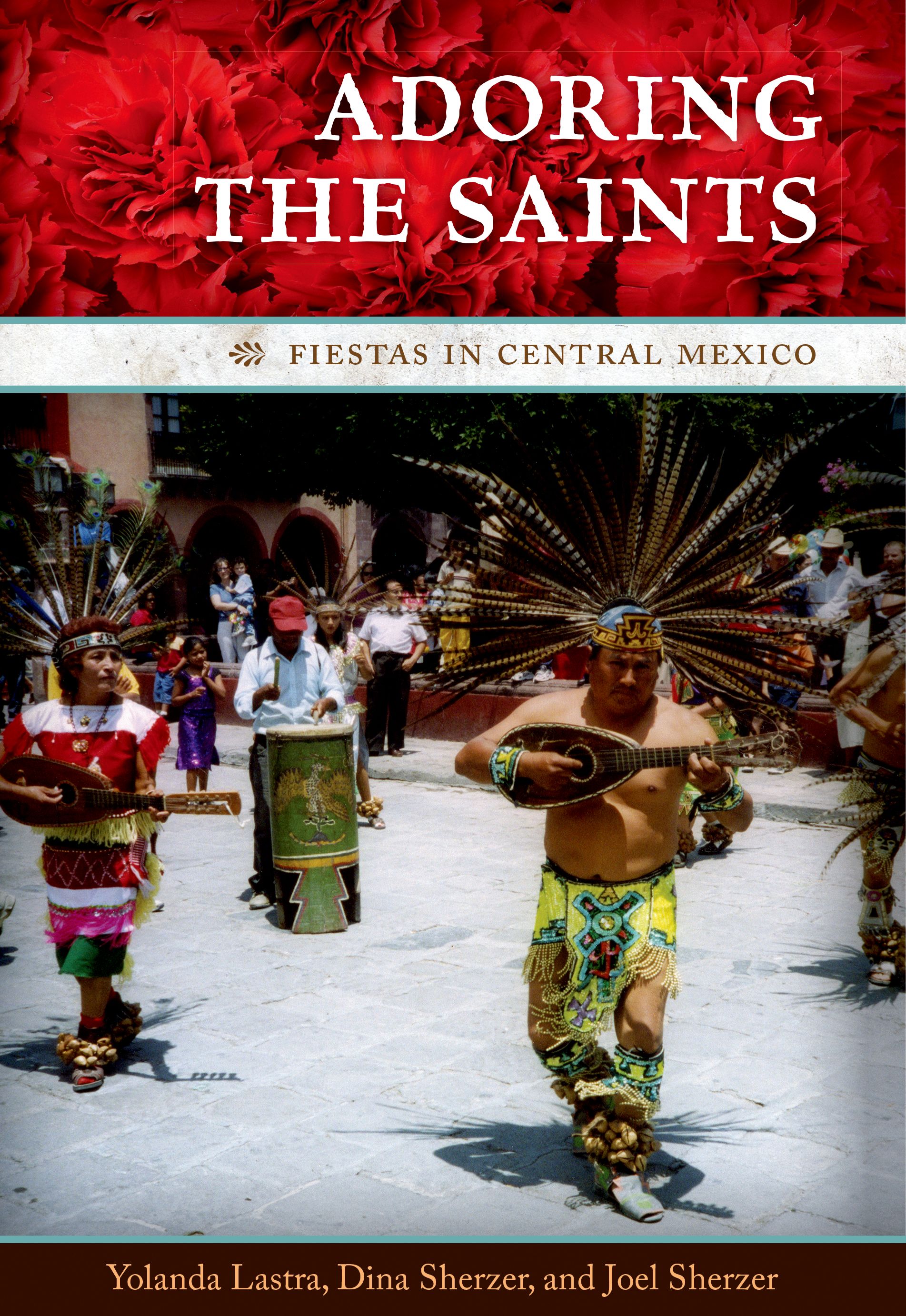
Adoring the Saints
Mexico is famous for spectacular fiestas that embody its heart and soul. An expression of the cult of the saint, patron saint fiestas are the centerpiece of Mexican popular religion and of great importance to the lives and cultures of people and communities. These fiestas have their own language, objects, belief systems, and practices. They link Mexico's past and present, its indigenous and European populations, and its local and global relations. This work provides a comprehensive study of two intimately linked patron saint fiestas in the state of Guanajuato, near San Miguel de Allende—the fiesta of the village of Cruz del Palmar and that of the town of San Luis de la Paz. These two fiestas are related to one another in very special ways involving both religious practices and their respective pre-Hispanic origins. A mixture of secular and sacred, patron saint fiestas are multi-day affairs that include many events, ritual specialists, and performers, with the participation of the entire community. Fiestas take place in order to honor the saints, and they are the occasion for religious ceremonies, processions, musical performances, dances, and dance dramas. They feature spectacular costumes, enormous puppets, masked and cross-dressed individuals, dazzling fireworks, rodeos, food stands, competitions, and public dances. By encompassing all of these events and performances, this work displays the essence of Mexico, a lens through which this country's complex history, religion, ethnic mix, traditions, and magic can be viewed.
eBook

Translating “Holy Bodies” (Corpi Santi) in Malta, 1667–1795
AbstractThis article discusses the corpi santi, or whole skeletons of saints, which were brought to Malta from the catacombs of Rome in the eighteenth century. Here they had a diff erent meaning than they had in northern Europe. Malta was not aff ected by the Thirty Years’ War and therefore did not have to replace relics destroyed by the Protestants. The Maltese church also had no need to emphasize its connection with Rome. These saints were honored in Malta because they were heroes, having died for Christ as martyrs. Parishioners also perceived corpi santi as patrons, explaining why they were fully integrated within the parish. They rendered the churches in which they were exhibited centers of local devotion, thereby according prestige to the parish and intensifying rivalry between parishes. The saints also gave identity to the parish, so that parents even named children after them.
Journal Article

Adoring the saints : fiestas in central Mexico
Mexico is famous for spectacular fiestas that embody its heart and soul. An expression of the cult of the saint, patron saint fiestas are the centerpiece of Mexican popular religion and of great importance to the lives and cultures of people and communities. These fiestas have their own language, objects, belief systems, and practices. They link Mexico’s past and present, its indigenous and European populations, and its local and global relations. This work provides a comprehensive study of two intimately linked patron saint fiestas in the state of Guanajuato, near San Miguel de Allende—the fiesta of the village of Cruz del Palmar and that of the town of San Luis de la Paz. These two fiestas are related to one another in very special ways involving both religious practices and their respective pre-Hispanic origins. A mixture of secular and sacred, patron saint fiestas are multi-day affairs that include many events, ritual specialists, and performers, with the participation of the entire community. Fiestas take place in order to honor the saints, and they are the occasion for religious ceremonies, processions, musical performances, dances, and dance dramas. They feature spectacular costumes, enormous puppets, masked and cross-dressed individuals, dazzling fireworks, rodeos, food stands, competitions, and public dances. By encompassing all of these events and performances, this work displays the essence of Mexico, a lens through which this country’s complex history, religion, ethnic mix, traditions, and magic can be viewed.
eBook

Favourite Patron Saints
This book is a selection of saints presented chronologically and as Patrons. The proportion of women to men is deliberately higher than usual and the aim is-in accordance with Pope John Paul's intentions-to produce a worldwide spread of saints. Lesser-known figures that did remarkable things feature amongst some of the best-known saints. Although legends are mentioned, in true Butler's tradition, emphasis is always on historical fact. Entries are limited to canonised saints. Emblems or attributes are described where relevant and there are touches of humour where appropriate. The short introduction concentrates on the historical development of canonisation and draws some social implications. At the head of each page the patronage of the saint in question is given: for example medicine, taking exams, music, hunting, architects, and blind people. There is a saint for almost every chosen path of life and human predicament. On each page there is a decoration or illustration. The book ends with a simple glossary.
eBook

Saint and Nation
In early seventeenth-century Spain, the Castilian parliament voted to elevate the newly beatified Teresa of Avila to co-patron saint of Spain alongside the traditional patron, Santiago. Saint and Nation examines Spanish devotion to the cult of saints and the controversy over national patron sainthood to provide an original account of the diverse ways in which the early modern nation was expressed and experienced by monarch and town, center and periphery. By analyzing the dynamic interplay of local and extra-local, royal authority and nation, tradition and modernity, church and state, and masculine and feminine within the co-patronage debate, Erin Rowe reconstructs the sophisticated balance of plural identities that emerged in Castile during a central period of crisis and change in the Spanish world.
eBook