
Catalogue Search | MBRL


Are you sure you want to remove the book from the shelf?

{{itemTitle}}
4,676
result(s) for
"Pattern books."
Sort by:

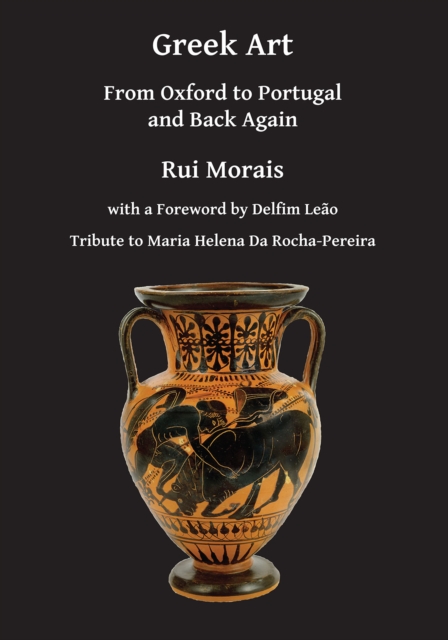
Greek art: from Oxford to Portugal and back again
One of the most fascinating topics in the study of ancient art concerns artistic practices and models and the means of transmission of iconographic designs and decorative compositions. This phenomenon, although well known, has not drawn much attention of scholars of the ancient art. Apart from copies of originals, the practice dates back to the first civilizations and may be even older. The media used could be painted vignettes on papyri, paint on leather, or sketches painted on ostraca, used as pattern books. This issue is practically unheard of regarding ancient Greece, although a few media have been found which may have facilitated the transmission of iconographic designs and decorative compositions. In this study we present some examples that suggest the existence of pattern books in the Greek world.
eBook

Checkers and Dot on the farm
This sweet and striking book has been designed especially for babies and tots. Welcome to the wonderfully patterned world of Checkers and Dot!
Book

The Illustrated Dioskourides Codices and the Transmission of Images during Antiquity
A parchment codex of the early sixth century a.d., now in Vienna, contains a remarkable series of nearly 400 full-page illustrations of individual botanical species. These illustrations accompany an alphabetical recension of a pharmacological treatise on the medicinal properties of plants written by Dioskourides of Anazarbos, a Greek author of the first century a.d. Both the date of the codex and the style of its botanical illustrations have encouraged suggestions that the latter were modelled somehow on classical archetypes. This article presents new observations in support of the classical archetypes theory, but questions the traditional view that these archetypes were transmitted by ‘illustrated texts’ or ‘pattern books’ executed in papyrus or parchment. What follows is a new hypothesis concerning the nature of the artistic intermediaries used by painters, mosaicists and sculptors during antiquity.
Journal Article

Checkers and Dot at the zoo
This sweet and striking book has been designed especially for babies and tots. Welcome to the wonderfully patterned world of Checkers and Dot!
Book

Design Quality, Mechanization and Taste in the British Textile Printing Industry, 1839–1899
This article considers the design debate in the printed-textile industry of the nineteenth century through an examination of textile samples, focusing on two key aspects: the need for design education and the development of diverging tastes between the upper and working-classes, and the effect of mechanization on design quality. This debate has dominated the historiography of printed textiles, yet is by no means exclusive to the textile industry. The aim of this article is not to assess the design quality of printed textiles produced in the North-West of England for the domestic market during the nineteenth century but to see the discussion of design quality in context and demonstrate how nineteenth-century ideas of design quality and taste were perpetuated throughout the twentieth century. Using the textile designs of Edmund Potter & Co. and Samuel Matley & Son found in the Board of Trade registers as a lens through which to unpack these issues, this article illustrates the value of examining the material evidence in relation to the design debate in the printed textile industry of the nineteenth century.
Journal Article


FROM THE INTEGRATED SURVEY OF HISTORIC SETTLEMENTS TO THE PATTERN BOOK WITHIN THE BIM
The object of the study is the survey of minor historic settlements through integrated architectural survey techniques, the BIM modelling for the management of information at multiple levels, and the definition of pattern books to describe the qualities of the place. The research on cultural heritage representation made in Umbria, taking as a case study the historic hamlet of Lizori, a settlement located over the hill between Foligno and Spoleto in the town of Campello sul Clitunno (PG). It was selected as a paradigm of minor village and an experimental model to provide useful reference to reconstruct strategies, which is so important in the area recently affected by seismic events. The purpose of the research is therefore focused on finding a modus operandi in the management of multiple and uneven information. The goal is then to create a digital informative model functional to the conservation and restoration process and a knowledge-based reference for further study.
Journal Article

Print & pattern : nature
The latest book based on the popular Print & Pattern blog, Print & Pattern: Nature celebrates beautiful surface designs, patterns and motifs of leaves, insects, grasses, butterflies and trees. Product areas covered include stationery, cards and giftwrap, fabrics, wallpaper, rugs, ceramics, homewares, gadget skins and more. Documenting the work of the best designers in the field, the book is an invaluable source of reference and inspiration for surface designers, designer-makers and craftspeople, graphic designers, illustrators and textile designers.
Book
Multi-instrumental approach with archival research to study the Norwich textile industry in the late eighteenth and early nineteenth centuries: the example of a Norwich pattern book dated c. 1790–1793
Merchant-manufacturers in Norwich, a major centre for textile production in England, used pattern books and pattern cards containing swatches of worsted and worsted mixed with other yarns to facilitate sales and trade. Studying such well-preserved and dated materials provides valuable information that can translate into informed decisions for the care of Norwich textile collections. Using a Norwich pattern book from Winterthur Museum’s Special Collections dated c. 1790–1793, we report the first stage of a substantial study that combines spectroscopic and chromatographic techniques with archival research. A combination of X-ray fluorescence (XRF), high performance liquid chromatography-photodiode array (HPLC–PDA) and scanning electron microscopy-energy dispersive X-ray spectroscopy (SEM–EDX) allowed for identification of characteristic mordants like iron and tin salts; and dyes, like quercitron, native to North America. In addition, a combination of Fourier transform infrared spectroscopy (FTIR) and gas chromatography-mass spectrometry (GC–MS) allowed for partial identification of the glazed finish in some textiles as a natural gum. Setting the foundations for future conservation and conservation science work, our research contributes to the care of these important and beautiful textiles, by providing scientific evidence for humidity and/or light sensitive constituent materials.
Journal Article