
Catalogue Search | MBRL


Are you sure you want to remove the book from the shelf?

{{itemTitle}}
277
result(s) for
"Paul Tillich"
Sort by:


Confronting Demonic Autonomy in Digital Capitalism: Reconstructing Tillich’s Religious Socialism as a Post-Secular Public Theology
In an age in which the post-secular condition and digital capitalism are increasingly interwoven, the question of what role religion ought to play in the public sphere—and how it might regain critical and constructive force amid deepening crises of meaning—has become urgent. Contemporary digital capitalism, characterized by the pseudo-sacralization of algorithmic logic, generates a persistent absorptive power marked by ecstatic effects. This elevates technological rationality and market logic to a level of pseudo-sacral authority, exercising a form of symbolic and spiritual domination. Returning to Paul Tillich’s thought, this article reconstructs his vision of religious socialism not as a historical artifact, but as a critical public theology capable of resisting this form of demonic domination. Tillich’s central insight is that the crisis of capitalism is not merely economic but ontological: its culture of “autonomy” severs itself from its religious ground, allowing finite forms—now amplified by digital technology—to elevate themselves into ultimate meaning and thereby consolidate into self-absolutizing, demonic structures. Against this background, the article argues that Tillich’s religious socialism is not a proposal for institutional replacement, but a public theological practice rooted in “ultimate concern.” Its task is to expose the structures of usurpation operative within digital capitalism and to reconfigure the order of meaning through the symbolic vision of theonomy. Through this symbolic practice, religion is recovered as a deep dimension of culture capable of critically piercing the regimes of meaning-occlusion. Moreover, it is precisely the unfinished and open-ended characteristic of religious socialism that enables it to regain theoretical and symbolic vitality in the post-secular present.
Journal Article
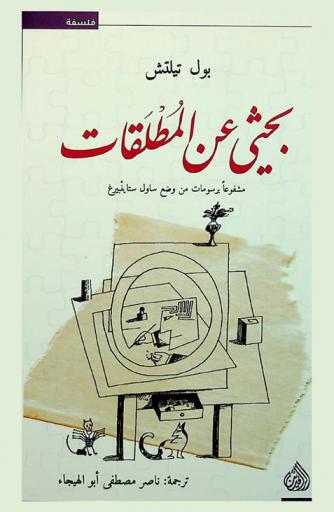
بحثي عن المطلقات : مشفوعا برسومات
يشير تيليتش في هذا الكتاب إلى السمة المطلقة للواجب الأخلاقي مدركا ومبينا في الآن ذاته، تمظهرها النسبي في كل فعل يقوم به الإنسان وفي كل قرار يتخذ. . . ه ويواجه القارئ، لدى تتبعه المادة السرية التي تتصدر هذا النص، موهبة تيلتش المتفردة في تصوير التساكن البنيوي والقرابة بين التجربة الحسية والطبيعية المنطقية للعقل، فضلاً عن تصوير توافقهما على الرغم من تجافيهما الظاهر، ذلك أن وطأة الوجود البشري، بمأزقه وعظمته، تكمن فيما حمله الإنسان من عهد لا متناه، كما تكمن، أيضا وبنوع من المفارقة، بمقدرته المتناهية لإنجاز هذا العهد والوفاء به وهكذا فإن البحث عن المعنى اللامتناهي في حياة كل إنسان، تاريخيا وروحيا، لا يدوم بسبب الطوارئ الوجودية للشرط الإنساني وإنما على الرغم منها وتكمن في هذه العملية الطبيعة الغامضة للواقع كما للمثال perfection، بما يمثل القبول النهائي والحاسم الذي يؤسس النضج الكامل للإنسان ويتكون هذا الكتاب من المحاضرات التي ألقاها تيلتيش في كلية القانون التابعة لجامعة شيكاغو وقد أزمع، لو قدر له العيش أن يلقي المحاضرات ذاتها، في جامعة هارفارد ضمن البرنامج التي يدعى هناك بـ \"محاضرات نوبل\" ويشع الصفاء النابض وغير الاعتيادي لعقل تيليتش وروحه عبر أنحاء النص وقد ألهم هذا الصفاء رسومات شاؤول ستاينبيرغ بالقوة والبصيرة ذاتيهما، ذلك ان تيليتش وستاينبيرغ يمتلكان، كل بأسلوبه الخاص، تلك المقدرة الكاريزمية المتعلقة، على نحو حميمي، بحاجة الإنسان العميقة للنظام.
BOOK
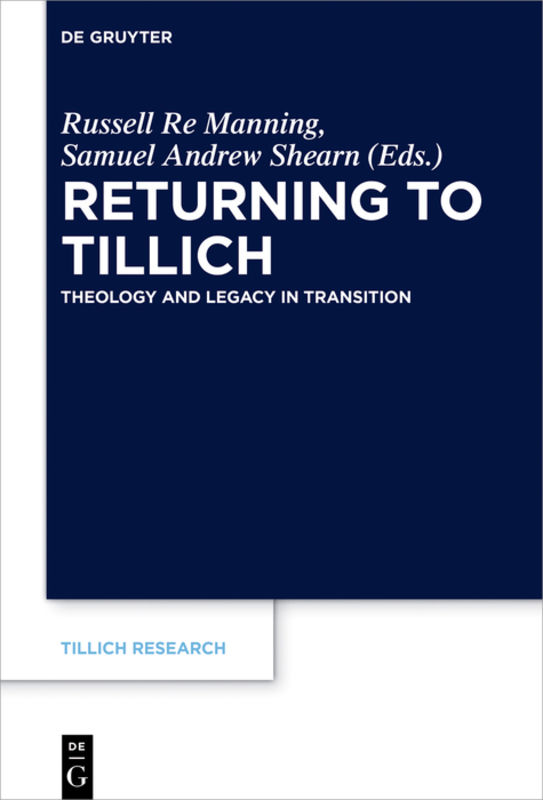
Returning to Tillich : theology and legacy in transition
Paul Tillich (1886-1965) was a thinker of international charisma and worldwide repute. His works provide important impulses for debates on theology, philosophy of religion and cultural theory. The series Tillich Research reflects on international research on this notable theologian and philosopher, the academic exploitation of his works with its range of different approaches to its reception and interpretation, as well as a diverse selection of themes and emphasis on them.
eBook

Broadcasting Law and Gospel: Paul Tillich's Wartime Ministry to Nazi Germany
During World War II, the German theologian Paul Tillich, then a professor at Union Theological Seminary, partnered with the United States’ organization Voice of America to deliver over 100 religious addresses in the German language into his homeland. In these broadcasts, Tillich utilized the Lutheran categories of Law and Gospel to identify and discuss the sins of the Nazis (and Hitler in particular) and to remind the German population that there was still hope in redemption. Remarkably, well before the war's end, Tillich argued for German collective guilt and the need for the atonement and expiation of the German people. He continually warned them of impending judgment and inescapable punishment – both human and divine – as the Allies advanced on the battlefield in a race toward Berlin. Yet Tillich often tempered this focus on judgment with an emphasis on the Gospel, the certain hope Germans have in God's salvation. This prism of Law and Gospel pervades the religious addresses. I will place these broadcasts in the context of the war, the wartime work of Voice in America, and what we know of other religious addresses delivered over the airwaves to Nazi Germany, to reveal how Tillich preached resistance to Nazi Germany.
Journal Article
Mysticism and Ethics in the Theology of Religions and Interreligious Dialogue: Re-Reading Paul Tillich and Jacques-Albert Cuttat
In today’s plural and global context, the Theology of Religions and Interreligious Dialogue play a decisive role in fostering mutual understanding and a genuine culture of encounter. This article examines the theological and spiritual foundations of this task through a re-reading of Paul Tillich and Jacques-Albert Cuttat. Starting from Tillich’s unfinished reflection on the significance of the history of religions, this study reconstructs his ontological and pneumatological framework, with particular attention to the notion of a mystical a priori as the structural condition of all religious experience. On this basis, it analyses Cuttat’s model of “assumptive convergence” between the two “religious hemispheres”—East and West—as an experiential and spiritual unfolding of Tillich’s intuition. This article argues that Cuttat’s proposal anticipates, in practical and mystical terms, the theology of religions outlined by Tillich, showing how Christian mystical experience can assume, discern, and transfigure other religious traditions without syncretism or relativism. In this perspective, mysticism emerges as a fundamental theological principle for articulating truth, plurality, and ethical responsibility in interreligious dialogue.
Journal Article

Images Above All: Richard Kroner and the Religious Imagination
This essay returns to a largely forgotten achievement of mid-twentieth-century philosophical theology, Richard Kroner’s Culture and Faith (1951) and the “philosophy of faith” presented therein. It focuses on Kroner’s idea of religious imagination as the inspired medium of revelation. It considers implications of this idea with regard to religious epistemology and theological language. In doing so, it puts Kroner in conversation with John Caputo, Iain McGilchrist, and Kroner’s friend and colleague Paul Tillich.
Journal Article

Three Kairoi – Three Aions. Paul Tillich, Ultimate Concern and Pedagogy of Radical Hope
For contemporary critical philosophers of education, the thought of Paul Tillich, a protestant theologian, does not seem to be a very likely point of reference. Nevertheless, we decided to read some of his works within a philosophical-educational context. Reading those works of Tillich we realized that they required a pedagogical-philosophical acknowledgement. Scarce as the educational analyses of Paul Tillich’s writings are, they concern mostly either religious education or some specific issues connected with teaching. Our proposal was to read him differently: as a critical tool for grasping contemporary educational issues, independent from a religious or didactic approach. In the article, referring to the thoughts of Tillich, we analyze the three most important tensions of the last and present centuries: kairos I and II, referring to the human condition after World Wars I and II, and kairos III, related mainly to the war on terrorism and to the growing climate crisis. The analysis of these special moments in the history of humankind is related to the postulates and pedagogical attitudes articulated by us. We conclude that as a result of the deepening climate crisis and the looming specter of a cataclysm, the transition to a better aion may enable the pedagogy of radical hope. The essence of this pedagogy is to shape the “courage to be” during grassroots, collective and political action - an existential attitude saturated with resistance, concern and hope that such grassroots, cultural-religious practices can contribute to social change and reduce the fear of inevitable death associated with the risk of annihilation of the Earth.
Journal Article

Original Sin and Everyday Protestants
In the years following World War II, American Protestantism experienced tremendous growth, but conventional wisdom holds that midcentury Protestants practiced an optimistic, progressive, complacent, and materialist faith. InOriginal Sin and Everyday Protestants, historian Andrew Finstuen argues against this prevailing view, showing that theological issues in general--and the ancient Christian doctrine of original sin in particular--became newly important to both the culture at large and to a generation of American Protestants during a postwar \"age of anxiety\" as the Cold War took root.Finstuen focuses on three giants of Protestant thought--Billy Graham, Reinhold Niebuhr, and Paul Tillich--men who were among the era's best known public figures. He argues that each thinker's strong commitment to the doctrine of original sin was a powerful element of the broad public influence that they enjoyed. Drawing on extensive correspondence from everyday Protestants, the book captures the voices of the people in the pews, revealing that the ordinary, rank-and-file Protestants were indeed thinking about Christian doctrine and especially about \"good\" and \"evil\" in human nature. Finstuen concludes that the theological concerns of ordinary American Christians were generally more complicated and serious than is commonly assumed, correcting the view that postwar American culture was becoming more and more secular from the late 1940s through the 1950s.
eBook
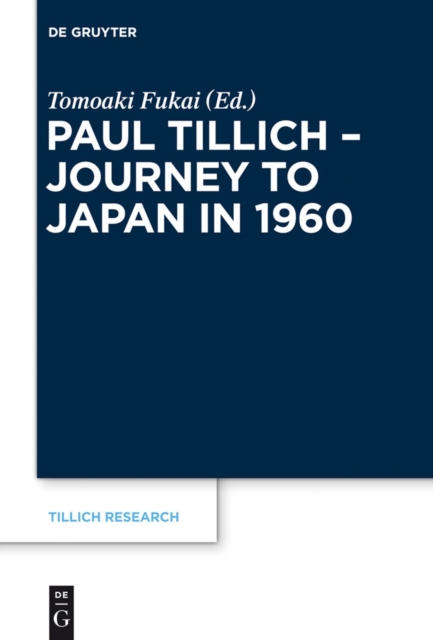
Paul Tillich - Journey to Japan in 1960
In the summer of 1960 Paul Tillich visited Japan. Together with his wife Hannah, he spent eight weeks in the country sightseeing, lecturing, and having discussions with local scholars. This monograph provides the first comprehensive documentation of Tillich's journey, highlighting the political context and the itinerary of his visit. Moreover, Tomoaki Fukai presents the manuscripts of Tillich's lectures, his conversations with leading Buddhists in Kyoto, and his correspondence with his Japanese hosts.
eBook